Introduction
Dodona, in northwestern Greece, was one of the most important oracular sanctuaries of the ancient Greek world. Located in Epirus, the sanctuary was famous for its association with Zeus and the prophetic significance of an ancient oak tree.
Pilgrims traveled to Dodona to seek divine guidance on matters involving personal decisions, family concerns, public affairs, and political questions.
The idea of "oracle bones" in local legends invites a comparison between the sanctuary's actual divinatory practices and broader traditions of interpreting physical objects as messages from the divine. However, the term should be used carefully because Dodona's best-known archaeological evidence does not establish a standardized system of oracle-bone divination comparable to practices documented in ancient China.
Dodona and Zeus
Dodona was an ancient sacred site whose religious importance extended across many periods.
The sanctuary was especially associated with Zeus Naios, a form of Zeus linked to the site. Dione was also worshipped there, and the relationship between the two divine figures changed across historical contexts.
Dodona's religious authority rested partly on its antiquity and distinctive oracular traditions.
Ancient writers described the sacred oak and the interpretation of sounds associated with it. The precise details of the ritual varied across accounts, and some descriptions may reflect later interpretations.
How the Oracle Worked
Ancient literary sources describe divination at Dodona through signs associated with the sacred tree and its environment. Some accounts refer to the sounds of leaves, birds, or other features of the sanctuary.
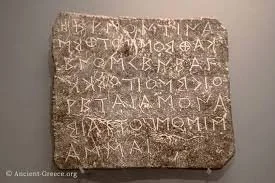
Lead tablets provide particularly valuable archaeological evidence. Many contain questions submitted by visitors seeking divine guidance.
These texts reveal the concerns of ordinary people and communities, including questions about marriage, family, property, travel, health, and other decisions.
The tablets are among the most important sources for understanding how the oracle functioned in practice.
The Lead Tablets
Lead tablets discovered at Dodona often contain brief questions directed toward a deity.
Some were inscribed with a stylus, and many were folded or otherwise handled after being written.
Their survival allows historians to examine not only religious practice but also language, literacy, social relationships, and everyday concerns.
The tablets do not establish that animal bones were the standard instrument of divination at Dodona.
The phrase "oracle bones" should therefore be understood as a topic for investigating local stories unless a particular artifact has been identified and documented.
Bones and Divination in Ancient Cultures
Bones could have symbolic or ritual importance in different ancient societies.
Animal remains might be associated with sacrifice, feasting, offerings, or the interpretation of sacrificial signs.
Greek religious practices included forms of divination involving sacrifices, dreams, and other signs. However, these practices differed between locations and periods.
Researchers must distinguish between examining sacrificial remains and deliberately using bones as an oracle.
Local Legends and Historical Memory
Communities sometimes develop stories explaining unusual artifacts, ancient ruins, or sacred landscapes.
A bone discovered near an archaeological site may later become associated with a legendary oracle, even if its original purpose is unknown.
Such stories can reveal how people interpret the past, but they cannot independently establish the original function of an object.
Researchers can investigate these narratives through folklore collections, oral history, historical records, and archaeological comparison.
Archaeology at Dodona
The sanctuary's remains include religious buildings, theaters, inscriptions, votive offerings, and other structures associated with its long history.
Excavations have helped establish how the sanctuary developed and how its functions changed.
Dating is essential because an object found at Dodona may belong to a period when the sanctuary's religious practices differed from those described in earlier literature.
The site should therefore be studied as a changing institution rather than an unchanging oracle.
What Further Research Could Establish
A careful study of alleged oracle bones would begin with the identification of a specific object or documented tradition.
Researchers would need to determine the object's material, archaeological context, date, and original function.
If the object is a bone, zooarchaeological analysis might identify the animal species and evidence of cutting, burning, or other modification.
Such analysis could help determine whether the bone was associated with food preparation, sacrifice, craft production, burial, or another activity.
Conclusion
Dodona's oracle was a major institution of ancient Greek religion, and its inscribed lead tablets offer direct evidence of the questions people brought to the gods. Stories about oracle bones provide an intriguing subject for folklore research, but they should not be presented as an established feature of Dodona's divinatory system without supporting evidence. By distinguishing archaeological findings from local legend, researchers can better understand how the sanctuary operated and how its reputation evolved over time.