Introduction
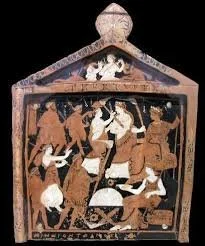
The Eleusinian Mysteries were among the most influential religious rites of ancient Greece. Centered at Eleusis near Athens, these initiatory ceremonies were associated primarily with Demeter and Persephone and became famous for their secrecy, religious significance, and promises connected with the afterlife.
The mysteries were part of a broader Greek religious world in which agricultural cycles, seasonal festivals, local deities, and community rituals shaped social life.
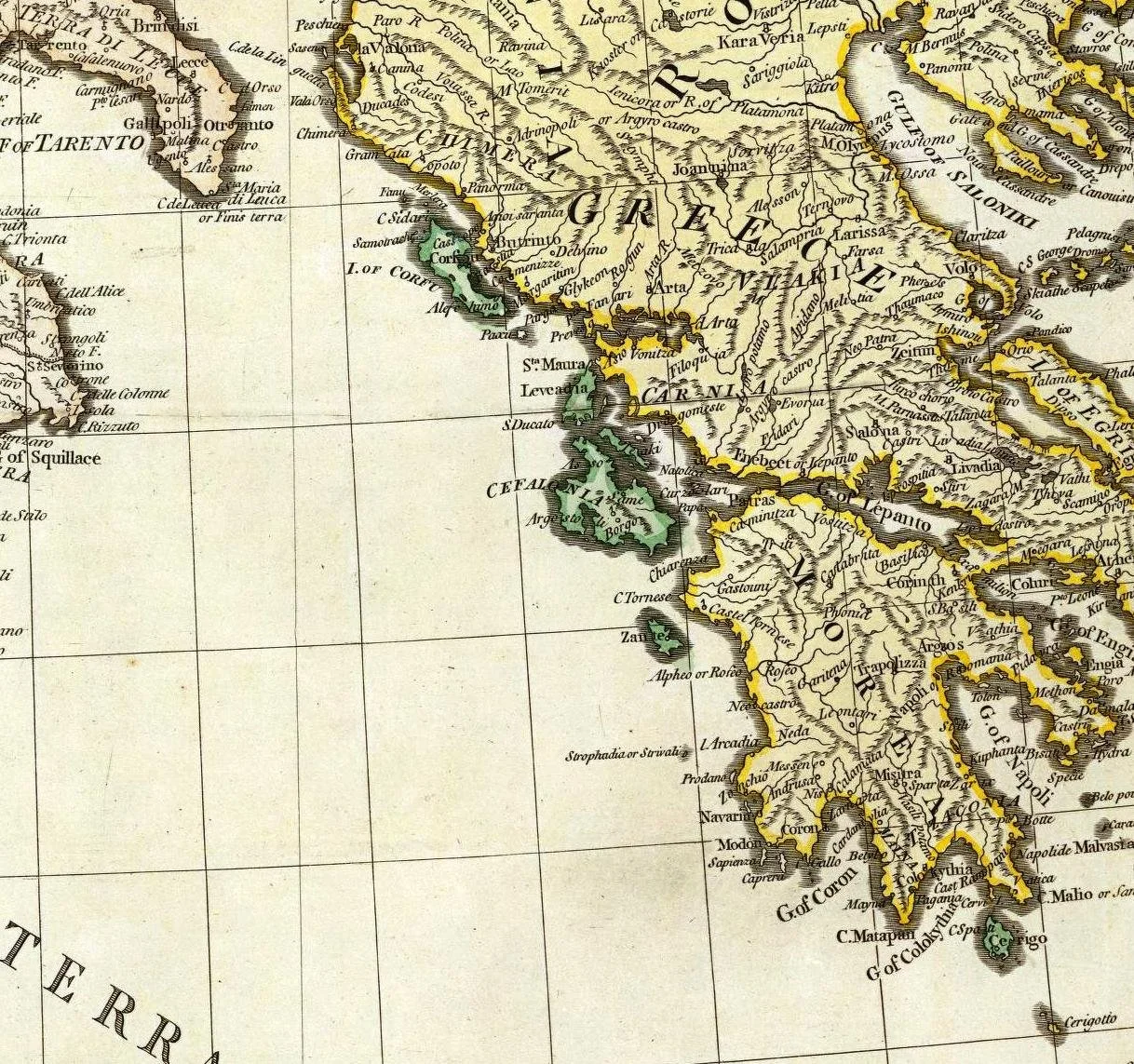
Boeotia, a region of central Greece with its own rich religious traditions, provides an interesting setting for considering how ancient ritual themes may have been remembered, transformed, or reinterpreted in later village customs.
However, a modern village ceremony should not be identified as a direct survival of the Eleusinian Mysteries without evidence of historical continuity.
Demeter and Persephone
The religious traditions associated with Eleusis centered on Demeter, the goddess of agriculture and grain, and her daughter Persephone.
In the Homeric Hymn to Demeter, Persephone is taken to the underworld by Hades. Demeter searches for her daughter, and her grief affects the fertility of the earth.
The eventual arrangement allowing Persephone to spend part of the year with her mother and part in the underworld became an influential explanation of seasonal change.
The myth connects agricultural productivity with loss, reunion, death, and renewal.
The Eleusinian Mysteries
The Eleusinian Mysteries developed into a major religious institution. Initiates participated in ceremonies whose central experiences were kept secret.
Ancient writers suggest that participation could transform how individuals understood death and the possibilities of existence beyond it. Nevertheless, the precise rituals and teachings remain partly unknown because secrecy was fundamental to the institution.
Modern reconstructions must therefore distinguish between what ancient sources explicitly describe and what scholars infer.
Boeotia's Religious Landscape
Boeotia contained numerous sanctuaries and traditions associated with agricultural, heroic, and local deities. Its communities participated in the wider Greek religious world while maintaining distinct local practices.
Religious life was not limited to major sanctuaries. Household offerings, village festivals, seasonal observances, processions, and community meals could all contribute to the relationship between people and the divine.
The region's rural traditions provide a broader context for considering how agricultural symbolism could remain meaningful long after ancient institutions disappeared.
Ritual Continuity and Cultural Memory
Ritual practices can persist through changing religious systems, but continuity is rarely simple.
A seasonal procession may preserve an ancient agricultural pattern without maintaining the original theology. A modern festival might incorporate Christian saints, local historical memories, and older seasonal customs.
Similarities between ceremonies can result from shared human concerns rather than direct transmission from one historical period to another.
To demonstrate continuity with Eleusinian practice, researchers would need evidence such as historical documentation, distinctive ritual sequences, long-term local records, or well-supported patterns of transmission.
Agricultural Symbolism
Agriculture provides a natural connection between ancient and modern ritual.
Planting, harvesting, grain storage, rainfall, and seasonal transitions have long influenced communal ceremonies.
The story of Demeter and Persephone gave these cycles a powerful mythological framework.
In later rural societies, ceremonies related to harvest, fertility, or seasonal change could preserve comparable themes without necessarily descending directly from the Eleusinian Mysteries.
Archaeology and Folklore
Archaeological research can investigate ancient sanctuaries, votive offerings, inscriptions, pottery, and ritual spaces. Folklore research can document oral traditions, songs, seasonal customs, and community memories.
Combining these approaches can reveal how people reinterpret the past.
Yet folklore should not be treated as a literal record of ancient events. Stories change as they pass between generations, and their meaning often reflects the needs of the community preserving them.
Conclusion
The possibility of Eleusinian echoes in Boeotian village rites highlights the long life of agricultural symbolism in Greek culture. Demeter and Persephone provided ancient communities with a powerful language for expressing fertility, grief, renewal, and hope. Modern customs may share themes with these traditions, but direct continuity must be demonstrated rather than assumed. A careful combination of archaeology, religious history, and folklore can illuminate how ancient ideas continue to influence cultural memory.