Introduction
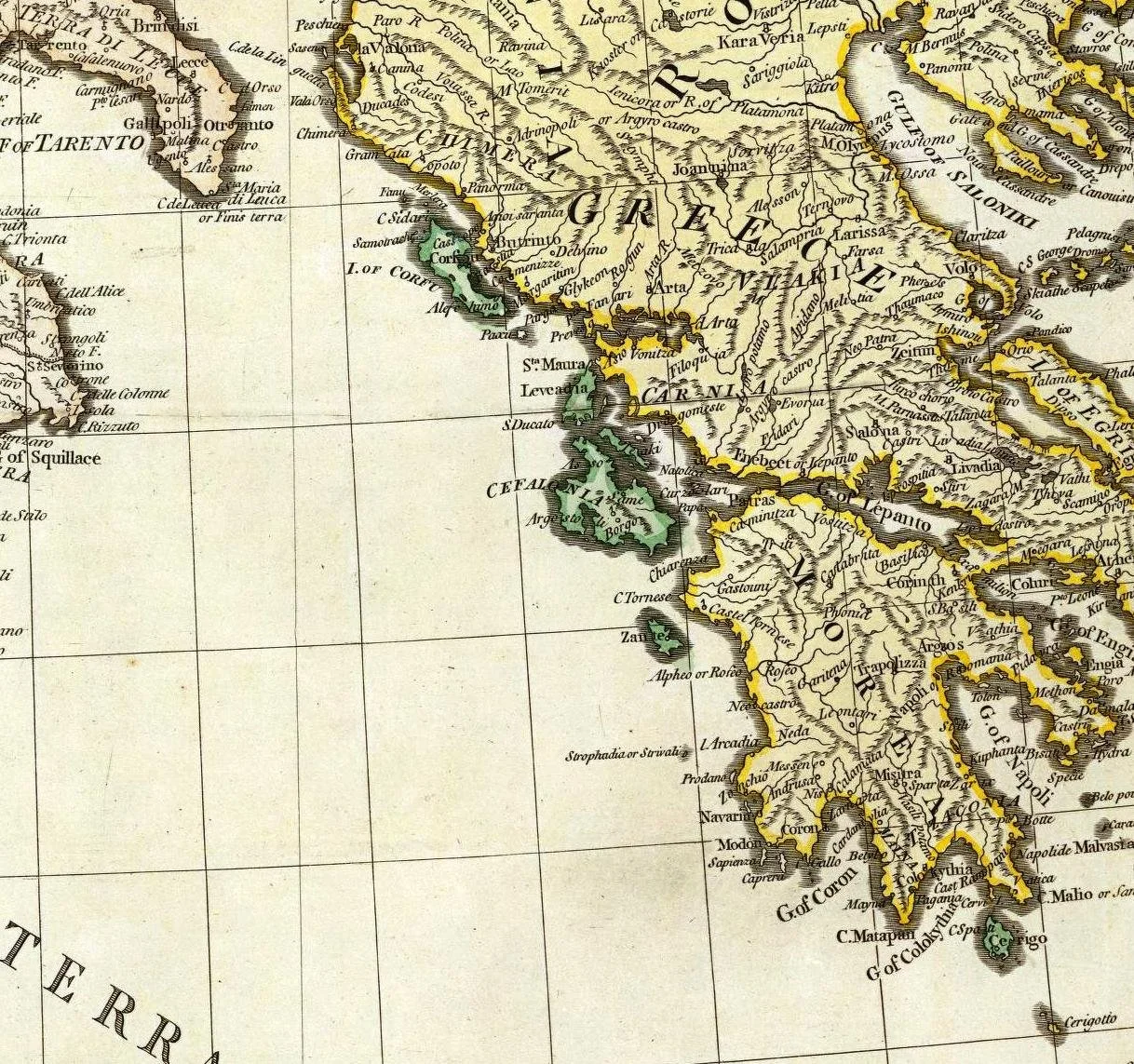
Corfu occupies a strategic position at the entrance to the Adriatic Sea, making it an important meeting point between the Greek world, the western Balkans, and the wider Mediterranean. Its history includes Greek colonization, Roman administration, Byzantine rule, Venetian government, and numerous other political and cultural influences.
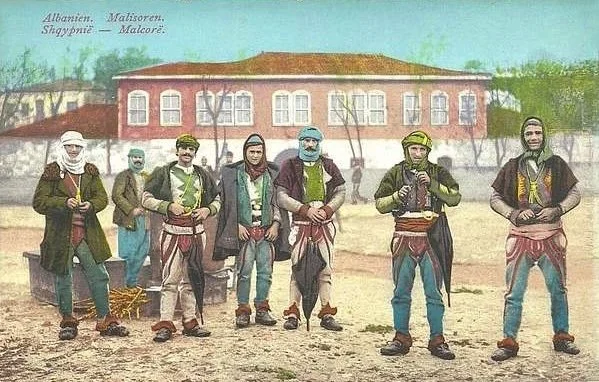
The ancient Illyrians are associated with communities living across parts of the western Balkans. Greek and Roman authors occasionally described Illyrian customs, including forms of bodily decoration, but these accounts varied by group and period.
The possibility of Illyrian tattooing traditions surviving in Corfu's folk artifacts raises important questions about cultural transmission. It also requires caution: a decorative motif on a modern object cannot automatically be traced to an ancient Illyrian practice.
The Illyrians and the Western Balkans
The term Illyrian was used by ancient Greek and Roman writers to describe various populations in the western Balkans. It did not necessarily represent a single unified nation with a common language, political system, or cultural identity.
Different communities occupied coastal areas, river valleys, and mountainous interiors. Some participated in maritime trade, while others maintained agricultural and pastoral economies.
Their relationships with Greek colonies and neighboring powers included commerce, warfare, diplomacy, and cultural exchange.
Because the archaeological evidence is diverse, researchers increasingly examine individual communities and regional traditions instead of treating all Illyrians as one uniform population.
Tattooing in the Ancient Mediterranean
Tattooing has a long history across different parts of the world. Ancient evidence for body modification can come from preserved human remains, artistic representations, and written descriptions.
Greek and Roman authors sometimes associated tattooing with particular foreign groups, social statuses, punishment, or ritual practices. Such accounts need to be read critically because ancient writers frequently described other societies through their own cultural assumptions.
The existence of tattooing among some ancient Balkan populations does not establish a standardized Illyrian tattoo system. Nor does it prove that any specific design found in modern Corfu originated in Illyrian society.
Corfu's Cultural Connections
Corfu's proximity to the Albanian and western Greek coastlines made it a significant point of maritime contact. Trade, migration, military service, and political change connected the island to communities across the Adriatic and Ionian seas.
Over many centuries, people moved between the island and the mainland. Decorative traditions could travel through textiles, ceramics, jewelry, religious objects, and everyday household items.
However, Corfu's cultural history includes many influences. Any claim linking an artifact specifically to Illyrian tattooing must be evaluated against the island's broader historical context.
Tattoos and Folk Artifacts
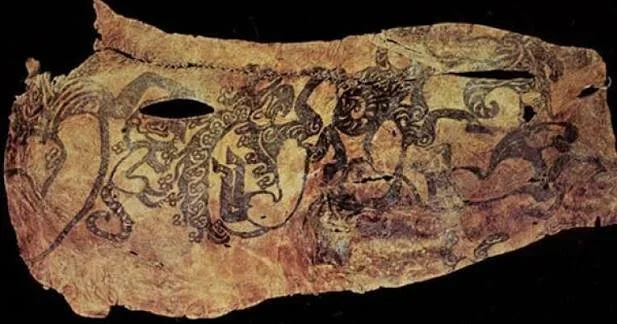
Folk artifacts may preserve repeated geometric designs, spirals, crosses, floral patterns, animal figures, and other motifs. Such patterns can be visually compared with ancient decorative traditions.
But visual similarity alone does not prove direct descent. Geometric patterns are widespread and can emerge independently in different cultures.
A convincing investigation would identify the artifact's date, place of manufacture, materials, ownership history, and documented cultural setting. Researchers would then compare the motif with securely dated archaeological examples.
The Problem of Continuity
Cultural practices sometimes survive through long periods, but continuity must be demonstrated rather than assumed. A modern decorative motif might reflect a medieval tradition, a recent artistic revival, an imported design, or an independent local invention.
Body art is particularly difficult to reconstruct when no preserved skin, contemporary illustration, or reliable description exists.
If a folk artifact is said to represent a tattoo, researchers must also establish whether it was actually intended to depict body decoration rather than textile design, embroidery, painting, or another artistic form.
Scientific and Historical Research
A systematic study could combine museum catalogues, archaeological excavation reports, regional ethnography, oral history, and technical examination of artifacts.
Microscopic analysis may reveal how a design was made. Pigment analysis can identify materials, while radiocarbon dating may sometimes establish the age of suitable organic components.
These methods cannot independently establish an object's ethnic identity, but they can clarify its chronology and manufacturing history.
Cultural Heritage and Responsible Interpretation
Claims of ancient continuity can be meaningful to local communities, particularly when they help people explore their relationship with the past. However, presenting uncertain connections as proven history can obscure the region's genuine cultural diversity.
Responsible interpretation should explain both the possibilities and the limitations of the evidence.
It should also recognize that modern communities have their own cultural identities, which should not be reduced to a single ancient label.
Conclusion
The study of possible Illyrian tattoo motifs in Corfu's folk artifacts offers a way to explore body decoration, visual culture, and the movement of traditions across the Adriatic. Ancient descriptions of tattooing provide a starting point, but they do not establish that specific Corfiot designs descend from Illyrian practices. Careful analysis of artifacts, historical records, and regional traditions is essential to distinguish genuine cultural continuity from resemblance and later reinterpretation.