Introduction
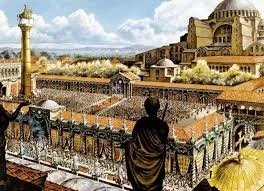
Thessaloniki has occupied a strategic position in southeastern Europe for more than two thousand years. Founded in the Hellenistic period, it later became an important Roman city and one of the major urban centers of the Byzantine Empire.
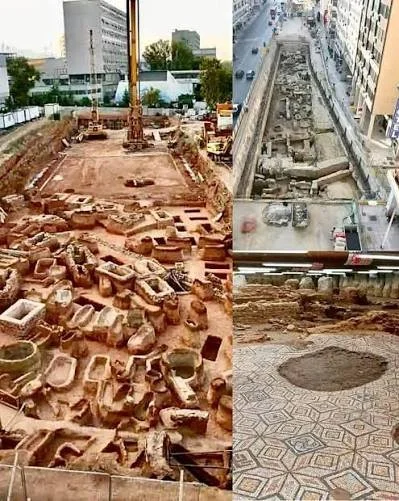
Its streets and buildings conceal archaeological remains from successive periods of settlement. These remains include defensive structures, domestic buildings, public spaces, religious sites, roads, and infrastructure.
The possibility of Mithraic traces beneath modern Thessaloniki is particularly interesting because the worship of Mithras became widespread in parts of the Roman Empire. However, the presence of Roman-era archaeology beneath a modern city does not automatically indicate a Mithraeum, or sanctuary dedicated to Mithras.
The Cult of Mithras
The Roman cult of Mithras, often called Roman Mithraism, became prominent during the first several centuries CE.
Its followers participated in a mystery religion that used distinctive ritual spaces and imagery. The god Mithras was commonly represented killing a bull in a scene known as the tauroctony, which became one of the cult's most recognizable images.
Mithraic sanctuaries have been discovered in various parts of the Roman Empire, including areas associated with military settlements, commercial centers, and urban communities.
The cult's exact theology remains difficult to reconstruct because most evidence comes from archaeology and iconography rather than extensive written explanations by its followers.
Mithraea and Their Architecture
Mithraea often took the form of enclosed rooms designed to resemble a cave. Many contained benches along the sides, allowing participants to gather around a central ritual space.
A sanctuary might include a relief or painting depicting Mithras and the bull, as well as images of associated figures such as Cautes and Cautopates.
These architectural and artistic features help archaeologists identify Mithraic sites.
A subterranean chamber alone, however, is not sufficient evidence. Cellars, storage spaces, cisterns, and other Roman structures can resemble underground sanctuaries in their general appearance.
Thessaloniki in the Roman Period
Roman Thessaloniki was an important center along the Via Egnatia, a major route connecting the Adriatic region with the eastern Balkans and Constantinople's wider approaches.
The city supported commerce, administration, transportation, and military activity. Its population included people with different regional backgrounds and religious traditions.
Roman urban life created conditions in which several religious practices could coexist. Traditional Greek cults, Roman religious institutions, Jewish communities, and eventually Christian groups all contributed to the city's changing religious environment.
The presence of a diverse population makes the investigation of lesser-known cults worthwhile, but it does not establish that a Mithraeum existed at a particular location.
How Archaeologists Identify Mithraic Remains
A convincing identification would normally require multiple lines of evidence.
These might include:
an inscription associated with Mithras
a recognizable tauroctony relief
architectural features consistent with a Mithraeum
ritual objects from a secure archaeological context
a documented excavation report
The location and date of the finds are equally important.
Objects discovered outside their original context may have been moved or reused, making their interpretation more difficult.
Underground Archaeology in a Modern City
Urban archaeology is challenging because modern construction can damage, cover, or incorporate ancient structures.
Excavations during building projects may reveal ancient walls, roads, wells, and other remains. Archaeologists must record these discoveries before construction changes the site.
Ground-penetrating radar and other remote-sensing methods can help identify buried features, although results must be verified through appropriate archaeological investigation.
The city's long history also means that structures from different periods can overlap in the same location.
Mithraism and Religious Diversity
Roman Mithraism was one of several religious traditions that developed or spread across the empire.
Its rituals are often associated with small groups of initiates, although the exact social composition of Mithraic communities varied.
Some sanctuaries were found near military installations, but Mithraism was not exclusively a soldiers' religion. Its followers could come from different occupations and social backgrounds.
Understanding the cult requires avoiding simplified assumptions about its membership.
Conservation and Public Interpretation
Discoveries beneath Thessaloniki's streets can provide important information about the city's Roman past.
However, sensational claims about secret tunnels or hidden temples can overshadow the careful work required to identify archaeological remains.
Responsible interpretation should explain what was found, where it was discovered, how it was dated, and which conclusions remain uncertain.
Conclusion
The possibility of Mithraic remains beneath Thessaloniki highlights the city's rich Roman religious landscape and the challenges of investigating archaeology beneath a modern urban environment. Mithraic sanctuaries are recognizable through specific architectural and iconographic features, but individual discoveries must be verified through excavation records and contextual evidence. By distinguishing established finds from speculative underground stories, researchers can contribute to a more accurate understanding of religious diversity in Roman Thessaloniki.