Introduction
Desfina is a settlement in Phocis, central Greece, located within a landscape shaped by mountains, rocky slopes, agricultural terraces, and proximity to the Gulf of Corinth. Its wider region contains an exceptionally rich archaeological history, including prehistoric settlements, ancient sanctuaries, and routes connecting inland communities with coastal areas.
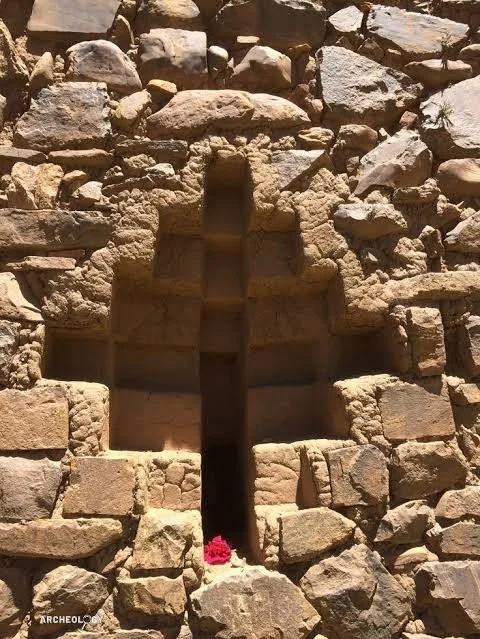
The title Geometric Idols in Desfina Cliff Niches suggests the possibility of discovering small figurines or religious objects placed within natural rock openings during the Greek Geometric period.
Although ancient communities sometimes used caves, rock shelters, and natural formations for religious activities, a specific collection of Geometric idols from cliff niches near Desfina should not be treated as a confirmed archaeological discovery without excavation records.
The Geometric Period
The Greek Geometric period is generally dated from approximately 900 to 700 BCE.
It is named after the distinctive geometric patterns that appeared on pottery, including concentric circles, meanders, triangles, and repeated linear designs.
During this period, communities developed increasingly complex social and political structures.
Sanctuaries, cemeteries, settlements, and craft traditions provide evidence of these changes.
Small figurines and votive objects also became part of the archaeological record.
Figurines and Religious Offerings
Ancient Greek communities dedicated objects to deities for different reasons.
Offerings could express gratitude, request protection, commemorate an event, or fulfill a religious obligation.
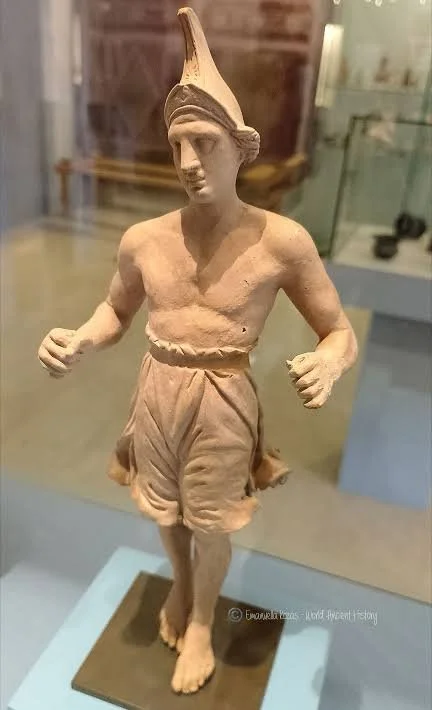
Figurines might represent humans, animals, or symbolic forms.
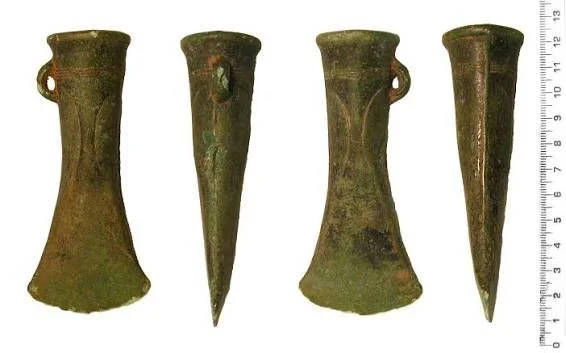
They could be made from terracotta, bronze, or other materials.
Their archaeological significance depends heavily on where they were deposited and what other objects were found nearby.
Natural Rock Niches as Sacred Spaces
Natural rock openings have attracted religious activity in many ancient societies.
A small niche could serve as a location for placing offerings, particularly when the surrounding landscape was associated with a deity or local tradition.
Such spaces might be used repeatedly over generations.
However, a natural opening containing an object is not automatically a shrine.
Researchers must examine the arrangement of finds, evidence of repeated activity, and the relationship between the location and nearby settlements.
Phocis and the Sacred Landscape
Phocis was home to important religious and political centers.
The nearby sanctuary of Delphi became one of the most influential religious destinations in the ancient Greek world.
Smaller local cult sites also existed throughout central Greece.
The relationship between major sanctuaries and local religious practices is an important subject in archaeological research.
A possible shrine near Desfina would need to be studied within this wider religious geography.
Identifying Geometric Objects
Archaeologists identify Geometric-period objects through several types of evidence.
These include:
Pottery style and decoration
Figurine manufacturing techniques
Metal composition
Stratigraphic context
Comparisons with securely dated artifacts
A figurine's appearance alone is not always enough to establish its date.
Objects may remain in use for long periods or be redeposited in later contexts.
What Cliff Niches Could Reveal
If repeated votive deposits were identified in a natural rock niche, they might provide evidence of localized religious activity.
Researchers could investigate whether the offerings were associated with a particular deity, a nearby settlement, a route through the landscape, or a natural feature considered sacred.
Animal figurines might reflect pastoral life or symbolic associations.
Human figurines could represent worshippers, deities, or other ritual concepts, depending on their form and context.
Archaeological Survey Methods
Rock shelters and cliff niches can be investigated through careful surface survey, mapping, photography, and non-invasive documentation.
Three-dimensional scanning can record the shape of a niche and its relationship with the surrounding rock.
Where excavation is justified, archaeologists must document the position of every object and the layers in which it appears.
This is especially important because small artifacts can easily be displaced by erosion, animals, or later human activity.
Conservation Challenges
Rock niches are exposed to weathering, moisture, biological growth, and temperature changes.
Small terracotta objects can deteriorate if they remain exposed.
Metal figurines may corrode.
Protecting such sites requires appropriate documentation and, where necessary, controlled access.
Unsupervised collecting can destroy the archaeological context even when the objects themselves survive.
Conclusion
Geometric Idols in Desfina Cliff Niches present an intriguing possibility for investigating local religious practices in central Greece during the early first millennium BCE.
The Geometric period is well documented, and the use of figurines and votive offerings in ancient Greek religious life is established.
However, the specific presence of idols in cliff niches near Desfina requires direct archaeological evidence.
If such a deposit were securely identified, it could help researchers understand how small sacred places formed part of the wider religious landscape of ancient Phocis.