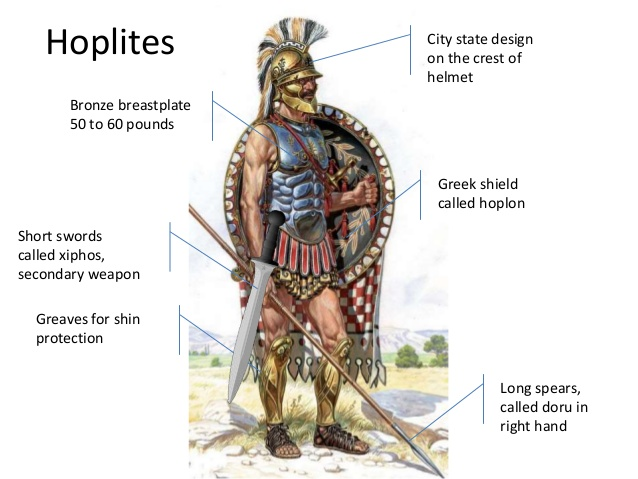
The Greek hoplite was the backbone of ancient Greek armies from the late 8th century BCE through the Hellenistic period. These citizen-soldiers were defined not by state-issued uniforms, but by their heavy armor, their unique long spears, and the close-knit phalanx formation in which they fought.
1. The Hoplite Armor (Panoply)
The complete set of armor worn by a hoplite was known as the panoply (meaning "all the armor"). It was heavy, expensive, and designed to protect the soldier in the brutal push-and-shove of melee combat.
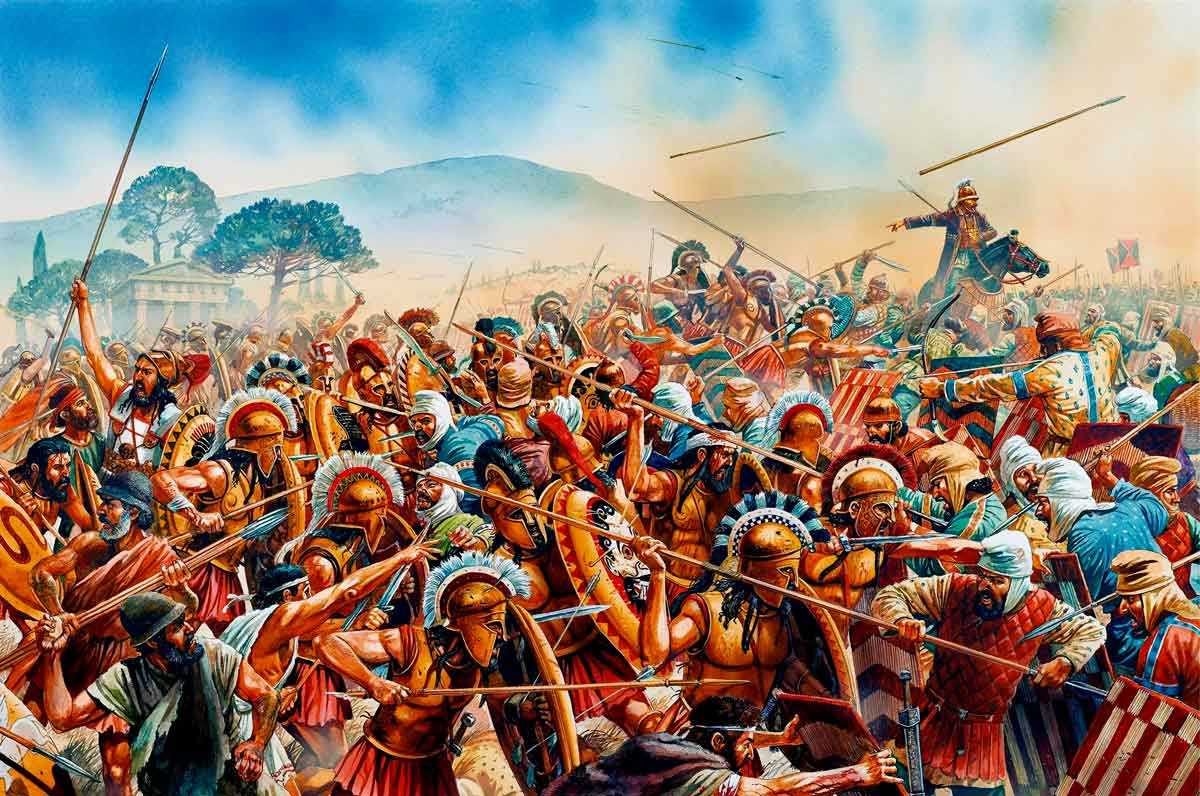
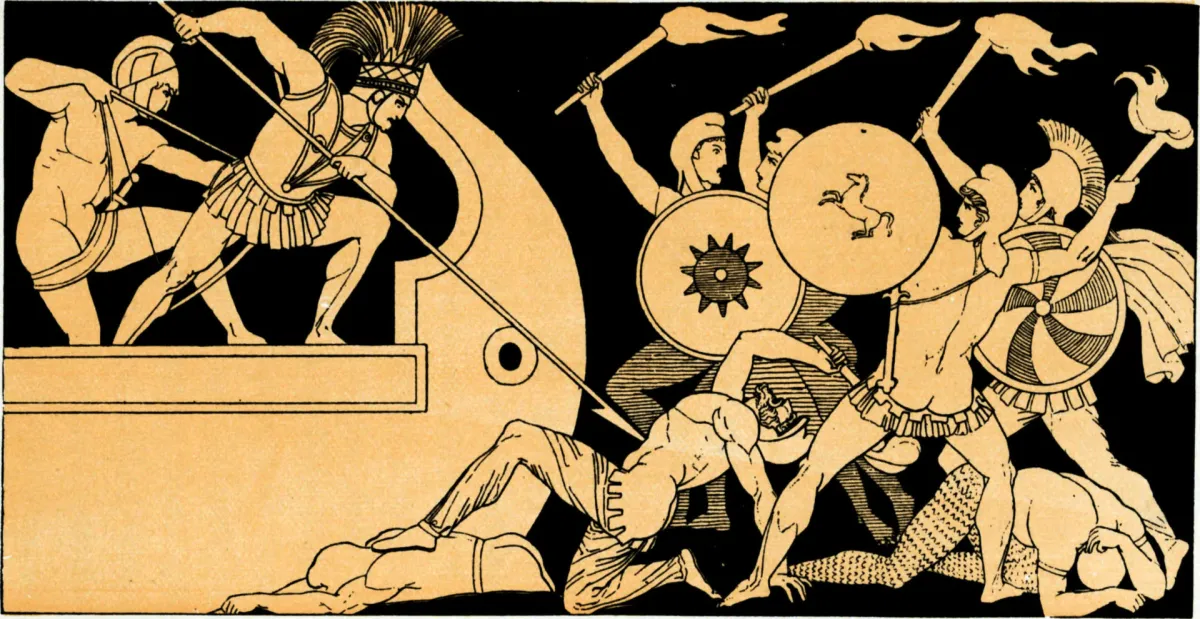
The Aspis (or Hoplon): The defining piece of hoplite equipment. It was a large, heavy, circular shield made of wood and faced with bronze. It weighed up to 16 pounds and was held using a double-grip system (the porpax and the antilabe), which allowed the soldier to rest the shield's weight on his shoulder and push into the man in front of him.
The Kranos (Helmet): Usually made of bronze. The most famous is the Corinthian helmet, which covered the entire head and neck with narrow slits for the eyes and mouth. Over time, lighter designs like the Pilos or Chalcidian helmets were adopted to improve hearing and visibility.
The Thorax (Cuirass): The chest armor. Early hoplites wore a molded bronze bell cuirass. Later, many hoplites transitioned to the linothorax, a lighter, cooler, and highly protective vest made of hardened, glued layers of linen.
The Knemides (Greaves): Molded bronze shin guards that protected the lower legs from strikes.
2. The Weapons
Hoplite weapons were designed for close-quarters infantry combat and mutual support within the phalanx.
The Dory (Spear): The primary offensive weapon. It was an eight- to nine-foot-long wooden shaft tipped with a large iron spearhead and a bronze butt-spike (sauroter). The butt-spike was used for balance, as a secondary weapon if the spearhead broke, or to finish off fallen enemies.
The Xiphos (Secondary Sword): A short, leaf-shaped, double-edged sword used for thrusting and cutting when the phalanx broke formation or in close grappling.
The Kopis (Alternative Sword): A heavier, single-edged curved blade that was favored by some soldiers for its chopping power.
3. Training and Combat Role
The term "hoplite" is derived from their equipment (hopla), emphasizing that the soldier and his armor were one cohesive fighting unit.
The Citizen-Soldier: Hoplites were not full-time, professional soldiers for most of Greek history (with the notable exception of the Spartans). They were farmers, craftsmen, and merchants who supplied their own equipment and took up arms to defend their polis (city-state).
The Phalanx Formation: Training focused primarily on discipline and maintaining formation. Soldiers stood shoulder-to-shoulder, presenting a wall of overlapping shields and spear points. The soldier to the right protected his neighbor with his shield, making the unit incredibly interdependent.
The Agoge (Spartan Training): In Sparta, training was a lifetime commitment. Spartan hoplites trained in the state-run agoge from childhood, learning rigorous discipline, physical endurance, and tactical maneuvers.
4. The Dynamics of Battle
The Othismos: The climactic clash of phalanxes, known as the othismos (push). Hoplites would press their shields into the backs of the men in front of them to break the enemy line.
Duration: Battles were generally short and decisive, often ending once one side's formation collapsed and the soldiers broke into a retreat.