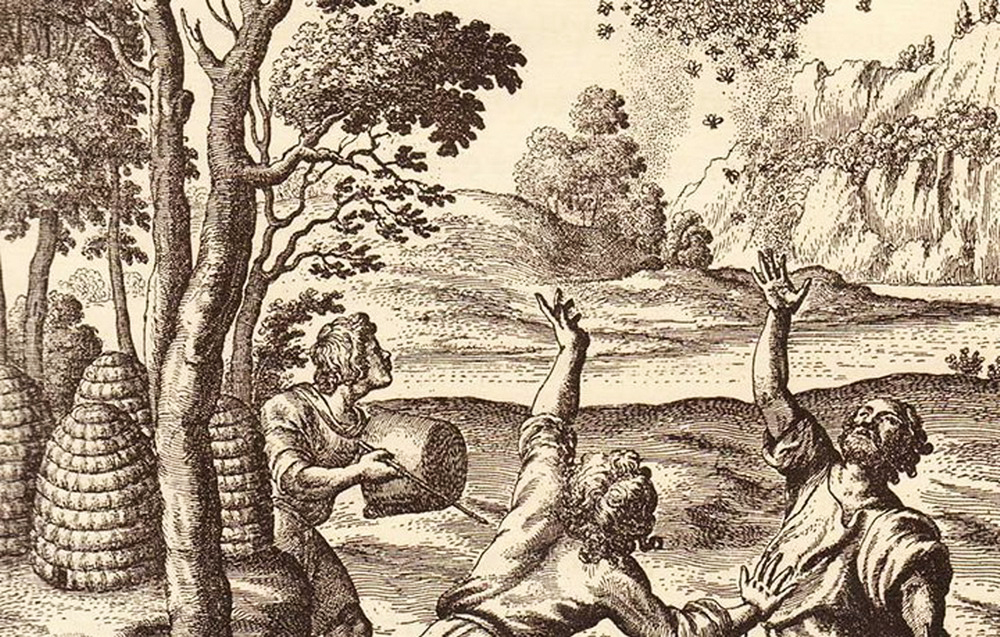
In a world completely devoid of sugar cane or beet sugar processing, honey (meli) was the sole concentrated sweetening agent available to the ancient Greek world, transforming beekeeping (melissourgia) into a vital and highly protected agricultural industry.
The Food of the Gods: Honey was considered a divine substance, viewed as dew that fell from the sky onto flowers. It was used to sweeten wines, preserve fruits, bake sacred cakes, and create melikraton (a holy mixture of milk and honey poured out during chthonic religious sacrifices).
Advanced Ceramic Hives: Archaeological excavations have uncovered sophisticated ceramic beehives dating back to the 5th century BCE. These horizontal, extension-style clay cylinders featured intentionally roughened interior surfaces to help bees attach their combs, alongside adjustable extension rings and removable lids that allowed beekeepers to harvest honey without destroying the entire hive structure.
Solon's Bee Laws: Beekeeping was so intensely competitive that early lawmakers had to step in. In the 6th century BCE, the Athenian legislator Solon enacted strict property laws stating that a new apiary (bee yard) could not be placed within 300 feet of an existing one, preventing neighbor disputes over foraging rights and hive swarms.