Olive oil (elaion) was so vital to the ancient Greek economy and lifestyle that Homer famously dubbed it "liquid gold." Beyond its role in diet and lighting, it was the absolute foundation of ancient dermatology and personal cosmetics.
Natural Skin Barrier: Lacking synthetic soaps, petroleum jellies, or complex chemical moisturizers, Greeks applied pure olive oil directly to their skin after bathing to seal in moisture and protect themselves against the harsh Mediterranean sun and dry winds.
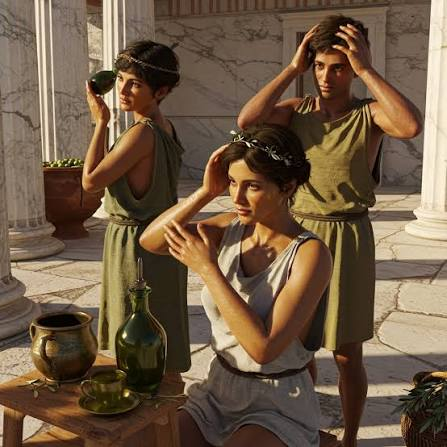
Infused Perfumery: Plain olive oil served as the base carrier oil for luxury perfumes. Perfumers (myrepsoi) gently simmered olive oil alongside imported aromatic botanicals like myrrh, frankincense, iris root, rose petals, and cinnamon. These rich, scented oils were stored in specialized ceramic vessels called alabastra and applied lavishly to the skin, hair, and clothing by both elite men and women.
Anti-Aging and Healing: Aristotle wrote extensively about the medicinal and therapeutic properties of olive oil. It was rubbed into the scalp to prevent hair loss, massaged into the face to smooth out wrinkles, and applied to open wounds or skin irritations as a natural soothing antibacterial ointment.