The Trojan Palladium is one of the most fascinating sacred objects in Greek mythology.
According to ancient tradition, the Palladium was a sacred image of the goddess Athena that possessed extraordinary protective power. As long as the statue remained within Troy, the city was believed to be protected from conquest.
This belief gave the object enormous political, religious, and symbolic importance.
The Palladium became so closely associated with Troy that its theft was considered essential to the Greeks' eventual victory during the Trojan War. The story therefore introduces a remarkable concept: a city's survival could depend upon the possession of a single sacred object.
The traditions surrounding the Palladium are complicated because they differ significantly between ancient authors. Some accounts say the statue fell from heaven; others emphasize its divine origin through a story involving Athena and Pallas. Still others connect its eventual fate to Rome and the sacred traditions of Roman state religion.
What Was the Palladium?
The Palladium was a sacred wooden image, traditionally associated with Athena.
The Greek term Palladion became associated with the statue because of its connection to Pallas, a name associated with Athena.
The object was believed to possess supernatural power.
Its presence protected Troy.
Its removal threatened the city's survival.
The Palladium therefore functioned not merely as a religious image but as a kind of divine guarantee of political security.
The Myth of Its Arrival in Troy
One tradition states that the Palladium fell from heaven.
According to a famous account, Zeus caused the sacred image to fall into Troy.
King Ilus, one of the founders of the Trojan royal line, discovered it.
The statue then became a sacred possession of the city.
This heavenly origin gave the Palladium extraordinary authority.
If the gods themselves had delivered the object to Troy, then possessing it could be interpreted as evidence of divine favor.
Athena and Pallas
Another mythological tradition connects the name Palladium with a tragic story involving Athena and a companion named Pallas.
In one tradition, Pallas was the daughter of Triton and a companion of Athena.
During a mock battle, Athena accidentally killed Pallas.
She was deeply distressed by the death.
To preserve the memory of her companion, Athena created an image of Pallas.
This image became associated with the Palladium.
The story explains the name while also connecting the object with themes of grief, memory, and divine identity.
The Palladium and the Security of Troy
The most important feature of the Palladium was its protective function.
Ancient tradition held that Troy could not be captured while the Palladium remained inside the city.
This transformed the Trojan War from a conventional military conflict into a struggle over sacred legitimacy.
The Greeks could not simply defeat Troy's army.
They needed to remove the divine protection.
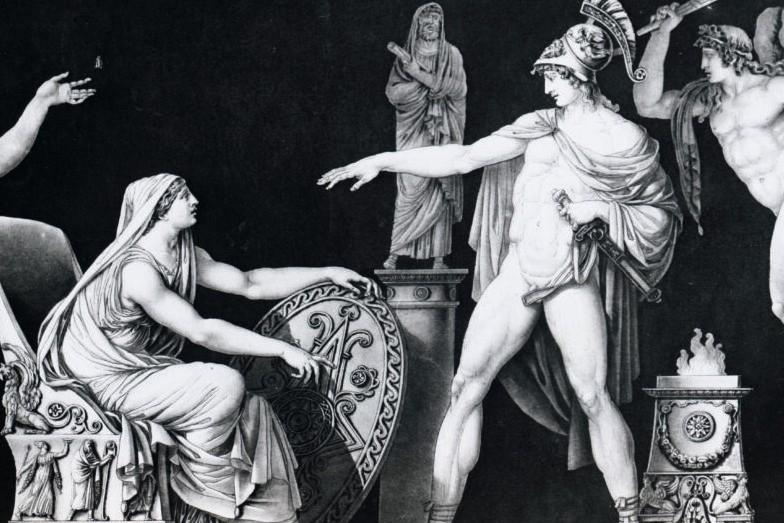
This explains why Odysseus and Diomedes undertook a dangerous mission to steal the statue.
The Theft of the Palladium
The story of the theft appears in later traditions concerning the Trojan War.
Odysseus and Diomedes infiltrated Troy.
The two heroes obtained the Palladium and escaped with it.
The episode became one of the great examples of Greek cunning.
Unlike Achilles, who represents overwhelming martial power, Odysseus represents intelligence and deception.
The theft therefore reinforces the distinction between two forms of heroism:
Achilles defeats enemies through strength.
Odysseus defeats obstacles through strategy.
Diomedes and Odysseus
The partnership between Diomedes and Odysseus is particularly significant.
Both were associated with intelligence and military effectiveness.
Their mission required secrecy rather than open combat.
Entering Troy under cover of darkness and removing a sacred object required extraordinary risk.
The mission also illustrates how Greek mythology frequently treats warfare as a combination of:
physical force,
intelligence,
espionage,
deception,
and religious symbolism.
Why the Palladium Mattered
The Palladium was important because ancient societies often believed that cities possessed sacred relationships with their gods.
A city was not simply a collection of buildings.
It had:
temples,
sacred images,
ancestral traditions,
rituals,
patron deities,
and divine protections.
Removing a sacred image could therefore be equivalent to attacking the spiritual foundation of the city.
The Palladium embodied Troy's relationship with Athena.
The Trojan Horse and the Palladium
The Palladium is sometimes confused with the Trojan Horse.
They are completely different elements.
The Trojan Horse was a military deception involving a wooden horse used by Greek warriors to enter Troy.
The Palladium was a sacred statue believed to protect the city.
However, the two stories are connected in the broader tradition because both involve deception and the eventual fall of Troy.
The Palladium represents the city's spiritual protection.
The Trojan Horse represents the Greek method of infiltrating the city.
Did the Greeks Need to Steal It?
Ancient traditions vary concerning the precise prophecy surrounding the Palladium.
Some accounts state that Troy could not fall while the statue remained within its walls.
Others connect its theft to a broader series of prophecies concerning the conditions necessary for Greek victory.
This variation is important.
The idea that the Palladium was absolutely required for Troy's destruction became particularly prominent in later traditions.
The story should therefore not be presented as though Homer himself gives a single definitive account of the theft.
The Palladium and Rome
Perhaps the most remarkable development in the Palladium tradition is its connection to Rome.
According to Roman tradition, the Palladium eventually became one of the sacred objects brought to Italy by Aeneas, the Trojan hero who escaped the destruction of Troy.
The object was eventually associated with Roman state religion.
Roman writers connected it with the Temple of Vesta, where sacred objects of extraordinary importance were kept.
The Palladium therefore undergoes a remarkable transformation:
Troy → Aeneas → Rome
Its journey becomes a symbolic bridge between Trojan ancestry and Roman identity.
The Vestal Virgins
The Palladium was associated with the Vestal Virgins, priestesses responsible for maintaining the sacred fire of Vesta.
Roman tradition regarded the safety of the sacred objects and fire as deeply connected with the welfare of the Roman state.
The Palladium's presence in this religious context demonstrates how the object evolved from a Trojan protective image into a symbol of Roman continuity.
The Romans could therefore present themselves as inheritors of Troy's sacred legacy.
A Symbol of Political Legitimacy
The Palladium had a deeper political meaning.
Possessing the sacred object could be interpreted as evidence of divine legitimacy.
Troy possessed it.
Later, Rome claimed to possess it.
This created a symbolic connection between two civilizations.
Roman writers could portray Rome not simply as a new power but as the successor to the ancient Trojan world.
The Palladium therefore helped support a larger myth of Roman origins.
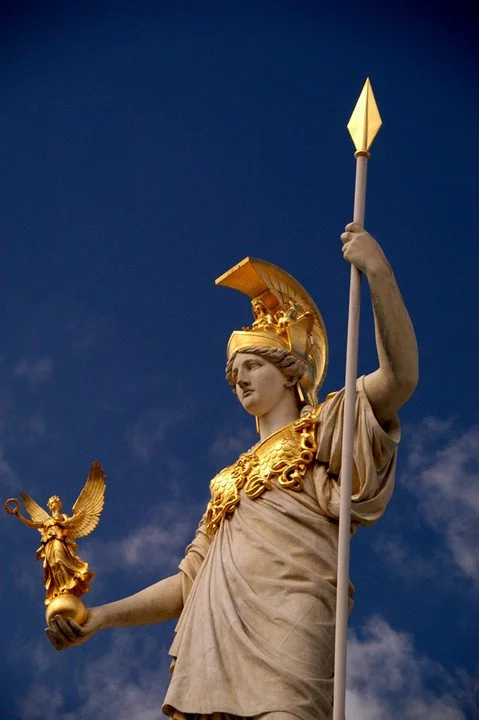
The Palladium and Athena
The statue's association with Athena is particularly meaningful.
Athena was the goddess of:
wisdom,
strategic warfare,
craftsmanship,
cities,
and civic order.
Her association with the Palladium therefore makes the statue especially appropriate as a symbol of city protection.
Athena was not merely a goddess of combat.
She represented organized, intelligent civilization.
A statue of Athena protecting a city therefore symbolized the belief that divine wisdom and civic order were essential to political survival.
The Sacred Object as a Source of Power
The Palladium belongs to a broader mythological category of sacred objects possessing supernatural significance.
Greek and Roman mythology contains many examples of objects that function as links between gods and humans.
Such objects could include:
weapons,
statues,
armor,
clothing,
stones,
and sacred relics.
The Palladium is particularly important because its power is collective rather than personal.
It protects an entire city.
Its sacredness therefore becomes political.
Troy's Dependence on the Palladium
The idea that Troy's survival depended upon the Palladium reveals something important about ancient ideas of destiny.
The city's walls were enormous.
Its warriors were powerful.
Its kings were wealthy.
Yet mythology suggests that all of these defenses could be defeated if the divine protection were removed.
This creates a hierarchy of power:
Human strength protects the city physically.
Divine favor protects it spiritually.
Without the second, the first may ultimately fail.
The Theft as a Turning Point
The theft of the Palladium represents a turning point in the Trojan War.
The Greeks have spent years trying to defeat Troy through conventional warfare.
Yet the city's divine protection remains.
The successful theft demonstrates that the Greeks have finally discovered how to bypass Troy's supernatural defenses.
The event therefore symbolizes the transition from prolonged conflict to inevitable destruction.
Mythological Variations
The Palladium tradition is particularly complex because different authors provide different accounts of:
its origin,
its appearance,
its location,
its powers,
who stole it,
who possessed it afterward,
and whether the object in Rome was the original Palladium.
These differences should not be treated as errors.
Greek and Roman mythology developed over centuries.
Different communities adapted myths to support their own religious and political identities.
The Roman Palladium tradition, for example, became particularly important because it supported Rome's claim to Trojan ancestry.
The Palladium and the Concept of Sacred Security
At its deepest level, the Palladium represents a simple but powerful concept:
A society's survival depends on more than physical strength.
Troy had powerful walls.
It had skilled warriors.
It had princes and kings.
Yet the mythology emphasizes that sacred legitimacy could determine the outcome.
This idea appears in many ancient cultures.
A city protected by its deity was more than a political settlement.
It was a sacred community.
The Legacy of the Trojan Palladium
The Palladium remains important because it connects mythology, religion, warfare, and political identity.
Its story begins as a divine statue associated with Athena.
It becomes the protective symbol of Troy.
Its theft becomes part of the strategy that leads to Troy's destruction.
Then, through the traditions surrounding Aeneas, it becomes associated with Rome.
The object therefore travels through one of the most important mythological genealogies of the ancient Mediterranean.
Its story ultimately illustrates the power of sacred symbols.
The Palladium was not valuable because it was made from precious material.
It was valuable because people believed that the fate of an entire civilization was tied to it.
In the mythological imagination, the fall of Troy therefore required more than defeating its soldiers.
The Greeks first had to remove the city's divine protection.
And once the Palladium was taken, the legendary city of Troy was no longer protected by the power that had guarded it for generations.