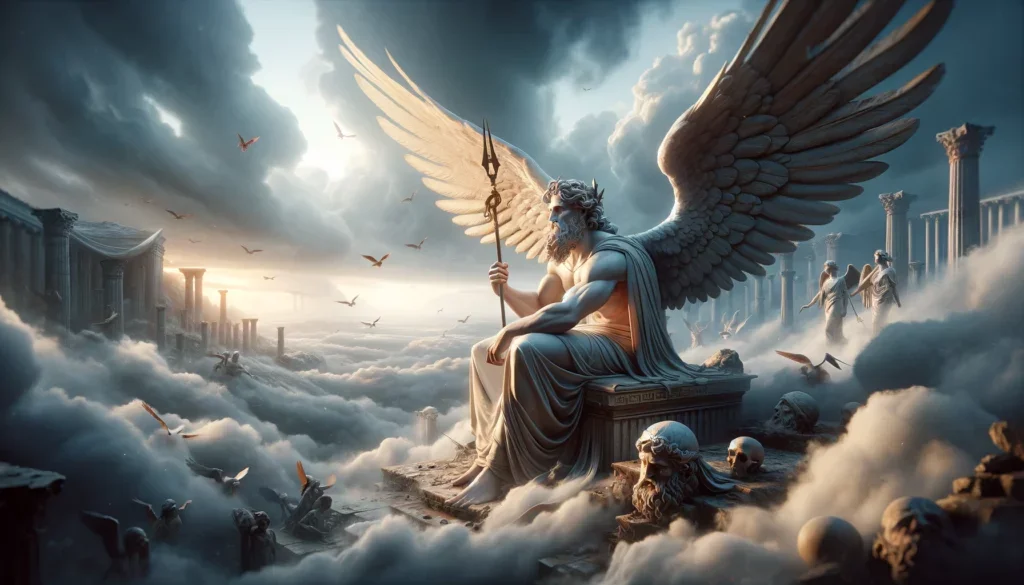
Zelus is one of the more abstract and intellectually interesting figures in Greek mythology.
Unlike Zeus, Apollo, or Athena, Zelus does not belong to the Olympian gods in the conventional sense. Instead, he is a divine personification of zeal, rivalry, competition, and eager dedication.
His mythology is especially valuable because it demonstrates how ancient Greeks could transform abstract human emotions and social forces into divine personalities.
Zelus is traditionally identified as a son of Pallas, a Titan associated with warfare, and Styx, the divine personification of the sacred river of the Underworld.
His siblings include:
Nike — Victory
Kratos — Strength or Power
Bia — Force
This family group is extremely significant because these concepts work together within the mythology of divine authority.
Who Was Zelus?
The Greek word zelos can refer to zeal, eagerness, rivalry, or passionate competition.
It does not correspond perfectly to the modern English word "jealousy."
That distinction is important.
Modern English uses "zeal" and "jealousy" differently, but the ancient concept could encompass intense competitive energy.
Zelus therefore represents the force that drives someone to excel, compete, or surpass another.
Zelus and Styx
Hesiod's Theogony identifies Styx as the mother of Zelus and his siblings.
Styx brought her children to Zeus during the conflict between Zeus and the Titans.
Their loyalty to Zeus earned them positions of honor.
The children of Styx therefore became closely associated with the power of the Olympian order.
This genealogy is meaningful.
Zelus is not an isolated emotion.
He belongs to a family of forces that support victory and authority.
Zelus and Nike
The relationship between Zelus and Nike is particularly important.
Nike represents victory.
Zelus represents the competitive drive that seeks victory.
One can therefore imagine the conceptual sequence:
Zelus → competition → effort → victory → Nike
Without rivalry, there may be no competition.
Without competition, victory loses some of its meaning.
The mythology therefore places these abstract concepts together as siblings.
Zelus and Kratos
Kratos represents strength or power.
Zelus represents competitive ambition.
Together they create another conceptual relationship:
Ambition + Power = ability to compete
Greek mythology frequently explores the relationship between power and motivation.
Strength alone does not determine who wins.
The desire to succeed also matters.
Zelus and Bia
Bia represents force or physical compulsion.
Zelus is more psychological.
Bia can force.
Zelus motivates.
Their combination reflects two different forms of power:
external force
and
internal motivation.
Zelus and Zeus
The children of Styx became associated with Zeus because they supported him during the Titanomachy.
Their loyalty represents the forces upon which Zeus' authority depends.
Victory, power, force, and competitive determination all contribute to the establishment of divine sovereignty.
Zelus therefore becomes part of the ideological structure supporting Zeus.
Rivalry in Greek Culture
Competition was extremely important in ancient Greek society.
Athletic contests, musical competitions, poetry, political debate, and warfare all involved rivalry.
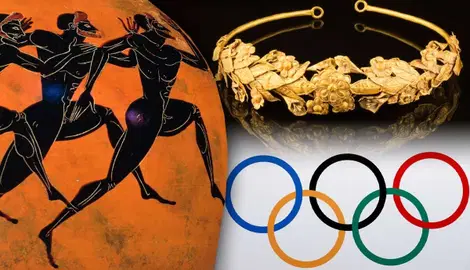
The Olympic Games are perhaps the most famous example.
Athletes competed not merely to participate but to win.
The desire for timē—honor and recognition—was central to Greek heroic culture.
Zelus can therefore be understood as a divine embodiment of a force deeply embedded in Greek society.
Rivalry and Heroism
Greek heroes frequently compete with one another.
Achilles seeks glory.
Ajax competes for recognition.
Heracles performs extraordinary feats.
Perseus confronts monsters.
Jason leads an expedition to obtain the Golden Fleece.
The heroic world is filled with contests.
Zelus represents the psychological energy behind that competitive culture.
Positive and Negative Rivalry
Rivalry is not inherently destructive.
Healthy competition can encourage:
excellence,
innovation,
courage,
discipline,
and achievement.
But rivalry can also produce:
envy,
hostility,
resentment,
arrogance,
and violence.
Greek mythology repeatedly demonstrates both sides.
Achilles' desire for honor contributes to his greatness but also causes conflict with Agamemnon.
The gods themselves compete for influence.
Heroes seek glory.
Zelus therefore embodies a force that can motivate greatness while simultaneously creating conflict.
Zelus and the Modern Concept of Jealousy
It is tempting to translate Zelus simply as "jealousy."
However, this can be misleading.
The ancient concept is broader.
Zelus is associated with passionate competition and zeal.
Jealousy may arise from fear of losing something to another person.
Zelus is more fundamentally concerned with the desire to surpass or equal another.
The distinction is subtle but important for academically accurate writing.
Zelus as a Psychological Concept
The personification of Zelus reflects ancient Greek interest in the causes of human behavior.
Rather than simply saying:
"People compete because they want to win."
Greek mythology could say:
"Zelus is present."
This transforms an invisible psychological force into a divine character.
It gives human motivation a narrative identity.
Zelus and the Pursuit of Excellence
The positive interpretation of Zelus is particularly relevant to Greek ideals of excellence.
The Greeks admired aretē, often translated as excellence or virtue.
Heroes were expected to demonstrate exceptional ability.
Competition provided a mechanism for demonstrating that excellence.
Zelus therefore represents the desire to prove one's worth.
The Legacy of Zelus
Zelus is not as famous as Nike or Zeus, but his conceptual importance is considerable.
He demonstrates how Greek mythology could personify abstract ideas that modern people might describe through psychology or sociology.
Competition, motivation, victory, force, and power become divine personalities.
The story of Zelus therefore reveals an important characteristic of Greek thought:
human emotions were not merely internal experiences; they could be imagined as cosmic forces.
Zelus represents the competitive impulse that pushes individuals toward achievement—but also warns that rivalry can become destructive when ambition loses its limits.