Festivals were among the most important events in ancient Greek religious and civic life.
Unlike the modern calendar, which separates religious holidays from ordinary days, Greek calendars were deeply connected to religious observance.
Each city-state maintained its own calendar, and months were frequently organized around festivals honoring particular gods.
No Single Greek Calendar
Ancient Greece did not use one universal calendar.
Athens, Sparta, Corinth, Thebes, and other communities could have different:
month names;
festival dates;
intercalary systems;
and religious schedules.
This means that speaking about “the Greek calendar” can be misleading.
The Athenian Calendar
The Athenian calendar was one of the best documented.
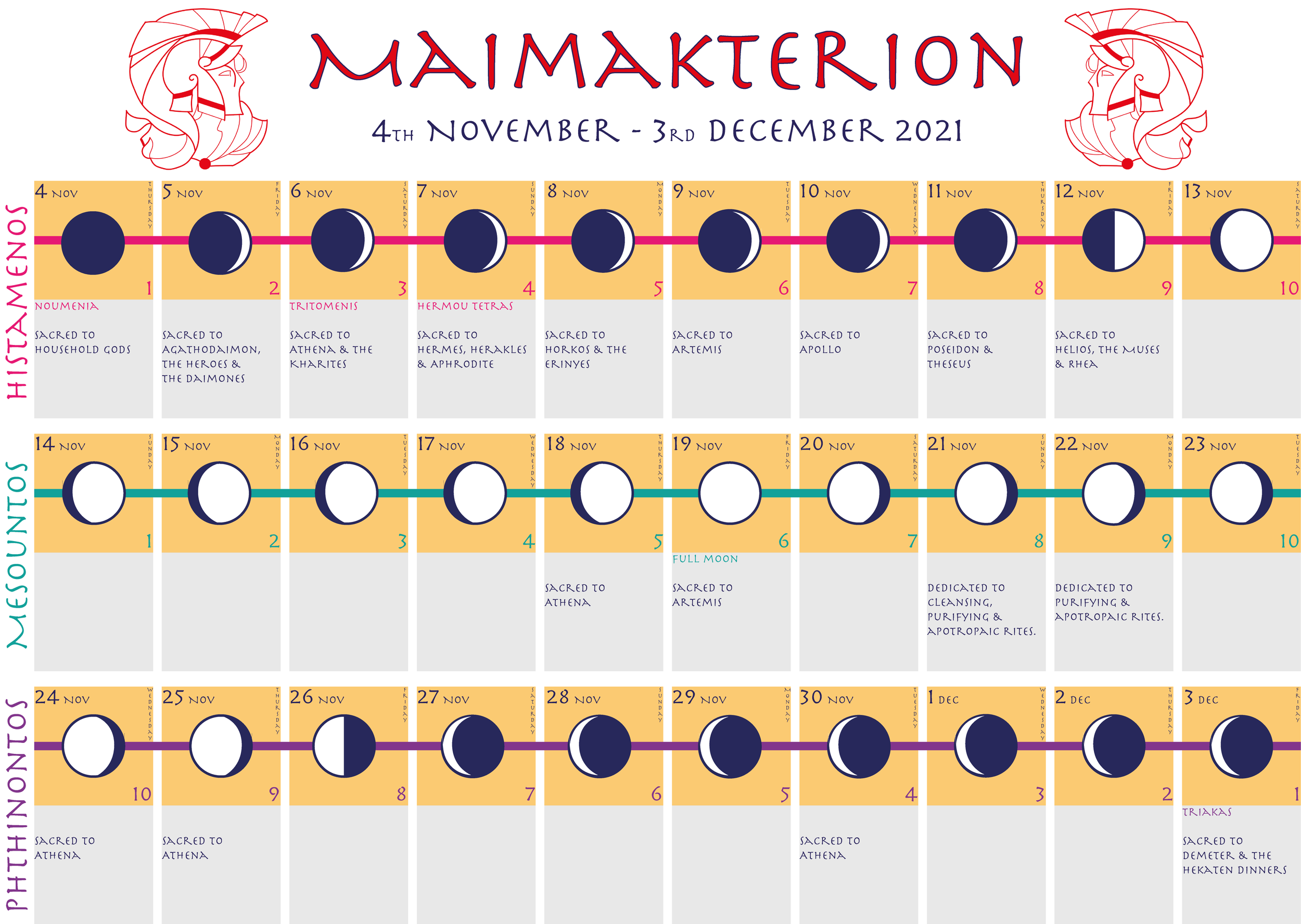
It was primarily lunar.
Months generally followed the phases of the moon.
Because the lunar year is shorter than the solar year, additional months sometimes had to be inserted.
Religious and Civic Calendars
The calendar had practical purposes, but religious observance was central.
Festivals determined when communities gathered for:
sacrifices;
processions;
competitions;
theatrical performances;
feasts;
and religious ceremonies.
Panathenaia
One of Athens' most important festivals was the Panathenaia, dedicated to Athena.
The festival included religious processions and competitions.
The Great Panathenaia occurred every four years and was especially elaborate.
Dionysia
The Dionysia honored Dionysus.
The festival became closely associated with theatrical performance.
Tragedies and comedies were performed before large audiences.
Thesmophoria
The Thesmophoria was associated with Demeter and Persephone.
It was particularly connected with women and agricultural fertility.
Anthesteria
The Anthesteria was associated with Dionysus and wine.
It occurred during the Athenian month of Anthesterion.
Wine, social celebration, and rituals concerning the dead all played roles in the festival.
Eleusinian Mysteries
The Eleusinian Mysteries were among the most famous religious traditions of the Greek world.
They centered on Demeter and Persephone.
Initiates participated in secret rituals associated with death, rebirth, and hope for a better fate after death.
Olympic Festivals
The Olympic Games were connected with the religious festival of Zeus at Olympia.
Athletes traveled from different Greek communities to compete.
The event therefore had both religious and pan-Hellenic significance.
Festival Food
Food was an important part of Greek festivals.
Depending on the event, communities could consume:
bread;
grain products;
meat;
cheese;
fruit;
olives;
wine;
and cakes.
Sacrificial animals could provide meat for communal feasting.
Processions
Religious processions transformed city streets into ceremonial spaces.
Participants could carry:
sacred objects;
offerings;
baskets;
torches;
and images.
Music and Dance
Music accompanied many festivals.
Instruments such as:
auloi;
lyres;
drums;
and percussion instruments
could accompany singing and dancing.
Athletic Competitions
Athletic competitions were another important feature.
Events could include:
running;
wrestling;
boxing;
pankration;
discus;
javelin;
and chariot racing.
Conclusion
Ancient Greek Calendar Festivals organized much more than religious worship.
They structured civic life, agriculture, entertainment, education, politics, athletics, theater, and community identity.
A Greek festival could transform an ordinary city into a place of processions, sacrifices, performances, competitions, feasting, and collective celebration.