Hair was an important element of appearance in ancient Greek society.
Hairstyles differed according to:
gender;
age;
social status;
period;
occupation;
and occasion.
Hair could communicate identity while also reflecting broader Greek ideals concerning beauty, modesty, maturity, and social status.
Women's Hairstyles
Greek women wore a variety of hairstyles.
Common techniques included:
braiding;
tying hair back;
buns;
curls;
ribbons;
hairnets;
and decorative pins.
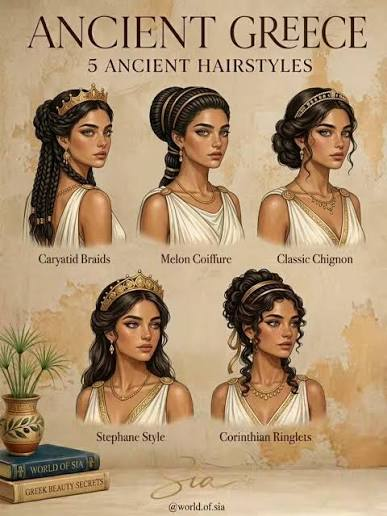
The Chignon
Women frequently arranged their hair into buns or gathered styles.
These styles were practical because long hair could be controlled and decorated.
Braids
Braiding was another common technique.
It allowed women to manage long hair while producing elaborate patterns.
Hairnets
Hairnets could help secure complex hairstyles.
They were sometimes made from:
textile;
wool;
or other materials.
Women's Hair and Marriage
Hairstyles could change throughout a woman's life.
Marriage, age, religious ceremonies, and social occasions could influence appearance.
Men's Hair
Greek men also maintained distinctive hairstyles.
Young men sometimes wore longer hair.
Adult men commonly had shorter hairstyles.
Beards
Beards became associated with adult male identity in many periods.
A beard could communicate maturity.
Athletes
Athletes often needed practical hairstyles.
Long hair could interfere with physical activity, making shorter or controlled hair more convenient.
Hair and Mourning
Hair had important roles in mourning rituals.
People could:
cut hair;
loosen hair;
or make other changes to appearance.
These actions communicated grief.
Hair Offerings
Hair could be dedicated to gods during important life transitions.
A young person reaching a new stage of life might offer locks of hair at a sanctuary.
Decorative Accessories
Hair could be decorated with:
ribbons;
pins;
wreaths;
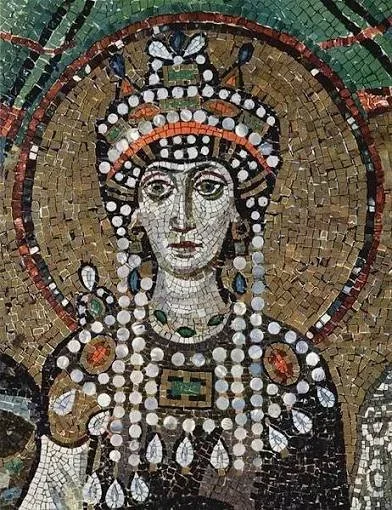
diadems;
and jewelry.
Wreaths
Wreaths had powerful cultural meanings.
They could represent:
victory;
religious devotion;
celebration;
honor;
and status.
Conclusion
Ancient Greek Hairstyles and Their Meanings show that hair was much more than a matter of personal grooming.
Hairstyles helped communicate age, gender, social position, emotional state, religious participation, and important transitions in life.
Ancient Greek hair culture therefore provides a valuable window into how appearance functioned within society.