Marriage in ancient Greece was usually a family and social institution rather than simply a private romantic decision.
Families considered:
wealth;
ancestry;
property;
alliances;
reputation;
and legitimacy.
Religion also played a role, and consultation of divine powers could influence important life decisions.
Oracles
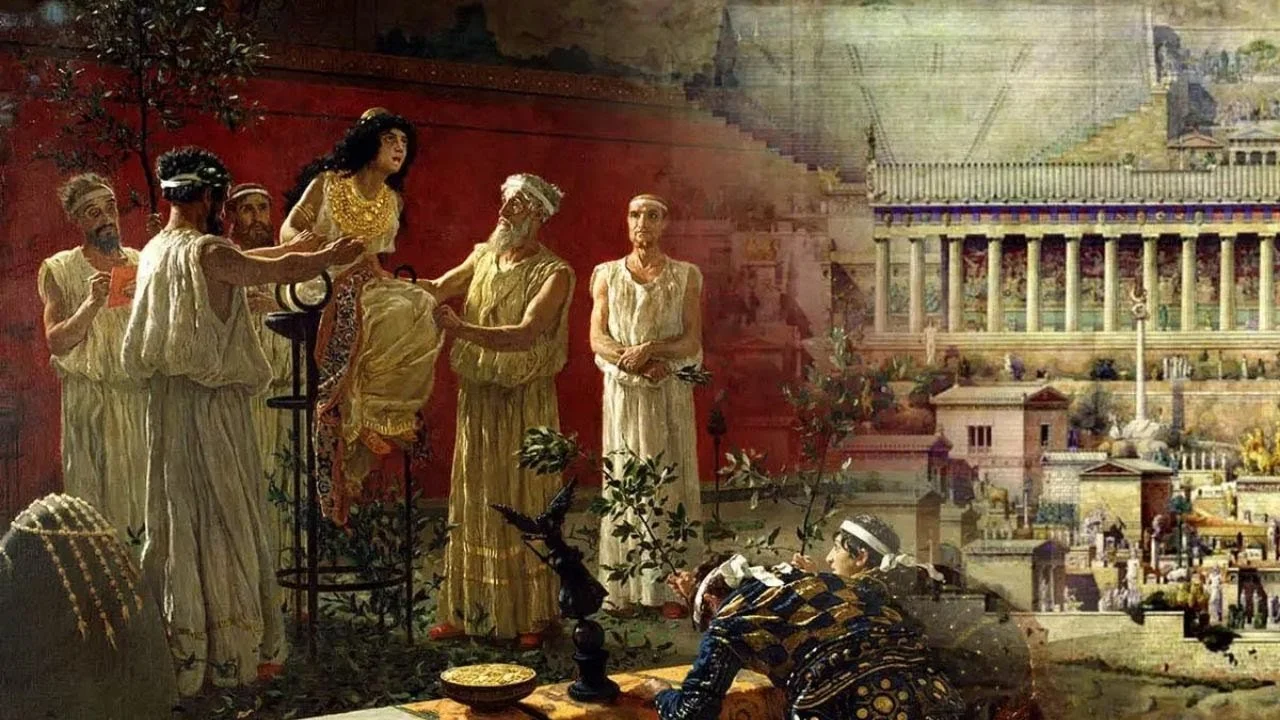
An oracle was a religious institution through which people sought divine guidance.
The most famous was the Oracle of Delphi, associated with Apollo.
Delphi
At Delphi, the priestess known as the Pythia delivered prophetic responses while serving Apollo.
Individuals and political communities traveled to Delphi seeking guidance.
Marriage Questions
Marriage could involve uncertainty.
Families might wonder about:
whether a marriage was favorable;
whether a particular union would succeed;
what consequences might follow;
or whether divine approval existed.
Not Every Marriage Required an Oracle
It is important not to exaggerate the practice.
Most Greek marriages were not dependent upon formal consultation with Delphi.
Families commonly negotiated marriages according to social and economic considerations.
Divination at Home
Religious signs could also be interpreted through other forms of divination.
People might consult:
priests;
local sanctuaries;
omens;
dreams;
or sacrificial signs.
Marriage and Religion
Marriage itself had religious dimensions.
It involved rituals honoring gods associated with:
marriage;
family;
fertility;
and household protection.
Hera
Hera was strongly associated with marriage and legitimate unions.
Offerings to Hera could therefore form part of religious practices surrounding marriage.
Artemis and the Transition from Childhood
Young women could also have relationships with Artemis before marriage.
In some traditions, girls dedicated childhood objects to Artemis as they transitioned toward adulthood.
Family Strategy
Marriage often connected families economically.
A bride's dowry could be important.
The groom's family and the bride's family could negotiate:
property;
obligations;
inheritance;
and social connections.
Oracles and Uncertainty
The appeal of divination was partly psychological.
Marriage could dramatically affect the future of a family.
Divine guidance provided a way to interpret uncertainty.
Conclusion
The Role of Oracles in Marriage Decisions demonstrates how religion intersected with family life in ancient Greece.
Oracles did not replace practical marriage negotiations, but religious consultation could provide guidance when families faced major decisions.
Marriage therefore existed at the intersection of:
family strategy + social expectations + economics + religion.