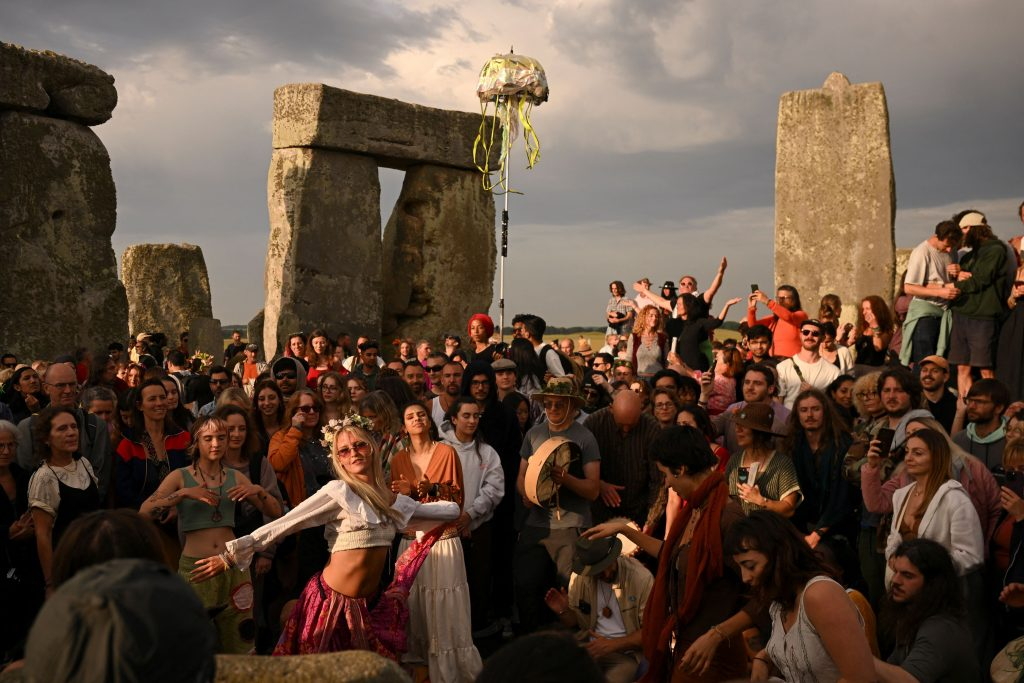
The summer solstice, the astronomical point at which the Northern Hemisphere experiences its longest day, was not necessarily celebrated by all ancient Greeks through one universal festival.
This is an important distinction.
Greek religious life was highly regional.
Different communities maintained different calendars, festivals, and traditions.
Nevertheless, the annual movement of the sun was deeply important to Greek society because agriculture, religious calendars, and seasonal activities depended upon the changing year.
Understanding the Solstice
The summer solstice occurs when the sun reaches its northernmost apparent position in the sky.
For ancient agricultural societies, this marked an important seasonal transition.
It indicated that the year had reached the point of maximum daylight before the days gradually began shortening.
Greek Calendars
Ancient Greek communities did not use one standardized calendar.
Athens had its own calendar, while other city-states used different systems.
Months were frequently associated with religious festivals.
Helios
The sun itself was personified by Helios.
Helios was traditionally depicted as driving his solar chariot across the sky.
His movement provided a mythological explanation for the daily cycle of sunlight.
Apollo and Solar Associations
Apollo later became strongly associated with light and solar imagery, although the identification of Apollo directly with the sun is more complicated than popular summaries suggest.
Helios remained the traditional personification of the sun.
Agricultural Importance
The summer period was crucial for farming.
Farmers were concerned with:
crop growth;
harvest timing;
water availability;
livestock;
and seasonal weather.
The solstice therefore existed within a larger agricultural rhythm.
Festivals Near the Summer Period
Greek festivals frequently incorporated:
processions;
sacrifices;
athletic competitions;
feasting;
music;
dancing;
and communal gatherings.
Some festivals occurred around periods that correspond broadly with the summer season, although not all were specifically solstice celebrations.
Kronia
The Kronia, associated with Kronos, occurred during the Athenian month of Hekatombaion, corresponding roughly to July.
It involved feasting and social activities.
Its timing places it near the period of the summer solstice in the broader seasonal cycle, although it should not simply be described as a Greek “summer solstice festival.”
Sacred Calendars
Astronomical observations were useful for maintaining religious calendars.
Priests and civic authorities needed to know when certain festivals should occur.
Stone Monuments
Some Greek sanctuaries and monuments demonstrate awareness of astronomical orientation.
However, claims that particular structures were universally designed as precise solstice observatories often exceed the evidence.
Ancient Greeks certainly understood astronomy, but individual sites must be evaluated archaeologically rather than assumed to have identical purposes.
Feasting and Community
Summer was an important period for communal activity.
Long daylight hours supported:
outdoor gatherings;
athletic competitions;
religious processions;
agricultural work;
and social celebrations.
Conclusion
How Greeks Celebrated the Summer Solstice requires a careful distinction between modern interpretations and ancient evidence.
The solstice itself was astronomically significant, and Greek society closely observed seasonal changes.
However, there was no single pan-Greek “summer solstice festival.”
Instead, seasonal rhythms were incorporated into diverse religious calendars, agricultural practices, festivals, and traditions.