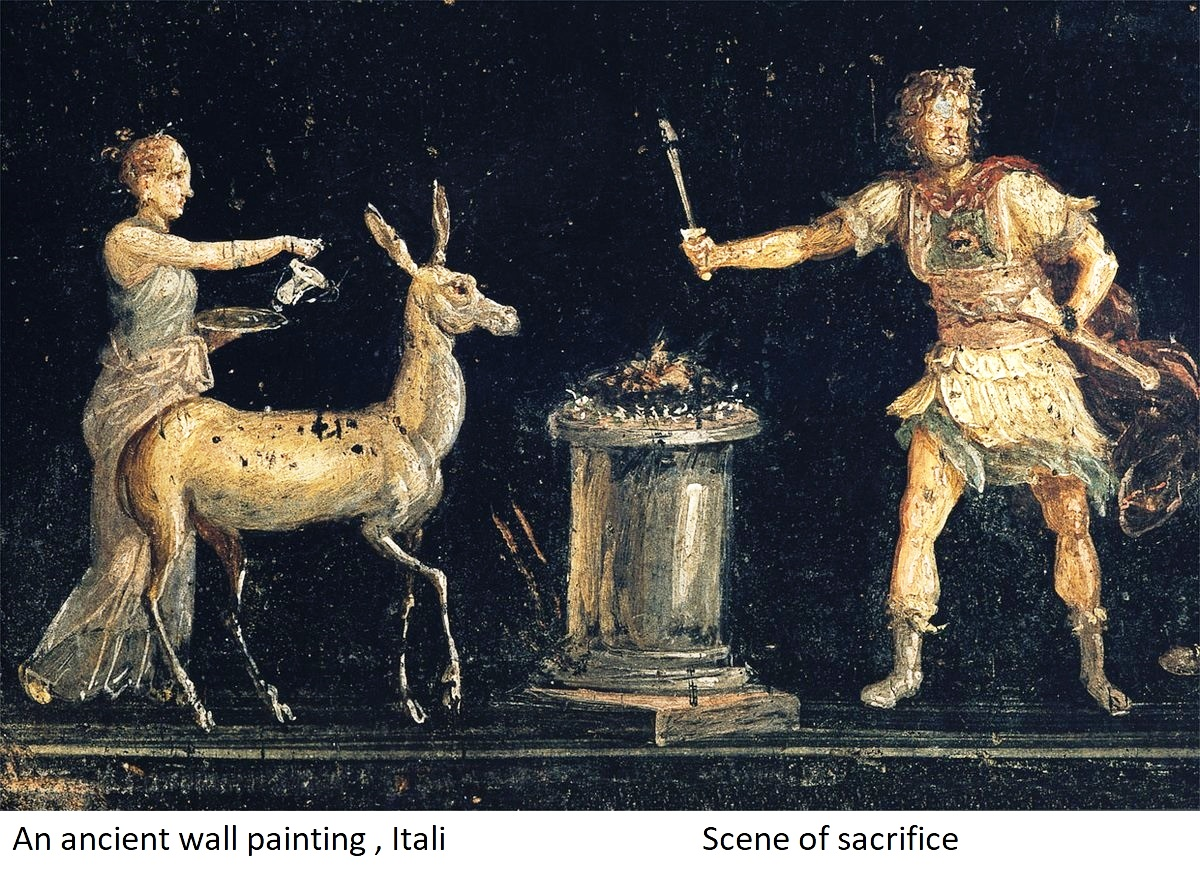
Animal sacrifice was one of the most important rituals in ancient Greek religion.
It was not simply an act of killing an animal.
It involved a carefully structured sequence of preparation, prayer, sacrifice, distribution, and communal eating.
Why Sacrifice?
Sacrifice created a relationship between humans and gods.
Greeks offered animals as acts of:
worship;
thanksgiving;
supplication;
purification;
or celebration.
Choosing the Animal
Different rituals required different animals.
Common sacrificial animals included:
cattle;
sheep;
goats;
pigs.
The animal was usually expected to meet particular ritual requirements.
Procession
The animal could be brought into the sanctuary as part of a procession.
Music and participants helped transform the event into a public religious ceremony.
Prayers
Participants addressed the deity through formal prayers.
They could request:
protection;
success;
fertility;
victory;
health;
or prosperity.
The Sacrifice
The precise procedure varied.
The animal was killed according to ritual requirements.
Blood played an important symbolic role.
Distribution of Meat
One of the most important aspects was what happened afterward.
The meat could be divided among participants.
This transformed sacrifice into a communal feast.
Sacrifice and Social Bonds
Feasting reinforced community relationships.
People shared food within a sacred framework.
Religion and social life were therefore deeply interconnected.
Burnt Offerings
Some offerings were burned completely.
The smoke rising toward the gods had symbolic significance.
Animal Bones
Archaeologists can sometimes identify sacrificial activity from concentrations of animal bones.
Cut marks, burning patterns, and the age and species of animals provide evidence.
Sacrifice and Politics
Public sacrifices could reinforce civic identity.
City-states might conduct major rituals before:
wars;
festivals;
political ceremonies;
or important public events.
Conclusion
The Ritual of Animal Sacrifice Explained reveals one of the central mechanisms of ancient Greek religion.
Sacrifice connected humans, gods, food, politics, and community.
The ritual was therefore simultaneously religious ceremony and social institution.