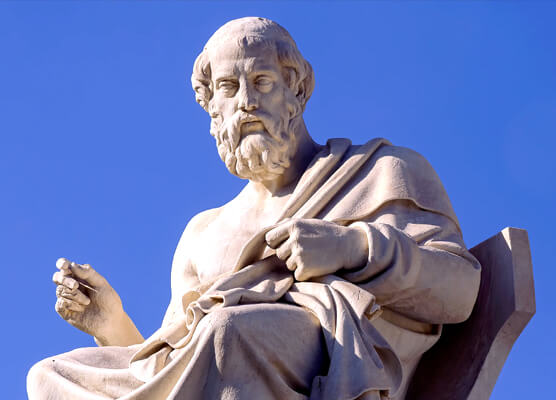
Silence occupied a surprisingly important position in ancient Greek philosophy.
Philosophers were famous for debate and argument, yet many traditions recognized that wisdom could involve knowing when not to speak.
Silence could represent discipline, contemplation, self-control, or intellectual humility.
Silence and Self-Control
Greek ethical thought placed great value on sophrosyne, often translated as moderation or self-control.
Knowing when to remain silent could demonstrate mastery over one's emotions.
Pythagorean Silence
Pythagorean communities became associated with disciplined speech.
Students were expected to listen and learn before speaking.
The tradition reflects the idea that knowledge requires careful observation.
Socrates and Questioning
Socrates was famous for asking questions rather than simply giving lectures.
His method forced people to examine their own assumptions.
Sometimes the recognition that one does not know something is itself an important philosophical achievement.
Silence and Knowledge
Silence could therefore represent intellectual humility.
A person who speaks confidently about things they do not understand may display ignorance.
Remaining silent until sufficient understanding is gained can be a form of discipline.
Orphic and Religious Traditions
Certain religious traditions also included secrecy.
Initiates of mystery cults were expected not to reveal sacred teachings.
Silence therefore protected religious knowledge.
The Philosopher and Society
Greek philosophers also discussed the proper relationship between speech and civic responsibility.
In democratic Athens, public speaking was extremely important.
Consequently, knowing when to speak and when to remain silent became an important social skill.
Silence in Stoicism
Later Stoic philosophy emphasized controlling emotional reactions.
Silence could provide time to evaluate whether a response was rational.
Conclusion
The Role of Silence in Greek Philosophy was not simply about refusing to speak.
Silence could represent:
discipline;
contemplation;
humility;
secrecy;
emotional control;
and preparation for meaningful speech.
For many Greek thinkers, wisdom involved not only knowing what to say but also understanding when silence was the wiser choice.