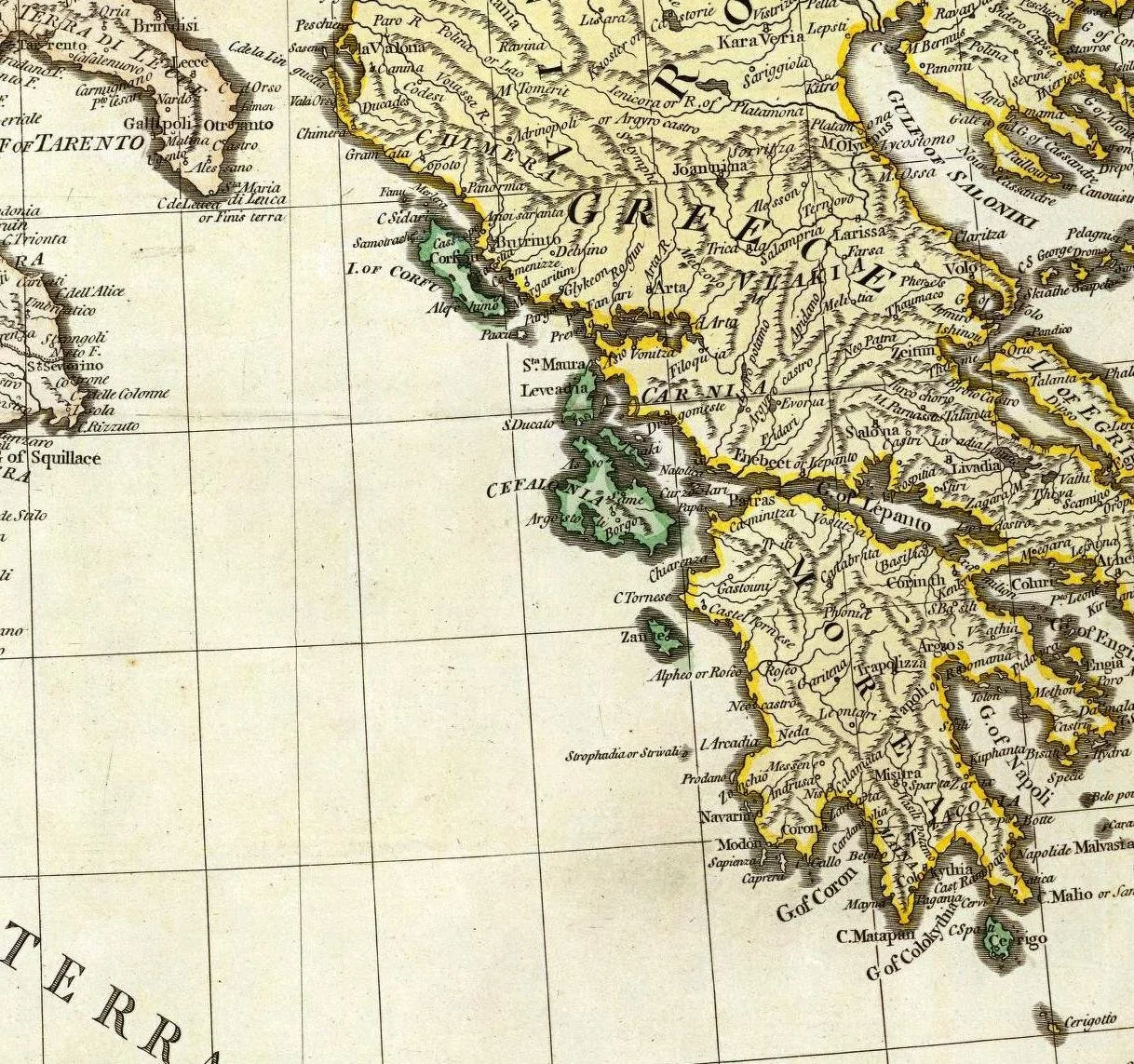
Ancient Greek civilization developed across a geographically diverse region extending throughout mainland Greece, the Aegean islands, the western coast of Anatolia, and eventually a vast network of colonies and Hellenistic settlements.
Geography was not simply a background to Greek history.
It actively shaped political organization, agriculture, warfare, trade, religion, and cultural exchange.
The Greek Mainland
Mainland Greece is characterized by mountainous terrain.
Large mountain ranges divided communities into relatively separate valleys and plains.
This contributed to the development of independent city-states.
Athens and Attica
Athens was located in Attica, a region surrounding several important agricultural and maritime areas.
Athens' proximity to the sea helped it become a major naval and commercial power.
The nearby harbor of Piraeus was crucial to its economic and military development.
Sparta and the Peloponnese
Sparta was located in Laconia in the southeastern Peloponnese.
Its position within a fertile valley gave it access to agricultural resources.
Spartan expansion into neighboring Messenia provided additional land and resources.
Corinth
Corinth occupied an exceptionally strategic position.
Located near the narrow Isthmus of Corinth, it connected central Greece with the Peloponnese.
Its location contributed to its importance in trade and maritime activity.
Thebes and Boeotia
Thebes was located in Boeotia.
The region contained fertile plains and became an important political center.
The Aegean Islands
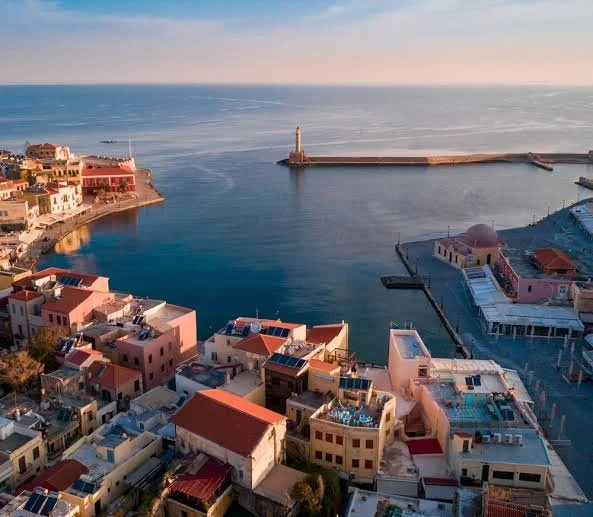
The Aegean Sea contained numerous islands.
These islands acted as stepping stones for maritime travel.
Important islands included:
Crete;
Euboea;
Rhodes;
Samos;
Chios;
and Lesbos.
Crete
Crete was one of the most important islands in the prehistoric Aegean.
The earlier Minoan civilization developed sophisticated palace societies there.
Anatolia
Greek-speaking communities established numerous settlements along the western coast of Anatolia.
Cities such as:
Miletus;
Ephesus;
and Smyrna
became important centers of trade and intellectual activity.
The Black Sea
Greek colonization extended into the Black Sea region.
Settlements there provided access to:
grain;
timber;
fish;
metals;
and other resources.
Mediterranean Colonization
From approximately the eighth century BCE onward, Greek communities established colonies across parts of the Mediterranean and Black Sea.
Major regions included:
southern Italy;
Sicily;
southern France;
North Africa;
and the Black Sea.
Sicily and Southern Italy
Southern Italy became so heavily populated by Greek settlements that ancient writers referred to parts of the region as Magna Graecia, or “Great Greece.”
Cities such as Syracuse became powerful political centers.
Geography and Warfare
Mountains made large-scale overland movement difficult.
Naval power therefore became especially important for communities with access to good harbors.
Geography and Agriculture
Greek agriculture was constrained by rugged terrain.
Olives and grapes were particularly well suited to many Mediterranean environments.
Grain production was more challenging in some regions.
Geography and Political Fragmentation
Perhaps geography's greatest political consequence was fragmentation.
Mountain ranges and isolated valleys made it difficult to create a single unified state.
Instead, numerous independent poleis developed.
Geography and Cultural Exchange
At the same time, the sea connected rather than simply separated Greek communities.
Ships transported:
people;
ideas;
religious traditions;
technologies;
artistic styles;
and commodities.
Conclusion
Historic Locations & Geography provides one of the keys to understanding ancient Greek civilization.
The mountains encouraged political fragmentation, while the surrounding seas encouraged maritime trade and cultural exchange.
The resulting civilization was not a single uniform kingdom but a network of independent communities connected by language, religion, trade, mythology, and shared cultural traditions.
From the mountains of mainland Greece to the islands of the Aegean and the distant settlements of the Mediterranean and Black Sea, geography profoundly shaped the history of the Greek world