Mycenae is one of the most famous archaeological sites of prehistoric Greece.
Located in the northeastern Peloponnese, the fortified settlement became the center of a powerful civilization during the Late Bronze Age.
Its massive walls, monumental tombs, palace complex, and famous Lion Gate inspired later Greek legends about heroes such as Agamemnon.
However, the historical Mycenae was more complex than the legendary city described in later poetry.
The Mycenaean Civilization
The Mycenaean civilization flourished approximately during the second millennium BCE, particularly between the seventeenth and twelfth centuries BCE.
Important Mycenaean centers included:
Mycenae;
Pylos;
Tiryns;
Thebes;
and Orchomenos.
These centers were connected through trade and cultural relationships but were not necessarily governed by one centralized kingdom.
The Citadel
Mycenae was constructed on a naturally defensible hill.
Massive fortification walls surrounded the citadel.
Later Greeks sometimes called these structures Cyclopean walls, believing that only giants called Cyclopes could have built them.
The enormous stone blocks created an impression of extraordinary power.
The Lion Gate
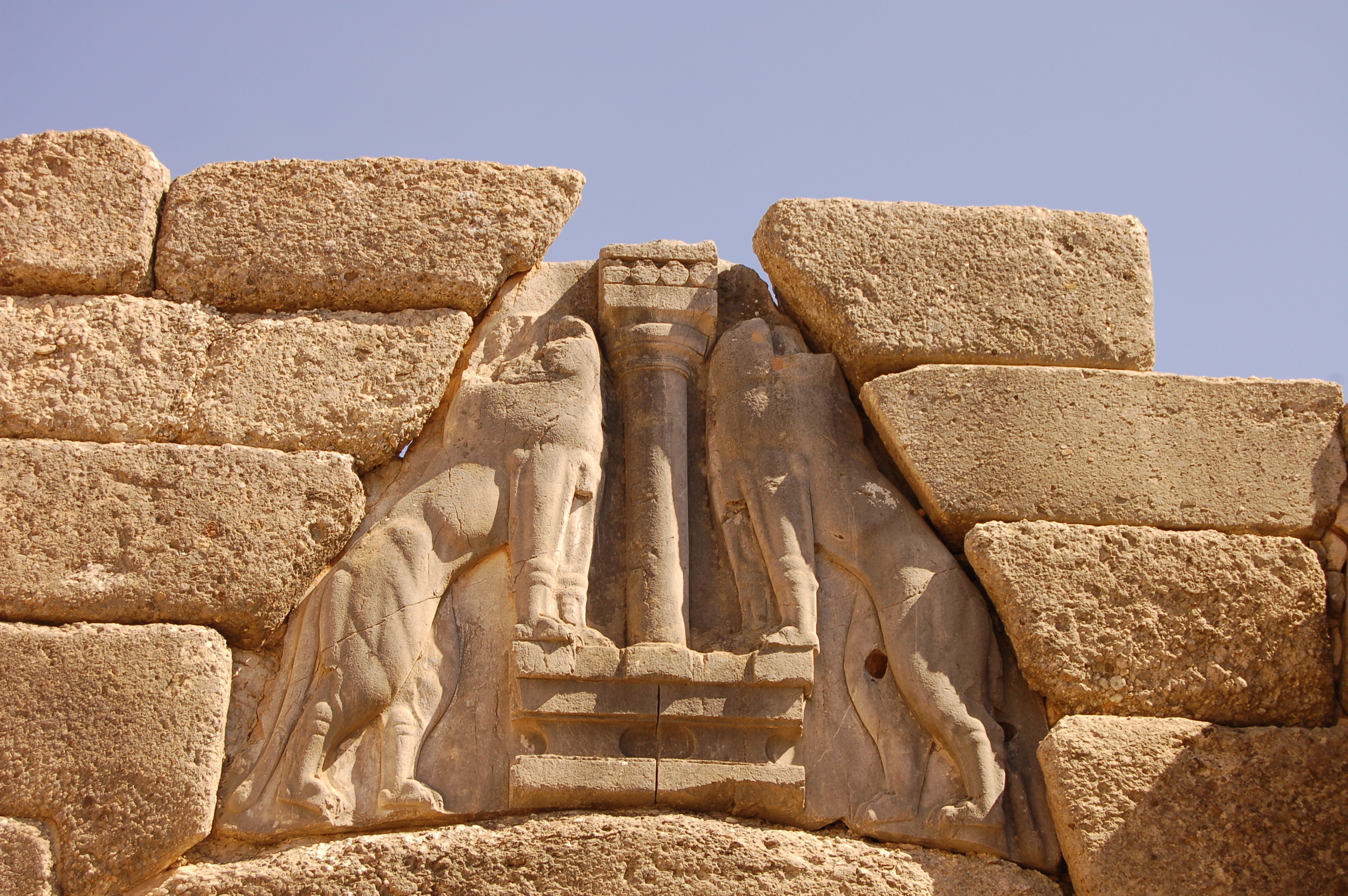
The most famous entrance is the Lion Gate.
Built during the thirteenth century BCE, it consists of enormous stone blocks supporting a triangular relief.
Two lions or lionesses face a central column.
The monument is one of the best-known surviving examples of Mycenaean monumental sculpture.
The Symbolism of the Lions
The exact meaning of the relief remains debated.
The animals may have represented:
royal authority;
protection;
power;
or the sacred status of the citadel.
The column between them may also have carried religious symbolism.
The Palace
Inside the citadel was a palace complex.
The central architectural feature was the megaron, a large hall containing a central hearth surrounded by columns.
This architectural form became influential in later Greek architectural development.
Royal Administration
Mycenaean palaces functioned as administrative centers.
Clay tablets written in Linear B record information about:
livestock;
agricultural products;
personnel;
religious offerings;
and economic administration.
These tablets provide direct evidence about Bronze Age Greek society.
The Grave Circles
Mycenae contains important elite burial areas.
Grave Circle A, discovered within the citadel, contained rich burials.
Objects found there included:
gold masks;
weapons;
jewelry;
vessels;
and other luxury goods.
The “Mask of Agamemnon”
One of the most famous discoveries is the gold funerary mask commonly called the Mask of Agamemnon.
The name was given by archaeologist Heinrich Schliemann.
However, the burial dates centuries earlier than the traditional historical period of the Trojan War and therefore cannot securely be identified as Agamemnon's actual mask.
Tholos Tombs
Mycenae also contains monumental beehive-shaped tombs called tholos tombs.
The Treasury of Atreus is the most famous.
Its enormous circular burial chamber demonstrates the impressive engineering capabilities of Mycenaean builders.
Trade
Mycenae participated in extensive Bronze Age exchange networks.
Mycenaean goods have been found across:
the Aegean;
Anatolia;
Cyprus;
the Levant;
Egypt;
and parts of the central Mediterranean.
The Collapse
Around the end of the thirteenth and beginning of the twelfth centuries BCE, Mycenaean palace systems experienced major disruption.
The reasons remain debated.
Possible factors include:
warfare;
internal instability;
earthquakes;
economic disruption;
and broader Mediterranean disturbances.
No single explanation has been conclusively demonstrated for every center.
Homeric Memory
Centuries later, Mycenae became associated with the legendary kingdom of Agamemnon.
The Iliad presents Agamemnon as a powerful ruler who led the Greek forces against Troy.
Whether these stories preserve distant memories of Bronze Age political structures remains a subject of scholarly discussion.
Conclusion
Mycenae: The Lion Gate and Beyond represents the monumental achievements of Bronze Age Greece.
Its fortifications, palace, royal tombs, administrative records, and international trade connections reveal a sophisticated society that existed centuries before classical Athens.
The later legends surrounding Agamemnon added another layer of cultural significance, transforming a Bronze Age citadel into one of the enduring landscapes of Greek mythology.