The ancient city of Ephesus was one of the great urban centers of the eastern Mediterranean.
Located in western Anatolia, modern-day Turkey, Ephesus became an important Greek, Hellenistic, Roman, and early Christian city.
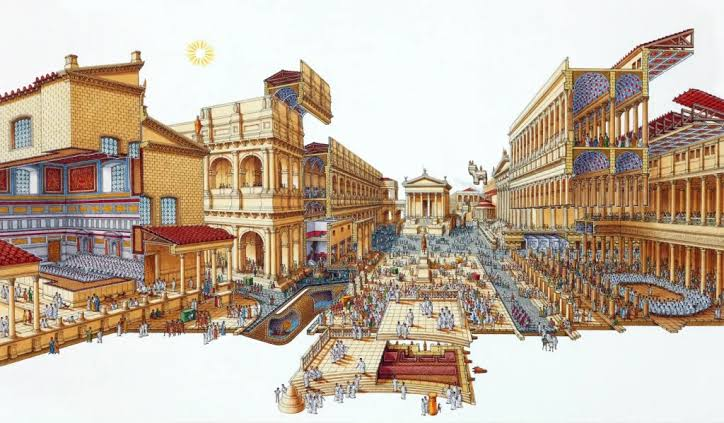
Its agoras were central spaces for commerce, politics, social interaction, and public life.
Ephesus and Its Geography
Ephesus was originally located near the coast.
Its position provided access to maritime trade.
However, sediment carried by the Cayster River gradually altered the coastline.
The ancient harbor eventually became increasingly distant from the sea.
The Commercial Agora
Ephesus contained a major Commercial Agora.
The marketplace was surrounded by colonnaded structures and shops.
Merchants could sell:
food;
pottery;
textiles;
luxury products;
tools;
and imported goods.
The State Agora
Ephesus also possessed a larger civic or state agora.
This area had political and administrative importance.
Public Life
The agora was a place where citizens encountered one another.
People could:
conduct business;
discuss politics;
hear announcements;
socialize;
and participate in civic activities.
Roman Ephesus
Ephesus became especially prosperous under Roman rule.
It developed monumental architecture including:
temples;
baths;
theaters;
libraries;
fountains;
and administrative buildings.
The Library of Celsus
One of the city's most famous monuments is the Library of Celsus.
Constructed in the second century CE, it served as a monumental library and memorial.
The Great Theater
Ephesus possessed an enormous theater.
It could accommodate thousands of spectators.
The theater was used for:
performances;
civic events;
religious ceremonies;
and public gatherings.
Early Christianity
Ephesus became important in early Christian history.
The city is associated with the apostle Paul and later Christian communities.
The Epistle to the Ephesians is traditionally associated with the city, although the authorship and historical context of the letter remain subjects of scholarly study.
Archaeological Preservation
Excavations have revealed:
marble streets;
mosaics;
fountains;
shops;
houses;
inscriptions;
temples;
and public squares.
Conclusion
The Agora of Ephesus illustrates how an ancient marketplace could serve many functions simultaneously.
It was an economic center, social gathering place, political environment, and component of a sophisticated urban system.
Ephesus' location along major Mediterranean routes helped transform it into one of antiquity's most cosmopolitan cities.