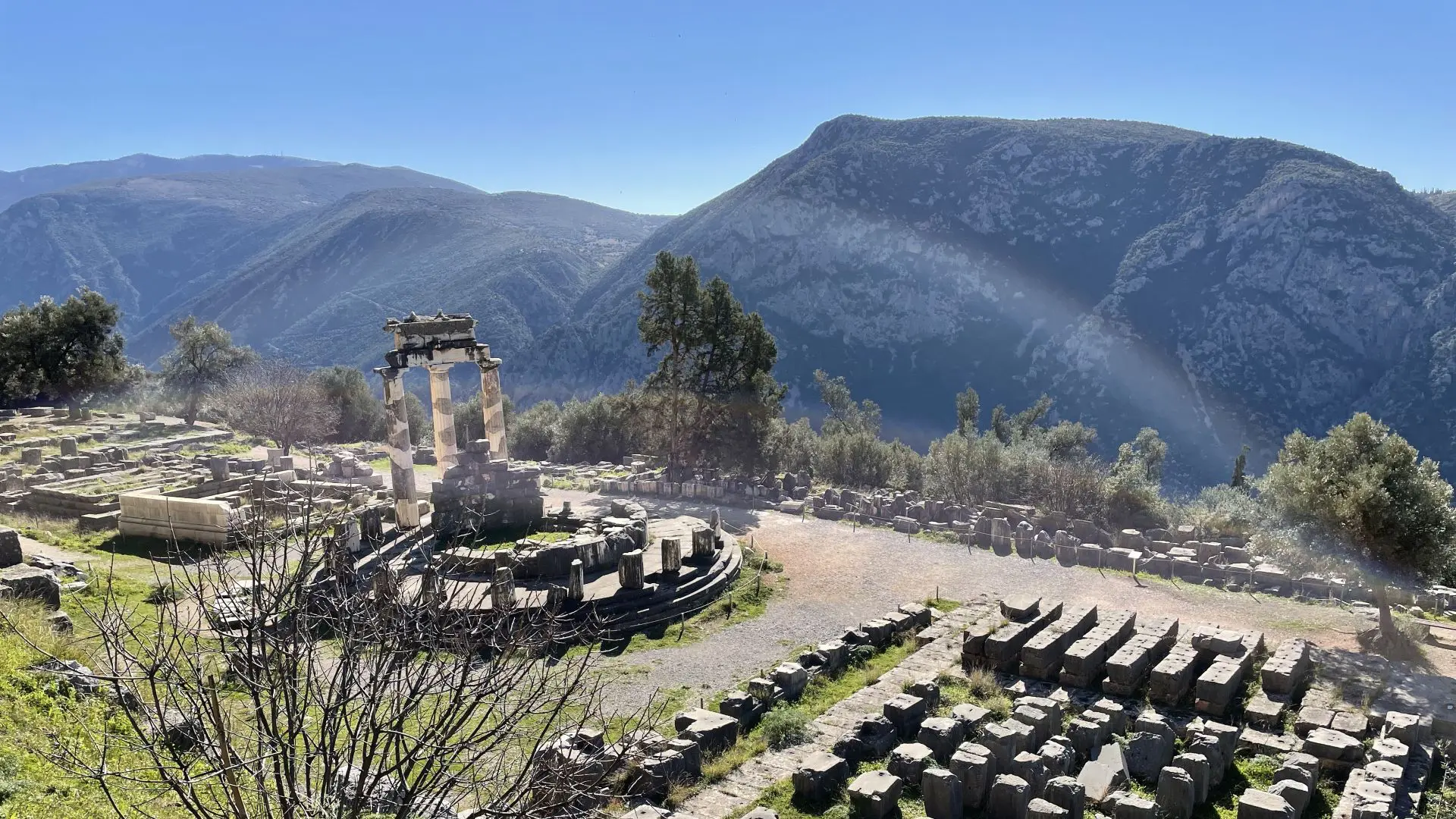
The Sacred Way was the principal processional route leading into the sanctuary of Apollo at Delphi.
It was far more than an ordinary road.
It formed a ceremonial pathway through which pilgrims approached one of the most important religious centers of ancient Greece.
Along the route stood monuments, statues, treasuries, and offerings that demonstrated the wealth and political competition of Greek communities.
Delphi and Apollo
Delphi was dedicated primarily to Apollo.
The sanctuary became famous throughout the Greek world for its oracle.
The Pythia, Apollo's priestess, delivered prophetic responses to those seeking divine guidance.
The Journey
Pilgrims did not simply arrive at the temple.
They moved through a carefully organized sacred landscape.
The Sacred Way guided them toward increasingly important religious monuments.
Treasuries
Greek city-states constructed treasuries along the route.
These buildings housed offerings dedicated to Apollo.
The Treasury of the Athenians is particularly famous.
Political Competition
The monuments revealed more than religious devotion.
They also demonstrated political prestige.
City-states competed to display their wealth and victories.
The sanctuary therefore became a visual representation of the Greek political world.
Offerings
Visitors dedicated:
statues;
weapons;
vessels;
tripods;
jewelry;
and other valuable objects.
Some offerings commemorated military victories.
Others expressed gratitude for successful events.
The Temple of Apollo
The Sacred Way eventually led toward the Temple of Apollo.
The temple was the religious center of the sanctuary.
The Pythia delivered oracles within the temple complex.
The Omphalos
Delphi was traditionally considered the center, or “navel,” of the world.
The omphalos symbolized this belief.
According to mythology, Zeus released two eagles from opposite ends of the world, and they met at Delphi.
The Theater
The sanctuary contained a theater overlooking the valley.
Religious festivals included musical and dramatic performances.
The Stadium
Delphi also possessed a major stadium.
The Pythian Games included athletic and artistic competitions.
Pilgrimage and Economy
Large numbers of visitors supported an economic ecosystem.
Pilgrims required:
food;
lodging;
transportation;
religious objects;
and services.
Conclusion
The Sacred Way to Delphi was simultaneously a religious route, political gallery, and archaeological record.
Every treasury, statue, and offering contributed to the experience of approaching Apollo's sanctuary.
The route demonstrates how ancient Greek religion operated within a broader world of political competition, artistic display, pilgrimage, and economic activity.