The island of Salamis occupies a remarkable place in Greek history because its geography became inseparable from one of the most consequential naval battles of the ancient Mediterranean. Located immediately west of Athens and separated from the Attic mainland by narrow waterways, Salamis provided sheltered waters in which ships could maneuver under conditions very different from those of the open sea.
Its most famous historical episode is the Battle of Salamis in 480 BCE, when a Greek fleet confronted the much larger naval forces of the Persian Empire. The battle became a defining moment of the Greco-Persian Wars and demonstrated how geography, naval organization, tactical discipline, and political decision-making could overcome numerical disadvantages.
Salamis and Its Strategic Geography
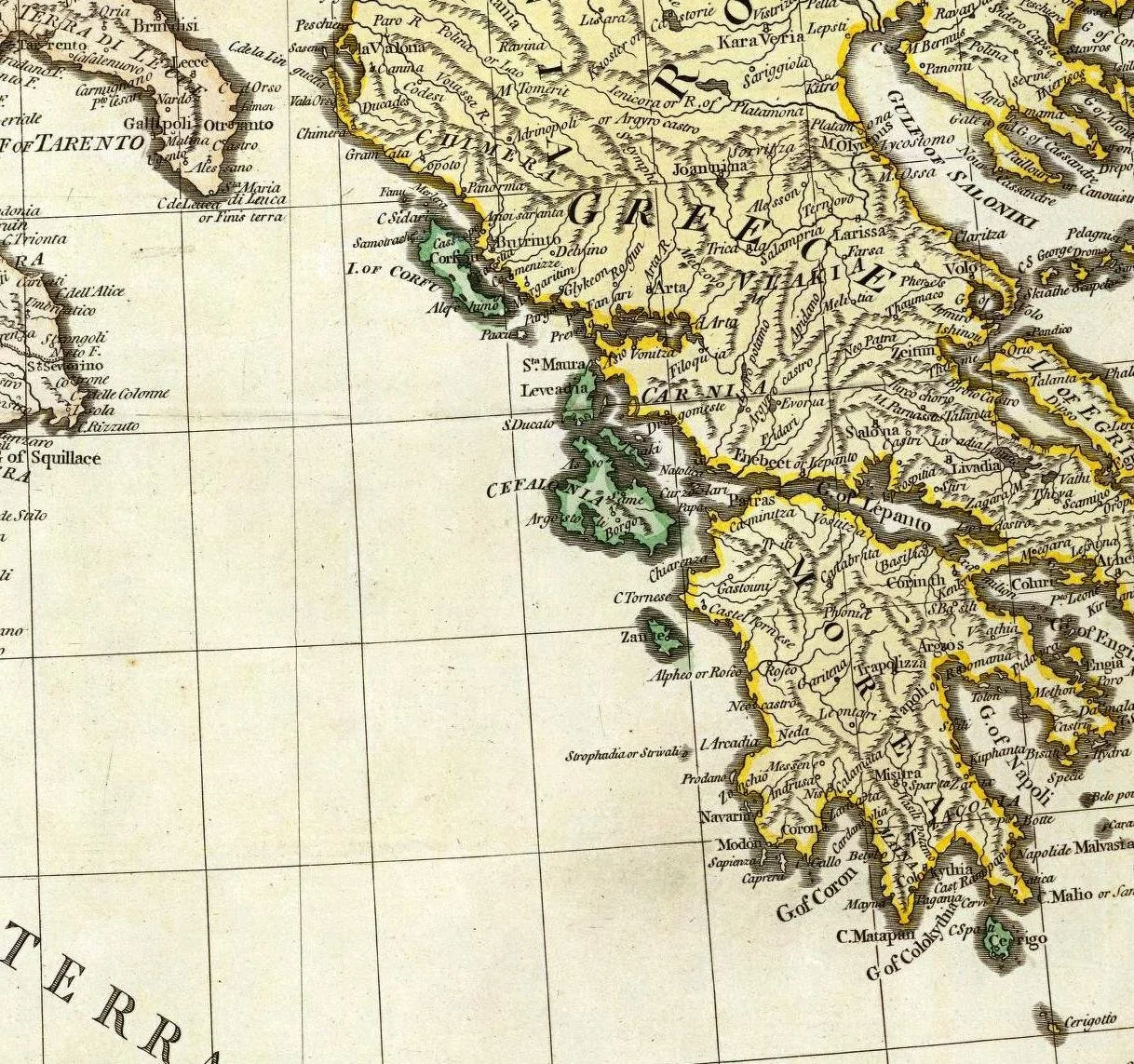
Salamis is the largest island in the Saronic Gulf.
Its position made it strategically important because it lies extremely close to Attica and the approaches to Piraeus.
The island contains numerous bays and narrow channels. These waters offered opportunities for naval forces to shelter, assemble, and maneuver.
For an ancient commander, such geography could be as important as the number of ships available.
The Persian Invasion
In 480 BCE, King Xerxes I of Persia launched a massive invasion of Greece.
The Persian expedition involved both land and naval forces.
After the Persian army advanced into central Greece and Athens was evacuated, the Greek naval forces had to determine where they could make an effective stand.
The Persian fleet had suffered losses at the Battle of Artemisium, but remained substantially larger than the Greek fleet.
The Athenian Navy
Athens had invested heavily in naval power during the preceding decades.
The Athenian statesman Themistocles was particularly influential in promoting the construction of a large fleet of triremes.
This decision transformed Athens into a major naval power.
The fleet would soon become central to the city's survival.
The Trireme
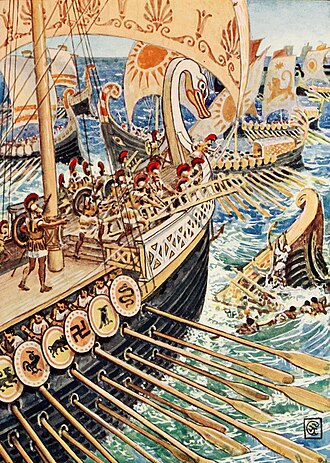
The principal warship was the trireme.
It was a long, relatively narrow vessel designed for speed and maneuverability.
Its propulsion came primarily from oarsmen, supplemented by sails when conditions permitted.
The ship also carried a bronze-covered ram at the bow.
The ram allowed commanders to attack enemy vessels by striking their hulls.
The Greek Strategy
The Greek commanders understood that fighting in open water against the larger Persian fleet could be dangerous.
The narrow waters around Salamis offered an advantage.
A large fleet could struggle to maintain formation when confined to restricted channels.
The Greek fleet could therefore exploit the geography to reduce the Persian numerical advantage.
The Battle
The Battle of Salamis took place in September 480 BCE, although the precise chronology and some tactical details remain subjects of historical discussion.
Greek ships entered the narrow waters near Salamis.
Persian forces attempted to engage them.
The confined environment contributed to confusion among the Persian fleet.
Greek crews, experienced in coordinated naval combat, were able to exploit opportunities created by congestion and disrupted formations.
Themistocles' Role
Themistocles became one of the most important figures associated with the battle.
Ancient sources describe strategic deception and manipulation of Persian expectations before the battle.
The goal was to encourage the Persian fleet to commit itself to waters favorable to the Greeks.
Whether every detail preserved by later historians occurred exactly as described is uncertain, but the broader strategic principle is clear: the Greeks sought to make geography work against the larger Persian fleet.
Why Salamis Mattered
The battle did not immediately end the Persian invasion.
However, it severely disrupted Persian naval strength.
Xerxes eventually withdrew much of his expeditionary force, leaving Mardonius to continue the campaign with a substantial army.
The following year, the Greek victory at Plataea helped bring the Persian invasion of mainland Greece to an end.
Salamis and the Rise of Athens
The victory greatly enhanced Athens' prestige.
The Athenian navy became one of the foundations of the city's later power.
Athens subsequently developed the Delian League, initially established as an alliance against Persia.
Over time, the alliance increasingly became an Athenian imperial system.
Archaeological Evidence
The waters surrounding Salamis continue to attract archaeological interest.
Researchers investigate:
ancient harbor areas;
underwater remains;
fortifications;
settlements;
and maritime infrastructure.
The physical landscape helps scholars understand why Salamis was such an effective battlefield.
Historical Legacy
Salamis became a symbol of resistance against imperial domination.
Ancient Greek writers presented the battle as a victory of the Greek city-states over a vastly larger empire.
Modern historians, however, emphasize that the outcome resulted from many factors, including naval technology, geography, alliances, intelligence, logistics, and Persian strategic limitations.
Conclusion
The Naval History of Salamis is ultimately a story about the interaction between geography and human strategy.
The island's narrow channels transformed the conditions of naval warfare and allowed the Greek fleet to exploit circumstances that would have been much less favorable in open water.
The Battle of Salamis therefore remains one of antiquity's most influential examples of how terrain, technology, organization, and tactical decision-making can alter the outcome of a conflict.