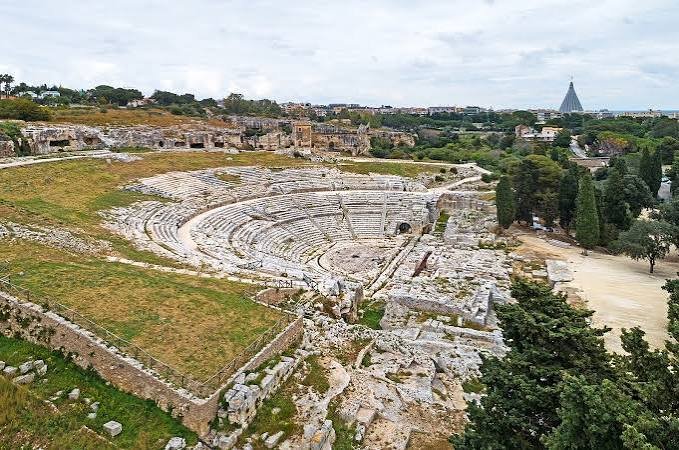
On the southeastern coast of Sicily lies Syracuse, one of the most powerful and prosperous Greek cities of the ancient Mediterranean.
Founded by Greek colonists from Corinth in the eighth century BCE, Syracuse eventually developed into a major political, military, commercial, and cultural center.
Its history demonstrates that the ancient Greek world extended far beyond mainland Greece and the Aegean.
Foundation of Syracuse
Greek settlers founded Syracuse traditionally in 734 or 733 BCE.
The city's location was exceptionally favorable.
Syracuse possessed:
Natural harbors
Agricultural land
Access to maritime trade routes
Defensive advantages
Freshwater resources
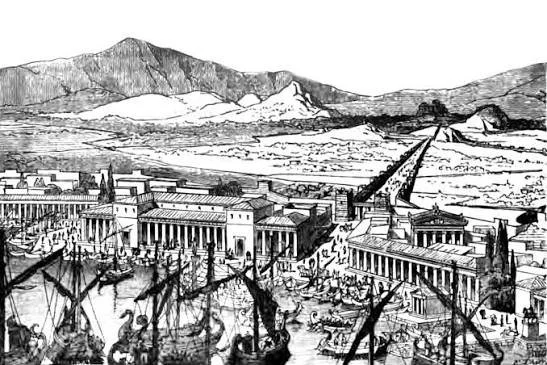
The original settlement was established on the island of Ortygia, while the city later expanded onto the mainland.
Expansion and Power
Syracuse gradually developed into one of the strongest Greek communities in the western Mediterranean.
Its rulers acquired influence over surrounding territories and developed substantial military capabilities.
The city's agricultural hinterland supplied food, while its ports facilitated trade.
Syracuse also developed powerful fleets.
Its strategic position placed it directly within conflicts involving Greeks, Carthaginians, and indigenous Sicilian populations.
The Tyrants of Syracuse
Syracuse became famous for its tyrants.
The term "tyrant" in ancient Greek political language did not necessarily mean a ruler who governed through arbitrary cruelty in the modern sense.
It referred primarily to someone who held power outside traditional constitutional arrangements.
One of the most important was Dionysius I, who ruled from 405 to 367 BCE.
He transformed Syracuse into a major military power.
Dionysius I
Dionysius strengthened Syracuse's defenses and developed its military industry.
The city constructed enormous fortifications, including the famous walls of Epipolae.
Syracuse also became an important center for military innovation.
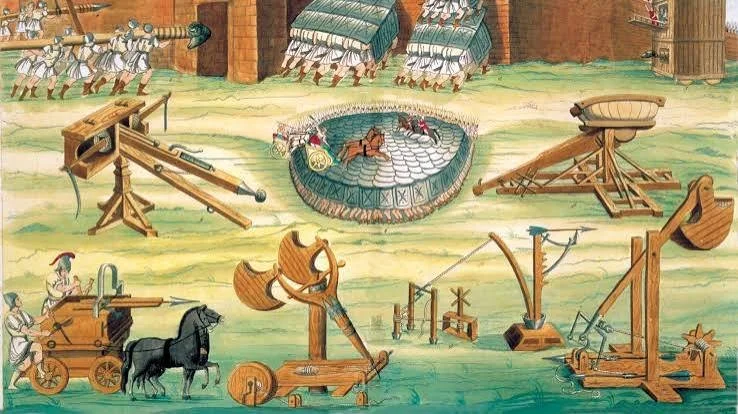
The city's engineers developed advanced siege weapons and defensive technologies.
The Siege of Syracuse
Syracuse became particularly famous during the Peloponnesian War.
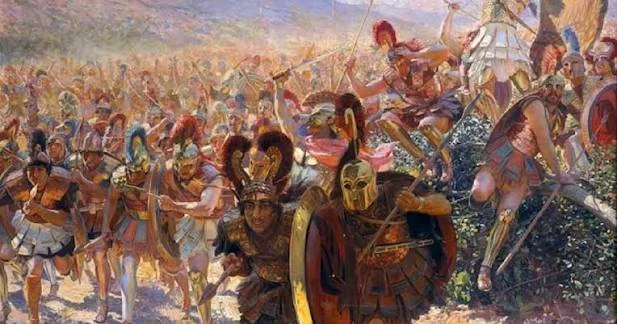
Athens launched its disastrous Sicilian Expedition in 415 BCE.
The Athenian objective was ambitious: weaken Syracuse, gain resources, and potentially expand Athenian influence in Sicily.
Instead, the expedition ended catastrophically.
Syracuse successfully resisted the Athenian invasion.
The defeat represented one of the greatest military disasters in Athenian history.
Archimedes and Syracuse
Syracuse is also associated with one of antiquity's greatest mathematicians and engineers: Archimedes.
Born around 287 BCE, Archimedes developed major contributions to:
Geometry
Mechanics
Hydrostatics
Mathematical physics
Engineering
During the Roman siege of Syracuse in 214–212 BCE, he reportedly designed defensive machines to help the city resist Roman forces.
Although later accounts sometimes exaggerate these devices, ancient sources consistently associate Archimedes with Syracuse's defense.
Roman Conquest
Syracuse eventually became involved in the Second Punic War.
The city initially supported Rome but later shifted toward the Carthaginian side.
Rome besieged Syracuse between 214 and 212 BCE.
After the city fell, Syracuse was incorporated into the Roman world.
Its political independence ended, but its cultural importance continued.
Cultural Legacy
Syracuse demonstrates the enormous geographic reach of Greek civilization.
Greek colonies were not isolated copies of mainland cities.
They developed their own political systems, military traditions, economies, and relationships with local populations.
Syracuse became a distinctive western Greek power.
Its history also demonstrates the importance of Sicily as a crossroads between Greek, Phoenician, Carthaginian, and Roman worlds.