The island of Delos is famous as one of the most important sacred sites of ancient Greece, but its archaeological remains reveal something more than temples and sanctuaries.
Behind the monumental religious buildings lies an intricate urban landscape of houses, workshops, marketplaces, streets, courtyards, and drainage systems.
The result is a remarkably detailed picture of ancient urban life.
Delos: Sacred Island
According to Greek mythology, Delos was the birthplace of Apollo and Artemis.
The island therefore became sacred to Apollo.
A major sanctuary developed there, attracting pilgrims from across the Greek world.
The religious importance of Delos eventually became intertwined with political and commercial importance.
Urban Growth
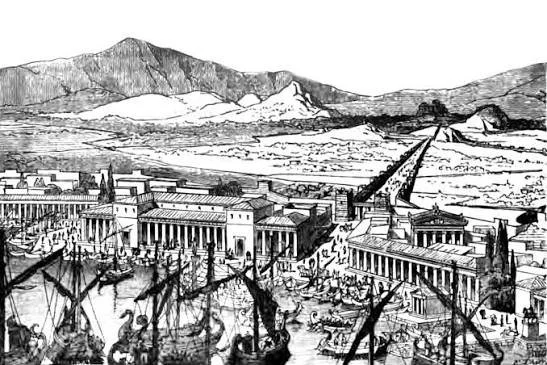
During the Hellenistic period, Delos developed into a major international trading center.
After Athens took control of the island in the second century BCE and declared it a free port, commercial activity expanded dramatically.
Merchants from different regions established businesses and residences there.
The archaeological remains reflect an exceptionally cosmopolitan population.
Streets and Architecture
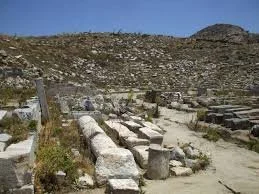
Delos did not possess a perfectly uniform street plan.
Its terrain and earlier development produced irregular streets.
Buildings could be packed closely together.
Narrow passages connected larger roads with residential districts.
The result could appear "labyrinthine" to modern visitors.
Yet this apparent complexity was not necessarily chaotic.
Different neighborhoods possessed their own architectural patterns.
Houses of Delos
Delian houses often centered around courtyards.
Rooms opened toward the central space.
This arrangement provided:
Light
Ventilation
Privacy
Social space
Some wealthy homes contained elaborate mosaics.
Mosaic floors could depict:
Geometric patterns
Plants
Animals
Mythological scenes
Marine imagery
A Cosmopolitan Population
Archaeological evidence indicates that Delos attracted people from throughout the Mediterranean.
Merchants, sailors, slaves, artisans, bankers, and religious visitors all passed through the city.
The island therefore provides evidence for the interconnectedness of the Hellenistic Mediterranean.
The Commercial Economy
Delos became particularly famous for commerce in slaves.
Ancient sources and inscriptions indicate that the island developed into a major slave-trading center.
This uncomfortable aspect of Delian prosperity is essential to understanding its economy.
The wealth visible in its houses and public buildings was connected to larger systems of commerce and exploitation.
Water Management
Urban life required water.
Delos had limited natural freshwater resources, making water management especially important.
Cisterns collected rainwater.
Wells and storage systems supplemented supplies.
Drainage systems helped remove wastewater.
These technologies reveal the practical engineering required to sustain a dense urban population on a relatively small island.
Why Delos Matters
Delos provides an unusually complete archaeological picture of a Hellenistic city.
Its streets reveal movement.
Its houses reveal domestic life.
Its sanctuaries reveal religion.
Its warehouses and commercial areas reveal trade.
Its inscriptions reveal multicultural interaction.
The labyrinthine urban landscape therefore provides a rare window into the daily realities of Mediterranean life more than two thousand years ago.