The Battle of Salamis in 480 BCE was one of the most important naval battles of the ancient world.
Greek forces, particularly the Athenian navy, defeated a much larger Persian fleet in the narrow waters surrounding Salamis.
The victory prevented the Persian invasion from achieving its ultimate objective and became a defining moment in Greek history.
The Persian Invasion
King Xerxes I invaded Greece in 480 BCE.
His forces advanced through northern and central Greece while a large naval fleet accompanied the army.
Control of the sea was essential.
Without naval support, the Persian army's supply lines would have become increasingly vulnerable.
Greek Naval Strategy
The Greek coalition included several city-states.
Athens provided a particularly large proportion of the fleet.
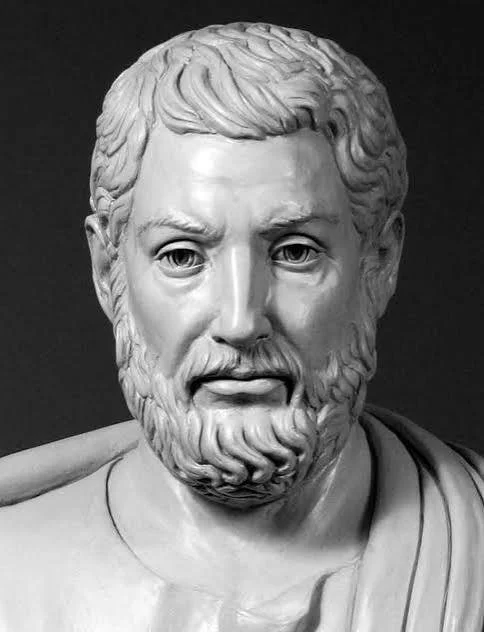
Themistocles, an influential Athenian statesman, strongly advocated naval development before the Persian invasion.
Athens had invested heavily in triremes.
The Trireme
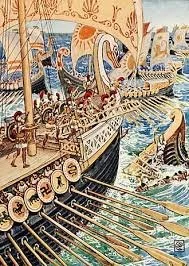
The trireme was a fast warship propelled primarily by oars.
Its key features included:
Three levels of oars
A narrow hull
High maneuverability
A reinforced prow
A bronze ram
The ram was the principal offensive weapon.
Instead of relying primarily on boarding, skilled crews could strike an enemy ship at vulnerable points.
Why the Straits Mattered
The Persian fleet was much larger.
In open water, numerical superiority could be extremely valuable.
But the waters around Salamis were narrow.
This restricted the ability of the Persian fleet to deploy its full strength.
The Greeks effectively turned geography into a weapon.
The Battle
Greek ships positioned themselves in the confined waters.
Persian vessels entered the straits.
The resulting congestion reduced the advantages of numerical superiority.
Ships struggled to maneuver.
Formations became disorganized.
Greek crews, familiar with the waters and operating in coordinated formations, were able to attack vulnerable Persian ships.
Ramming
Greek triremes could accelerate rapidly and strike enemy vessels with their reinforced bows.
A successful ram could:
Damage the hull
Break oars
Disable steering
Kill rowers
Force the enemy vessel out of formation
Once a ship became immobilized, boarding could follow.
The Role of Wind and Water
Environmental conditions were important.
Tides, currents, wind, and local geography could influence maneuverability.
Ancient naval warfare required crews to understand these factors.
A commander who understood the physical environment could gain a major tactical advantage.
Themistocles and Deception
Ancient sources associate Themistocles with a deceptive message designed to encourage Xerxes to bring his fleet into the confined waters.
Whether every detail of the traditional account is accurate remains debated.
Nevertheless, the central strategic idea is credible: forcing a larger enemy fleet into restricted waters reduced its numerical advantage.
Consequences
The Persian defeat at Salamis was strategically significant.
Xerxes withdrew much of his army from Greece.
The Persian invasion continued through land operations, but the naval defeat made sustained logistical support more difficult.
Greek resistance subsequently achieved further success at Plataea and Mycale in 479 BCE.
Historical Legacy
Salamis became a symbol of Greek resistance.
For Athens, the victory also reinforced the importance of naval power.
The city's fleet would soon become the foundation of its maritime empire.
The battle demonstrates a fundamental principle of military history:
A smaller force can defeat a larger one when geography, organization, intelligence, and tactical positioning neutralize numerical superiority.