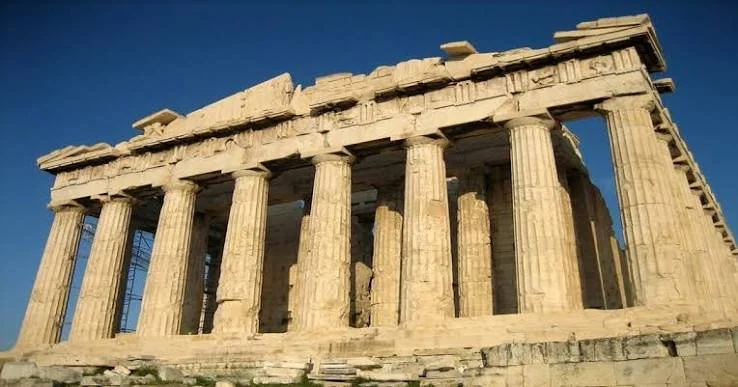
Few political experiments in the ancient world have had an influence comparable to the democracy that developed in Athens during the fifth century BCE. The Athenian system was radically different from modern representative democracies. Citizens participated directly in major decisions, debated legislation and policy in public assemblies, and could exercise political power through institutions designed to prevent the concentration of authority.
Yet Athenian democracy did not emerge suddenly, nor was it a permanent or universally inclusive system. It developed through centuries of political conflict, economic change, social tension, warfare, and constitutional experimentation. It also excluded women, enslaved people, and resident foreigners from citizenship.
The history of Athenian democracy is therefore both a story of political innovation and a reminder that ancient concepts of citizenship were fundamentally different from modern ideas of universal political participation.
Athens Before Democracy
Early Athens was governed by aristocratic families.
Political power was concentrated among elite households that controlled land, wealth, religious offices, and political institutions.
The city experienced growing tensions between wealthy aristocrats and poorer citizens.
Debt was particularly important.
Some poorer Athenians could become trapped in systems of debt dependency, creating severe social instability.
These tensions encouraged political reform.
Solon's Reforms
Around 594 BCE, Solon was appointed archon and given extraordinary authority to address Athens' political crisis.
He introduced important reforms.
One of his most famous measures was the cancellation or restructuring of certain debts.
Solon also reorganized political participation according to wealth rather than purely aristocratic birth.
This did not create democracy in the later sense, but it weakened the exclusive political dominance of hereditary aristocrats.
His reforms established an important precedent:
Athens could change its political constitution through deliberate institutional reform.
The Age of Peisistratus
Athens subsequently experienced periods of tyranny.
Peisistratus seized power and ruled as tyrant.
Despite the modern negative meaning of the word "tyrant," ancient Greek tyranny could involve both authoritarian rule and policies that benefited sections of the population.
Peisistratus supported religious festivals, monumental construction, and economic development.
After his death, his sons continued the regime, but their rule eventually became unpopular.
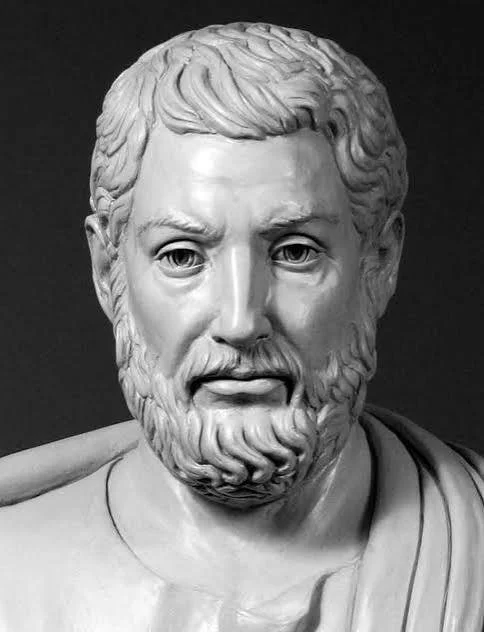
Cleisthenes and Democratic Reform
The decisive transformation came with the reforms of Cleisthenes around 508/507 BCE.
Cleisthenes reorganized the population into new political units called demes and tribes.
This weakened the traditional influence of aristocratic families because political organization no longer depended entirely on older regional and family networks.
The Council of 500 became an important institution.
Athens was increasingly organized around participation by citizens rather than domination by a small group of aristocratic families.
The Assembly
The Ecclesia, or citizen assembly, became central to Athenian political life.
Eligible male citizens could attend.
The assembly could debate:
War
Peace
Alliances
Laws
Finance
Foreign policy
Political decisions
This was direct democracy.
Citizens did not primarily vote for representatives who would make decisions on their behalf.
They participated personally.
Sortition and Political Equality
Athens used selection by lot extensively.
Many public offices were filled through random selection among eligible citizens.
The principle behind this system was that political office should not automatically belong to wealthy or powerful individuals.
Some positions, especially those requiring specialized military or financial expertise, were elected.
Generals, for example, were elected rather than simply selected by lot.
Pericles and the Expansion of Democracy
During the fifth century BCE, democratic institutions became increasingly influential.
Pericles became one of the most important political figures in Athens.
Under his leadership, Athens invested heavily in:
Public architecture
Naval power
Religious festivals
Civic institutions
Payment for certain public offices and jury service helped make political participation more accessible to citizens who were not wealthy.
The Courts
Athenian democracy relied heavily on popular courts.
Large citizen juries heard cases.
There were no modern professional judges in the same sense as contemporary judicial systems.
Citizens could serve as jurors and determine verdicts.
This gave ordinary male citizens significant authority within the legal system.
Who Was Excluded?
Athenian democracy was highly participatory but not universal.
Women could be members of the citizen population but did not participate directly in political institutions.
Enslaved people were excluded.
Foreign residents, known as metics, were also excluded from citizenship.
Children were excluded until they reached adulthood.
Thus, the democratic citizen body represented only a portion of Athens' total population.
Democracy During Wartime
War profoundly affected Athenian democracy.
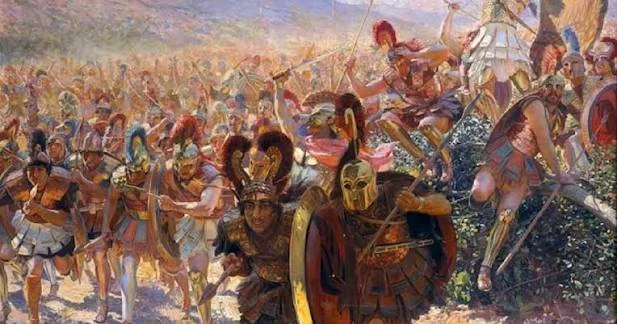
The Persian Wars strengthened Athens' naval power.
The poorer citizens who served as rowers became essential to military success.
Their growing military importance reinforced the political importance of the lower citizen classes.
The navy and democracy consequently became closely associated.
The Peloponnesian War
The Peloponnesian War created enormous pressure on the democratic system.
Athens suffered devastating military setbacks, including the Sicilian Expedition.
Political divisions intensified.
In 411 BCE, oligarchic forces temporarily seized control.
In 404 BCE, after Athens lost the war to Sparta, the Thirty Tyrants established another oligarchic regime.
Democracy was restored in 403 BCE.
The Trial of Socrates
The restored democracy faced continuing political tension.
In 399 BCE, Socrates was tried and executed.
His trial has become one of the most famous episodes in the history of Athenian democracy.
The case demonstrated both the power and dangers of popular judicial institutions.
The Macedonian Conquest
Athenian independence eventually faced a new challenge from Macedon.
Philip II defeated Athens and its allies at Chaeronea in 338 BCE.
Athens retained internal institutions, but its independence in foreign affairs was severely reduced.
Later Macedonian rulers continued to influence Athenian politics.
The End of Classical Democracy
Athens experienced additional political changes under Hellenistic and Roman rule.
The democratic system did not simply disappear overnight.
Instead, its authority gradually became constrained by larger imperial structures.
Athens remained culturally important, but it was no longer the independent political power it had been during the fifth century BCE.
Legacy
The Athenian democratic experiment influenced later political thought profoundly.
Modern democracy is not identical to the Athenian model.
Modern systems generally emphasize:
Universal suffrage
Representation
Constitutional rights
Individual liberties
Separation of powers
Ancient Athens operated according to very different principles.
Nevertheless, Athens established an extraordinarily influential idea:
Political decisions could be made through active participation by citizens rather than exclusively by hereditary rulers or aristocratic elites.
That concept remains one of the most enduring legacies of Classical Greece.