The Long Walls of Athens were among the most important defensive structures in Classical Greece.
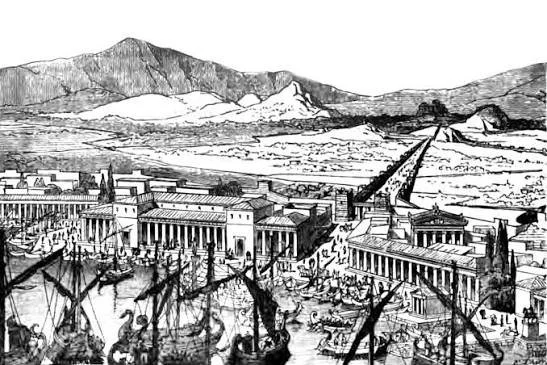
They connected Athens with its major port areas, allowing the city to maintain access to the sea even when enemy armies occupied the surrounding countryside.
The strategy behind the walls transformed Athens into a power whose survival depended heavily on naval strength.
Athens and the Sea
Athens possessed a major natural harbor at Piraeus.
Its naval fleet became increasingly powerful during the fifth century BCE.
The problem was geographical.
Athens and Piraeus were separated by several kilometers of land.
If an enemy army occupied Attica, Athens could potentially be cut off from the sea.
The Solution
The Athenians constructed fortified walls connecting Athens with Piraeus.
These walls created a protected corridor.
A later third wall provided additional protection.
The result was effectively a fortified link between the city and its ports.
Themistocles
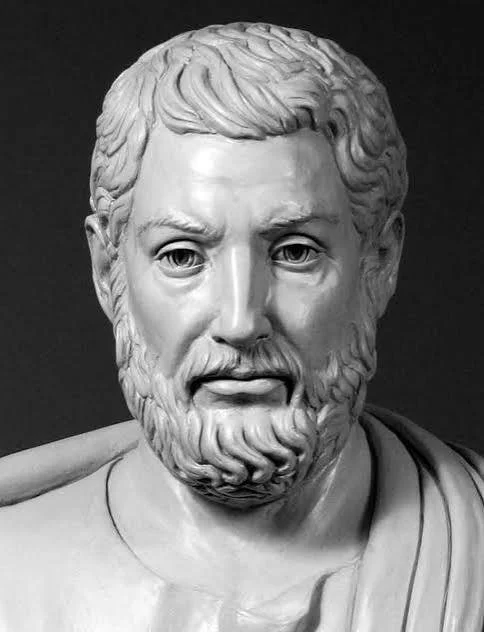
The development of Athens' naval strategy is strongly associated with Themistocles.
Following the discovery of silver at Laurion, Athens invested heavily in triremes.
The navy became the foundation of Athenian military power.
The Peloponnesian War
The Long Walls became particularly important during the Peloponnesian War.
Athens adopted a strategy of avoiding direct confrontation with Sparta's superior land army.
Athenians living in rural Attica moved inside the fortified city.
Spartan forces could devastate farmland, but Athens remained connected to its navy and overseas supplies.
The Strategy
The system worked according to a simple principle:
Sparta controlled the land; Athens controlled the sea.
The Long Walls allowed Athens to withstand land invasions while continuing maritime operations.
Problems
The strategy had serious weaknesses.
Large populations crowded into Athens.
The plague of 430 BCE spread rapidly under these conditions.
The city suffered severe mortality.
The strategy also depended upon maintaining naval superiority.
If Athens lost control of the sea, the walls could no longer guarantee survival.
Spartan Blockade
During the later stages of the Peloponnesian War, Spartan naval power improved with Persian financial support.
Athens eventually lost key naval battles.
Its maritime supply network collapsed.
The Long Walls were dismantled after the Athenian surrender in 404 BCE.
Historical Importance
The Long Walls demonstrate how architecture can embody military strategy.
They were not simply defensive walls.
They were part of a larger strategic system connecting:
Urban population
Naval power
Food supply
Overseas commerce
Military logistics
The walls turned geography into an advantage and helped Athens remain powerful despite lacking Sparta's land army.