Alexander III of Macedon, known as Alexander the Great, remains one of history's most famous conquerors.
Born in 356 BCE, Alexander became king of Macedon after the death of his father, Philip II, in 336 BCE.
His reign lasted only thirteen years, yet during that period he created an empire stretching from Greece and Egypt to Persia and parts of Central and South Asia.
Alexander inherited an extraordinarily capable military system.
Philip II had transformed the Macedonian army.
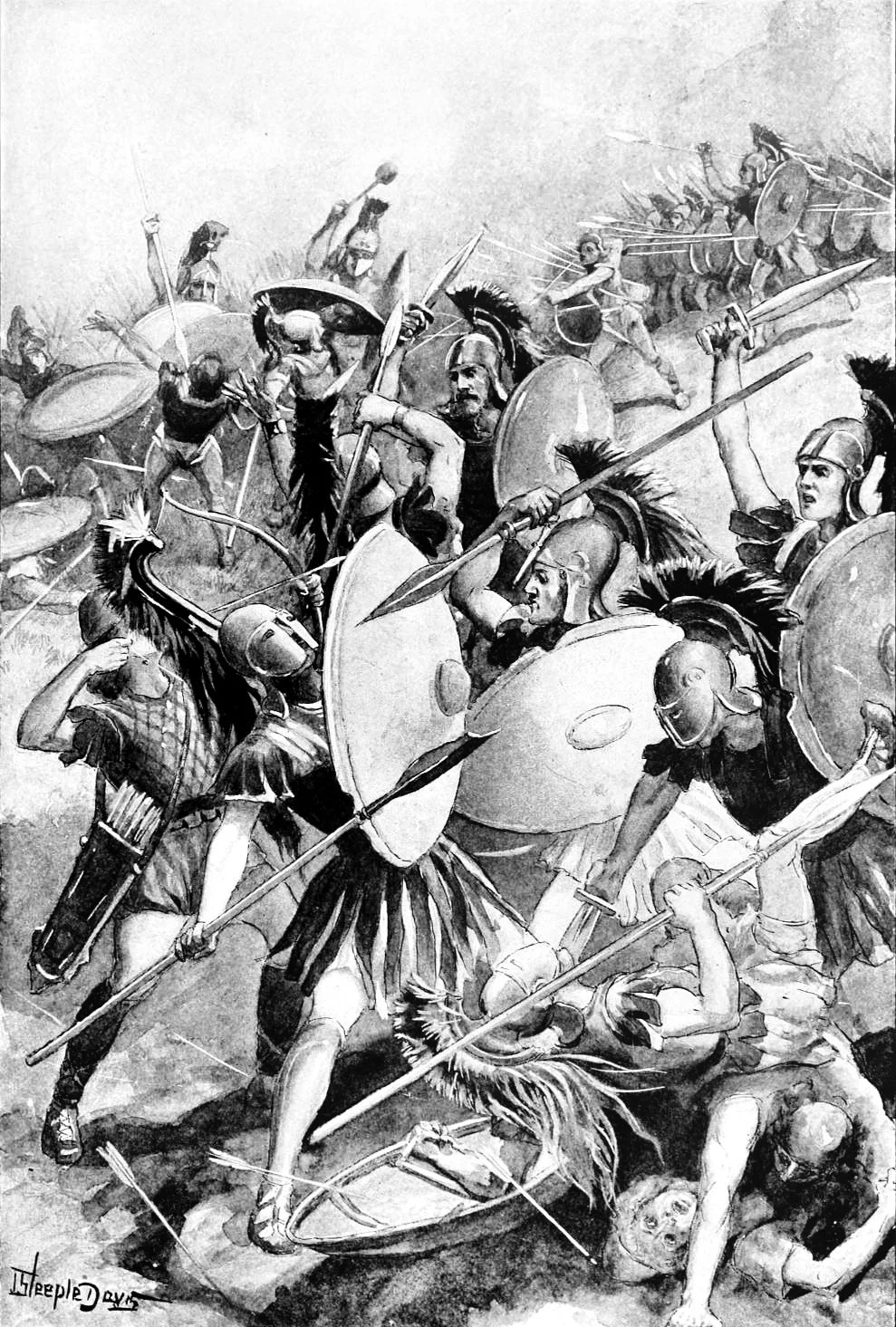
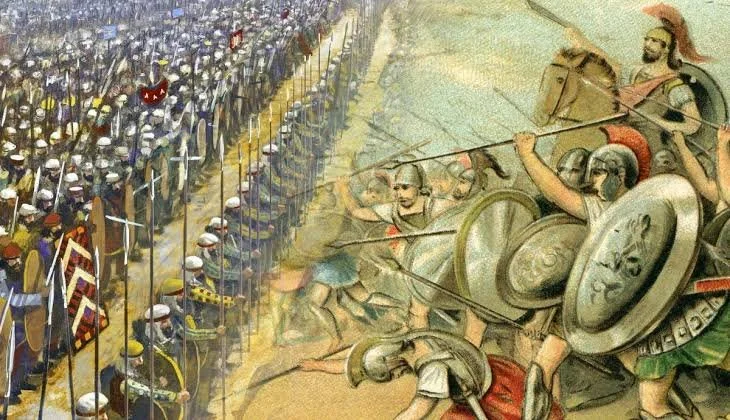
The Macedonian phalanx used the sarissa, a long spear that allowed infantry to attack from a distance. Macedonian cavalry provided mobility and offensive power.
Alexander combined these forces with light infantry, archers, siege engineers, and allied troops.
His first challenge was consolidating Macedonian authority in Greece.
After Philip's death, several Greek communities challenged Macedonian control.
Alexander moved quickly to suppress resistance.
He then began the campaign against Persia that his father had planned.
In 334 BCE, Alexander crossed into Asia Minor.
His first major victory occurred at the Granicus River.
The following year he defeated Persian forces at Issus.
The Persian king Darius III escaped.
Alexander then moved through the eastern Mediterranean.
He captured cities and eventually entered Egypt, where he was welcomed as a liberator from Persian rule.
He founded Alexandria, which later became one of the most important cities of the ancient world.
Alexander returned to Asia and defeated Darius at Gaugamela in 331 BCE.
The Persian Empire effectively collapsed.
Alexander captured Babylon, Susa, and Persepolis.
But conquest did not end there.
Alexander continued eastward.
His campaigns took him into Central Asia and eventually toward India.
At the Hydaspes River, Alexander fought King Porus.
Although Alexander won, the battle was costly.
His soldiers had been campaigning for years.
When Alexander attempted to continue farther east, his army refused.
The troops demanded to return home.
Alexander eventually agreed.
The return journey was difficult and destructive.
Alexander reached Babylon, where he died in 323 BCE at the age of thirty-two.
His empire did not remain politically unified.
His generals, known as the Diadochi, fought among themselves.
Eventually several Hellenistic kingdoms emerged.
Yet Alexander's conquests had profound consequences.
Greek language and institutions spread across much of the eastern Mediterranean and Near East.
Greek became a major language of administration and culture.
At the same time, Greek and local traditions interacted.
The Hellenistic world was not simply "Greek culture imposed on everyone else." It was a complex environment of cultural exchange.
Alexander himself adopted some Persian customs and incorporated Persian nobles into his administration.
This generated controversy among Macedonian and Greek troops.
His attempt to create a more integrated imperial elite demonstrates the difficulty of governing such a diverse empire.
Alexander's historical reputation has also been shaped by later legends.
Ancient writers portrayed him as a heroic conqueror, philosopher-king, military genius, or destructive imperialist depending on their perspective.
Modern historians similarly debate his legacy.
Was Alexander primarily a brilliant strategist?
A ruthless conqueror?
A cultural bridge between East and West?
A monarch driven by ambition?
The evidence supports elements of all these interpretations.
His military achievements were extraordinary.
His campaigns repeatedly defeated larger Persian forces through mobility, tactical coordination, and aggressive leadership.
But his wars also caused immense destruction and death.
Alexander's legacy is therefore inherently contradictory.
He created connections across regions that later became centers of Hellenistic civilization, but he did so through conquest.
He promoted cultural interaction while simultaneously destroying cities that resisted him.
His story illustrates the dual nature of empire: political integration can generate economic and cultural exchange, but it can also emerge through violence.
Alexander did not literally conquer the entire known world.
His empire had geographical limits, and many regions remained beyond his control.
Nevertheless, his achievements were unprecedented for his time.
Within little more than a decade, a Macedonian king transformed the political map of the ancient world.