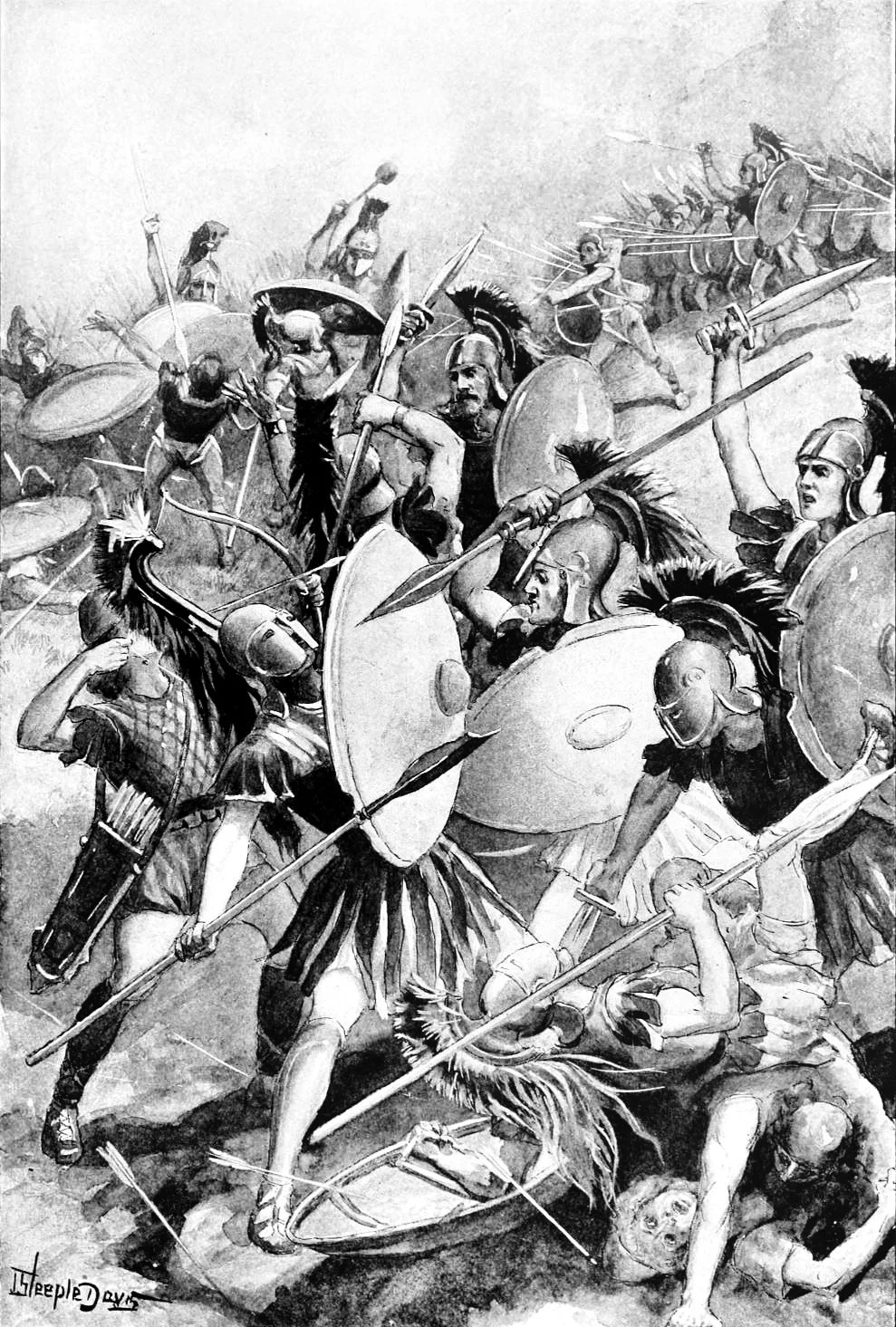
The Peloponnesian War was one of the longest and most destructive conflicts of classical Greek history. Fought primarily between Athens and Sparta and their respective allies from 431 to 404 BCE, the war weakened the Greek world and transformed the balance of power.
The conflict was rooted in the rise of Athens.
After the Persian Wars, Athens became the dominant naval power of the Aegean.
The Delian League gradually evolved into an Athenian empire.
Sparta and its allies viewed the expansion of Athenian influence with increasing concern.
Thucydides, the great historian of the war, argued that the growth of Athenian power and the fear it generated in Sparta were central underlying causes.
The war began in 431 BCE.
Pericles adopted a defensive strategy.
Athens would avoid major land battles with the Spartan army and rely on its navy, walls, and economic resources.
Athenians living in rural Attica were encouraged to shelter inside the city walls while Spartan armies invaded the countryside.
The strategy created terrible conditions.
Crowded populations contributed to the spread of plague.
The Athenian plague killed large numbers of people and contributed to political instability.
Pericles himself died.
Yet Athens continued fighting.
The conflict eventually spread across the wider Greek world.
Athens launched military campaigns in various regions, while Sparta attempted to undermine Athenian alliances.
The most catastrophic Athenian decision was the Sicilian Expedition.
In 415 BCE, Athens sent a massive force against Syracuse.
The expedition initially appeared promising but eventually collapsed.
The Athenian army was trapped and destroyed, while much of the fleet was lost.
The disaster severely weakened Athens.
Sparta later received Persian financial assistance and built a stronger naval force.
Athenian resources were gradually exhausted.
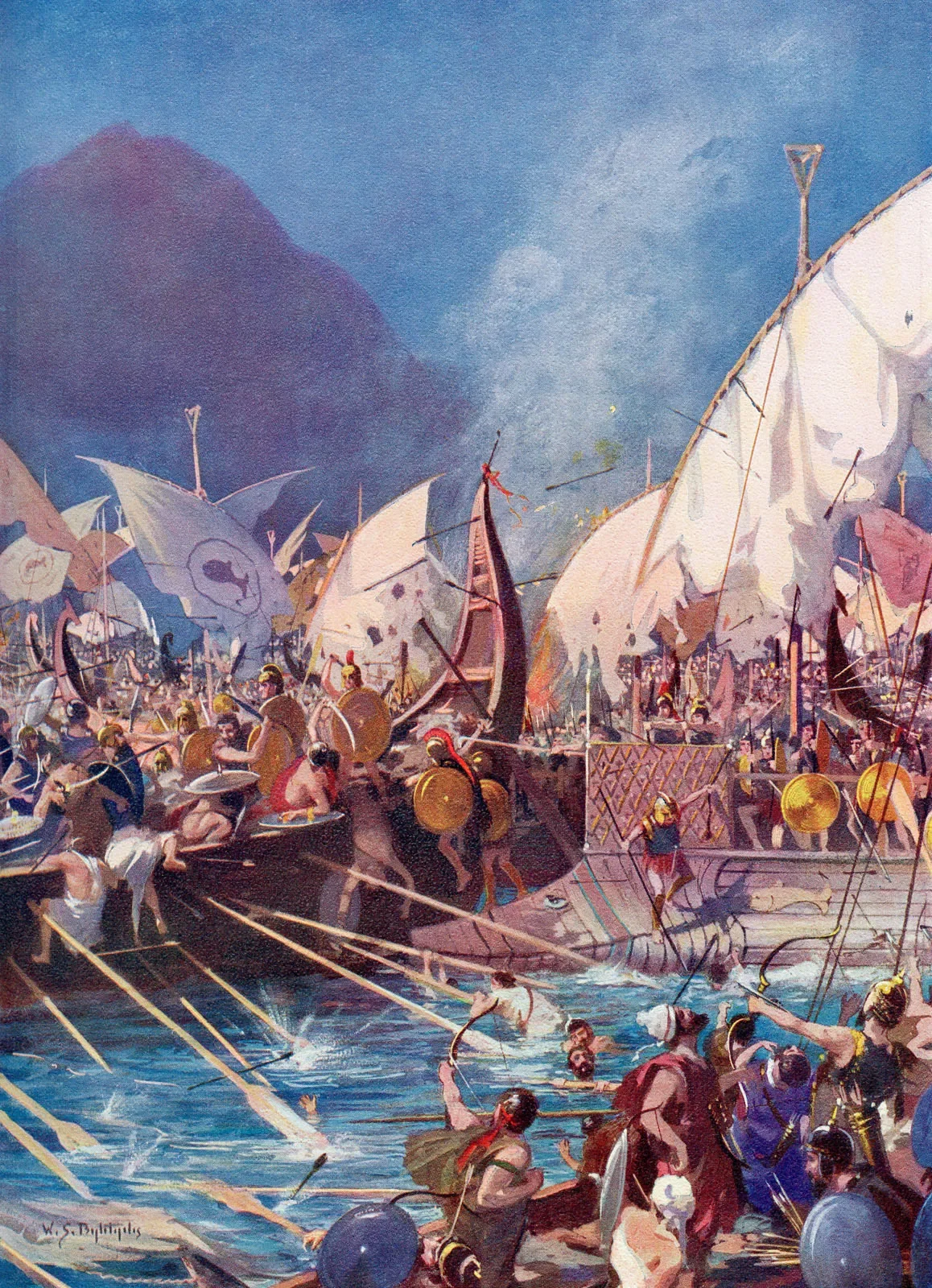
In 405 BCE, the Spartan commander Lysander defeated the Athenian fleet at Aegospotami.
Athens was effectively cut off from its food supply.
The city surrendered in 404 BCE.
The Long Walls were dismantled, and the Athenian empire collapsed.
Sparta became temporarily dominant.
But Sparta's victory did not produce lasting stability.
The war had weakened many Greek states.
Population losses, economic disruption, political violence, and distrust undermined the wider Greek system.
Thebes eventually challenged Sparta and defeated it at Leuctra.
Later, Macedon rose under Philip II.
The Peloponnesian War therefore contributed indirectly to the conditions that allowed Macedonian power to dominate Greece.
The conflict also changed Greek political culture.
Civil wars frequently produced extreme violence.
Thucydides famously examined how war could corrupt political language and social norms.
Words changed meaning, political factions became increasingly radical, and violence could become normalized.
The war therefore offers an early study of the relationship between military conflict and political instability.
It was not simply a war between Athens and Sparta.
It was a systemic crisis involving numerous Greek communities.
The phrase "Greece destroyed itself" captures an important truth, but it should not be taken literally.
Greek civilization did not disappear.
Instead, the independent city-state system became increasingly vulnerable.
Athens continued to exist. Sparta continued to exist. Thebes became powerful. Greek culture continued to flourish.
But the prolonged conflict weakened the political independence of the Greek poleis.
The Peloponnesian War demonstrated one of history's enduring lessons: a society can possess extraordinary military, economic, and cultural resources while simultaneously destroying its strategic position through prolonged internal conflict.