Pella was the royal capital of ancient Macedon and one of the most important cities of the Hellenistic world.
Although overshadowed today by Athens, Alexandria, and other famous ancient cities, Pella played a crucial role in the rise of Macedonian power.
The city became the principal Macedonian capital during the reign of Archelaus I in the late fifth or early fourth century BCE, replacing Aigai as the political center.
Its location was strategically advantageous.
Pella was situated in the fertile Macedonian plain and had access to waterways connected with the Thermaic Gulf.
This allowed the city to participate in agriculture, trade, and military logistics.
The rise of Pella coincided with the transformation of Macedon into a major Greek-world power.
Under Philip II, the kingdom became increasingly influential.
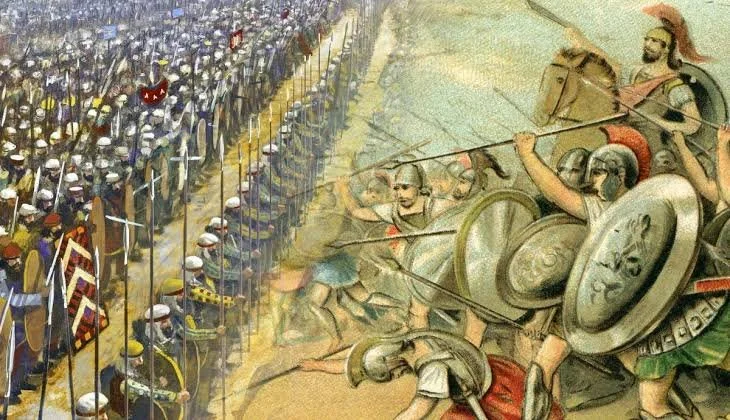
Philip reorganized the army, strengthened the monarchy, expanded Macedonian territory, and intervened in Greek affairs.
Pella served as the administrative and political center of this expanding state.
The city was also a cultural center.
Ancient sources associate the Macedonian court with intellectuals, artists, philosophers, and dramatists.
Aristotle famously served as tutor to the young Alexander at the Macedonian court.
The city's architecture reflected royal wealth.
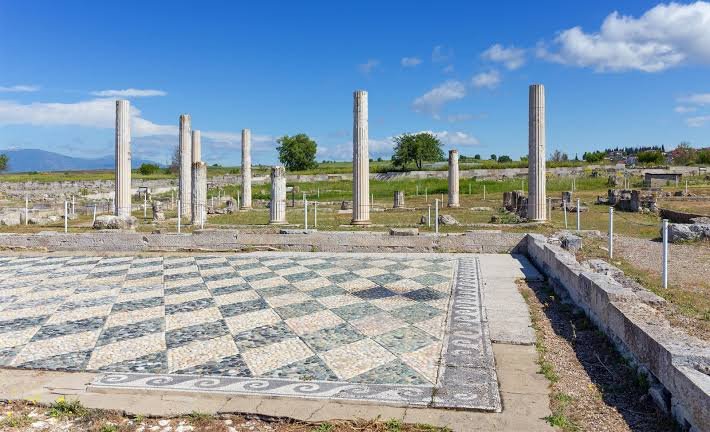
Archaeological excavations have uncovered substantial residential complexes, public buildings, streets, workshops, and elaborate mosaic floors.
Some of the mosaics are especially important.
They demonstrate the sophistication of Hellenistic artistic traditions.
Scenes depicting mythological subjects, hunting, and heroic themes reveal both technical skill and elite cultural values.
Pella's urban plan also demonstrates organized city planning.
Broad streets intersected in a grid-like arrangement.
Residential blocks were organized around courtyards.
This layout reflected the broader development of planned Hellenistic cities.
Pella was more than a palace city.
It contained markets, workshops, religious buildings, and ordinary residential areas.
The archaeological evidence therefore allows historians to investigate different levels of society.
The city's importance continued after Alexander's death.
During the Hellenistic period, Macedon remained an important kingdom despite internal struggles among Alexander's successors and later dynasties.
Rome eventually defeated Macedon.
After the Roman conquest, Pella declined in political importance.
A later settlement was established nearby, while the ancient city gradually lost its prominence.
The archaeological remains today provide evidence of a civilization at the center of Macedonian expansion.
Pella is particularly important because it helps challenge the idea that Macedon's rise was solely the result of military power.
Behind Philip and Alexander stood a sophisticated kingdom with administrative institutions, agricultural resources, urban centers, artistic traditions, and access to the wider Greek world.
Pella was the environment in which this transformation became possible.
The city therefore deserves recognition not simply as Alexander's birthplace region or Philip's capital, but as one of the principal political laboratories of the ancient Mediterranean.