Ancient Greek warfare underwent major transformations that influenced military history for centuries. The Greek contribution was not the invention of war itself, but the development and refinement of military systems that emphasized organization, discipline, equipment, formations, and collective action.
The hoplite became the most recognizable Greek soldier.
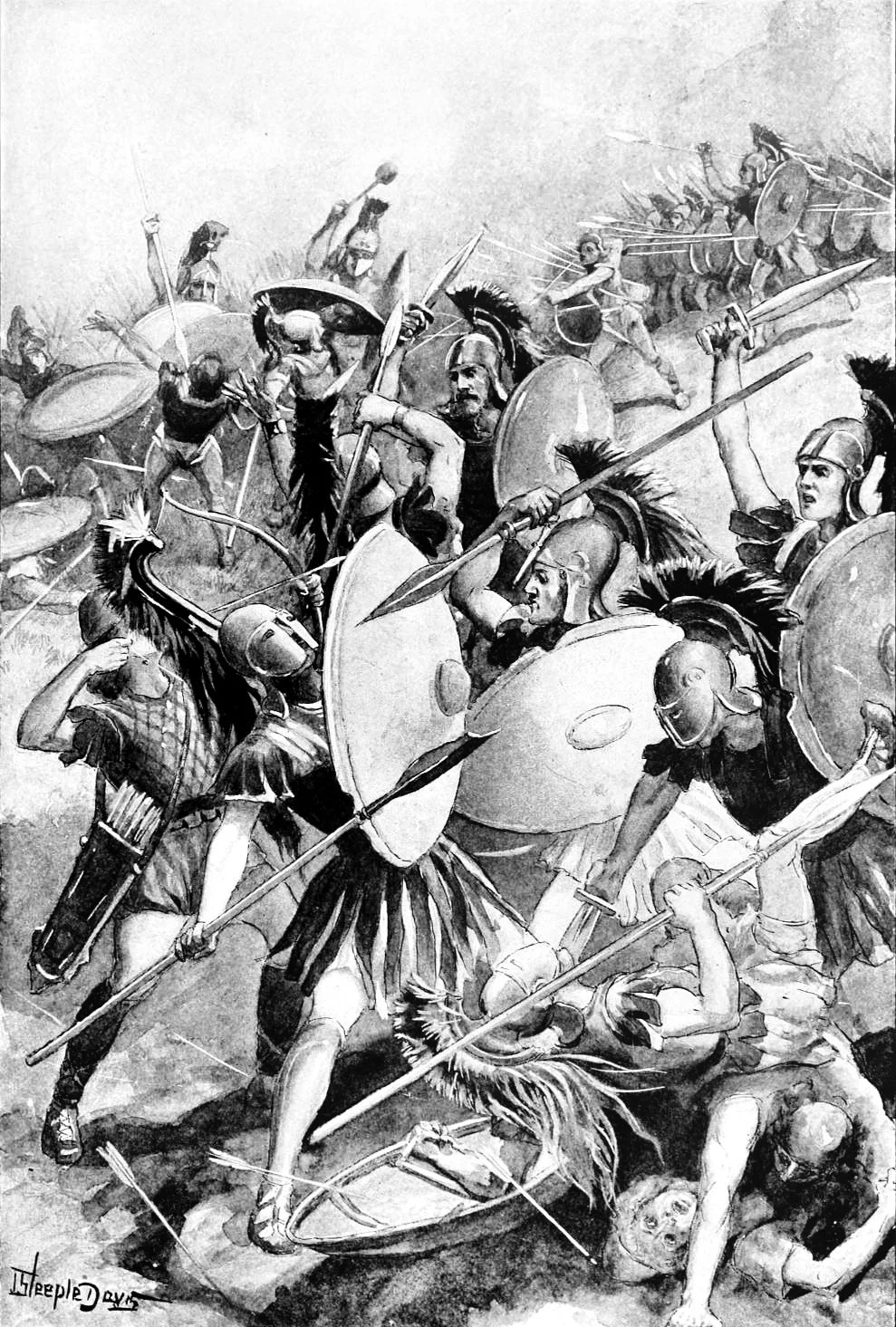
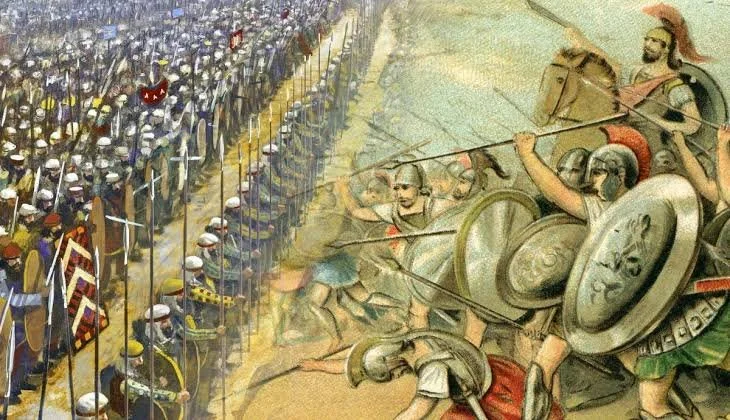
Hoplites were heavily armed infantrymen who typically carried a large round shield, spear, helmet, body armor, and protective greaves.
The shield was particularly important.
A hoplite's shield protected not only himself but also part of the soldier standing beside him.
This encouraged close-order fighting.
The phalanx developed from this principle.
Hoplites stood in dense ranks, presenting a wall of shields and projecting spears toward the enemy. The effectiveness of the formation depended on cohesion.
Individual bravery mattered, but collective discipline mattered more.
Greek warfare therefore emphasized the citizen-soldier.
In many poleis, military service was closely connected with citizenship. Wealthier citizens could afford hoplite equipment, while poorer citizens could serve as light infantry or rowers.
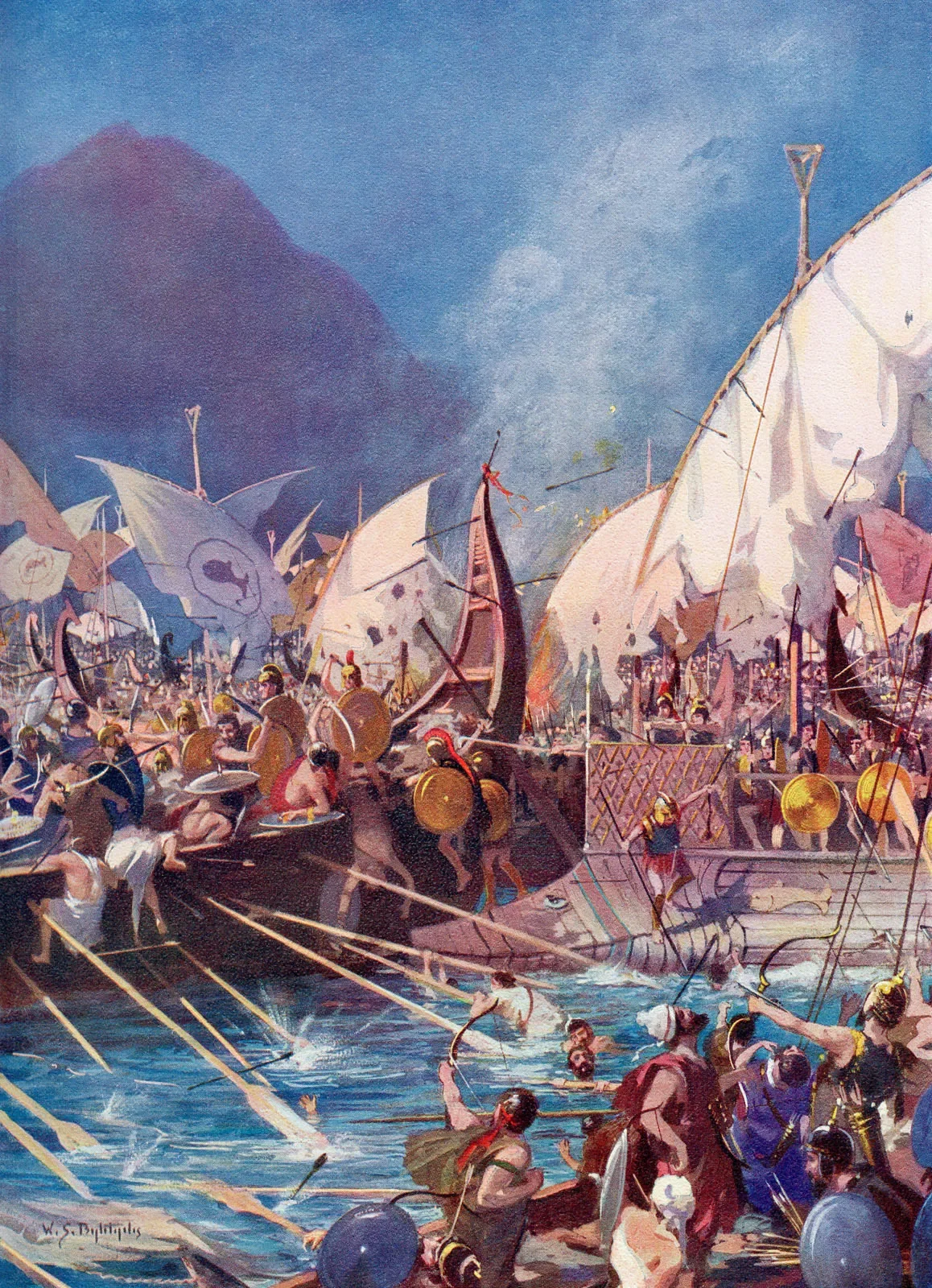
Athens expanded this military model through naval warfare.
The Athenian trireme became one of the most sophisticated warships of the ancient Mediterranean.
Its effectiveness depended on hundreds of people coordinating their movements. Speed, maneuverability, and disciplined rowing allowed Athenian fleets to attack enemy ships through ramming and tactical positioning.
The Battle of Salamis demonstrated the power of naval strategy.
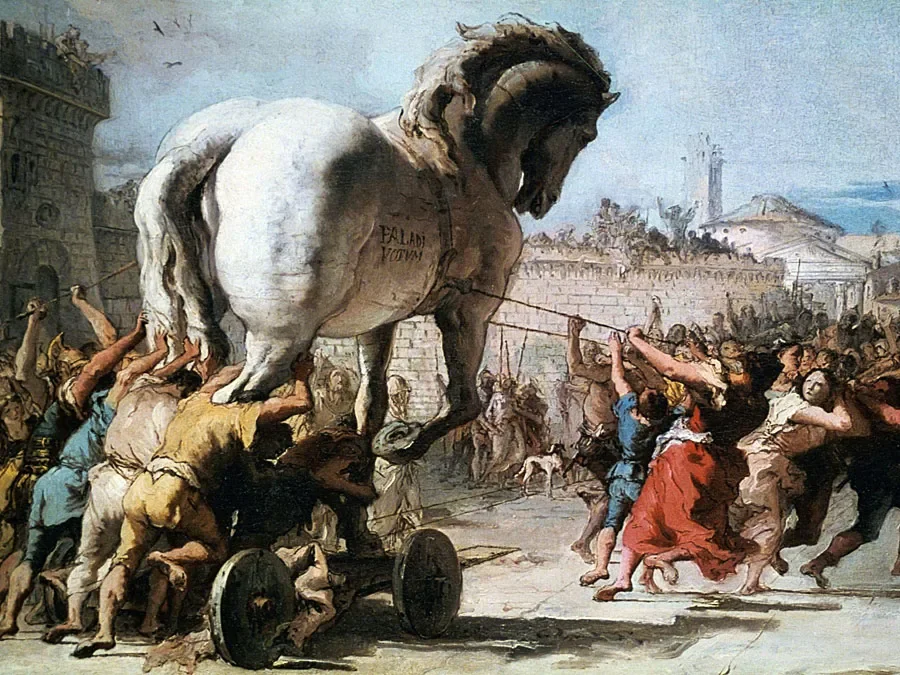
Greek military development also included siege warfare.
As fortified cities became more sophisticated, attackers developed increasingly complex techniques for breaking walls, constructing siege works, mining fortifications, and deploying artillery.
By the Hellenistic period, siege warfare had become highly technical.
Greek engineers also contributed to military mechanics. Devices using torsion and tension could launch stones or arrows over considerable distances.
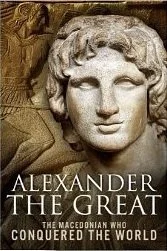
Alexander the Great demonstrated how different military systems could be integrated.
His army combined Macedonian phalanxes, cavalry, archers, light infantry, siege engineers, and specialized troops.
The Macedonian sarissa, a very long spear, allowed infantry formations to project extraordinary reach.
Cavalry provided mobility and striking power.
The combination created a flexible military system that conquered the Persian Empire.
Greek warfare therefore changed from simple mass infantry confrontation toward increasingly integrated combined-arms operations.
Military planning also became more sophisticated.
Commanders increasingly considered terrain, logistics, reconnaissance, supply routes, naval transport, and siege capabilities.
Greek historians such as Thucydides analyzed warfare as a complex interaction between economics, politics, strategy, and human psychology.
The Greek military tradition was therefore both practical and intellectual.
Warfare became a subject of systematic observation.
The Greeks demonstrated that military success depended not only on courage but also on organization, training, technology, logistics, and strategic planning.
Their methods influenced Macedonian warfare, the Hellenistic kingdoms, and eventually Rome.