Ancient Greek cities were frequently protected by formidable fortifications.
Stone walls, towers, gates, ditches, elevated terrain, and carefully designed defensive systems allowed relatively small communities to resist much larger armies.
Before the development of sophisticated artillery and large-scale siege machinery, a well-defended fortress could be extraordinarily difficult to capture.
The history of Greek fortifications is therefore a history of engineering, geography, logistics, and endurance.
Why Walls Mattered
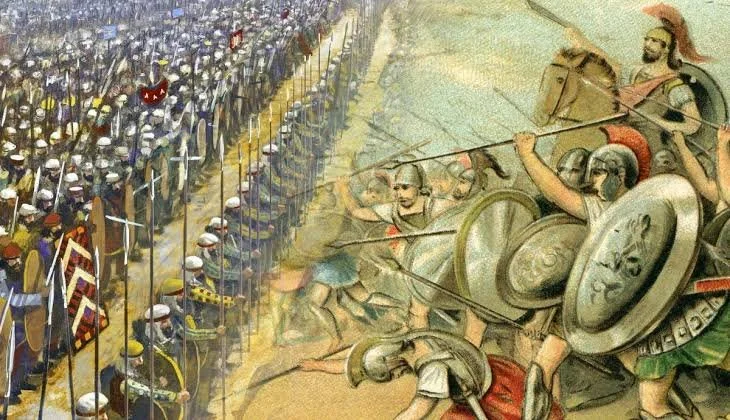
A hoplite army could be highly effective in open battle.
But fighting against a fortified wall was completely different.
Defenders could remain behind protection while attackers had to expose themselves.
Walls therefore multiplied the defensive power of a relatively small force.
Choosing the Location
Greek fortresses were often positioned strategically.
Hilltops were particularly valuable.
Elevation provided:
Visibility
Natural protection
Control of roads
Defensive advantage
Reduced accessibility
Acropolises frequently served as fortified strongholds.
Stone Construction
Greek walls were constructed using different techniques.
Some employed carefully cut stone.
Others used irregular masonry.
Massive blocks could create extremely strong defenses.
The quality of construction depended upon resources and period.
Towers
Defensive towers projected outward from walls.
They allowed defenders to attack enemies approaching the base of the wall.
This created overlapping fields of fire.
Archers and stone throwers could attack attackers from multiple directions.
Gates
Gates were among the most vulnerable points.
Greek engineers developed complex gate systems.
Approaches could be narrowed.
Multiple defensive barriers could be constructed.
Attackers approaching a gate could become exposed to missiles from defenders above.
Ditches
Some fortifications included ditches.
These slowed attackers and made siege towers or battering rams more difficult to deploy.
Water Supply
A fortress needed water.
A siege could last for months.
Defenders therefore constructed:
Wells
Cisterns
Reservoirs
Reliable water supplies could determine whether a city survived.
Food Storage
Food was equally important.
Grain could be stored inside fortified settlements.
Salted meat and preserved foods could support defenders during prolonged sieges.
Defensive Weapons
Defenders used:
Spears
Arrows
Sling stones
Javelins
Large stones
Boiling liquids are often mentioned in popular accounts of ancient warfare, but archaeological and textual evidence varies considerably depending on the site and period.
Counter-Siege Operations
Defenders were not passive.
They could launch attacks outside the walls.
Sorties could destroy siege equipment.
They could also attack enemy camps.
Mining and Countermining
Attackers sometimes attempted to undermine walls.
Defenders could respond by digging counter-tunnels.
This created subterranean warfare.
Siege Towers
Attackers could construct towers to approach walls.
Defenders attempted to destroy them with fire, projectiles, or counterattacks.
Fire
Fire was an effective weapon against wooden siege equipment.
Defenders could attempt to ignite siege towers, ladders, and shelters.
Psychological Warfare
Long sieges created enormous psychological pressure.
Defenders had to maintain morale.
Attackers had to maintain discipline.
Disease and hunger could become more dangerous than direct combat.
Relief Forces
A besieged city might send messages requesting assistance.
An allied army arriving from outside could force the besiegers to withdraw.
This made diplomacy and military alliances extremely important.
Famous Examples
Several Greek fortresses became famous for their defensive strength.
Acrocorinth, for example, occupied a strategically important elevated position overlooking the Corinthian region.
Messene also possessed substantial fortifications.
The walls of Syracuse became especially important during conflicts involving Athens and later Rome.
The Development of Siege Warfare
By the Hellenistic period, siege technology became much more advanced.
Large artillery machines, towers, battering devices, and specialized engineering units changed the balance.
Fortifications had to adapt.
Walls became thicker.
Defensive towers became more sophisticated.
Endurance as a Weapon
Ultimately, fortifications depended on endurance.
A strong wall could not guarantee victory forever.
A city needed:
Food
Water
Soldiers
Leadership
Morale
External support
If any of these failed, even the strongest fortress could fall.
Conclusion
Greek fortresses were sophisticated defensive systems rather than simple stone walls.
Their effectiveness came from the combination of architecture, geography, logistics, weapons, and human organization.
A well-designed fortress could transform a small community into a military obstacle capable of frustrating an army many times its size.
For ancient Greek states, fortification was therefore not merely construction.
It was strategic engineering in stone.