Mercenaries played an important and sometimes underestimated role in the military history of ancient Greece. Although the popular image of Greek warfare often centers on citizen-soldiers—particularly the heavily armed hoplites of the classical city-states—Greek armies were rarely composed exclusively of citizens. From the Archaic period through the Hellenistic age, professional soldiers, foreign auxiliaries, and hired troops increasingly became important instruments of warfare. Their presence reflected broader changes in Greek society, economics, diplomacy, and military technology.
A mercenary, in the ancient Greek context, was generally a soldier who fought for a foreign ruler, city, or commander in exchange for payment or material rewards rather than because he possessed a direct civic obligation to the political community for which he fought. The Greek word misthophoros, meaning roughly “wage-earner” or “one who receives pay,” captures this economic dimension. Military service could therefore become a profession, particularly for men who came from regions where warfare was an established means of livelihood.
The Origins of Greek Mercenary Service
Mercenary warfare did not suddenly appear during the classical period. Greek soldiers had already developed reputations as effective fighters in foreign lands before the fifth century BCE. The mountainous geography and fragmented political organization of the Greek world produced numerous communities with strong martial traditions. Soldiers from Arcadia, Crete, Thessaly, Achaea, and other regions could find employment beyond their own cities.
One particularly famous group was the Cretan archer. Cretan soldiers were valued for their skill with the bow and frequently served outside Crete. Their specialization illustrates an important characteristic of ancient mercenary warfare: commanders did not necessarily hire foreigners simply because they needed additional manpower. They often sought troops with capabilities that their own citizens lacked.
Another major source of mercenary soldiers was Arcadia in the central Peloponnese. Arcadian communities developed reputations for producing experienced infantrymen. Their relatively poor agricultural conditions in some areas may have encouraged military service as an economic opportunity, although economic explanations alone cannot account for the phenomenon.
Why Greek Soldiers Became Mercenaries
There were several reasons why men entered mercenary service.
Economic necessity was one of the most obvious. Agriculture could be uncertain, land was unequally distributed, and opportunities for employment were limited. A soldier with valuable military skills could potentially earn more through campaigning than through farming.
Military reputation was another factor. A successful warrior could accumulate experience, wealth, and prestige by serving powerful commanders. Military service could become a career rather than a temporary civic responsibility.
Political instability also contributed. Civil conflicts, succession disputes, and wars between rival Greek communities created demand for soldiers. A defeated political faction might leave its homeland and continue fighting elsewhere, transforming displaced warriors into professional soldiers.
The expansion of Greek military activity beyond mainland Greece further increased opportunities. Greek soldiers participated in campaigns in Egypt, Asia Minor, the Black Sea region, Sicily, and eventually throughout the eastern Mediterranean and Near East.
The Persian Empire and Greek Mercenaries
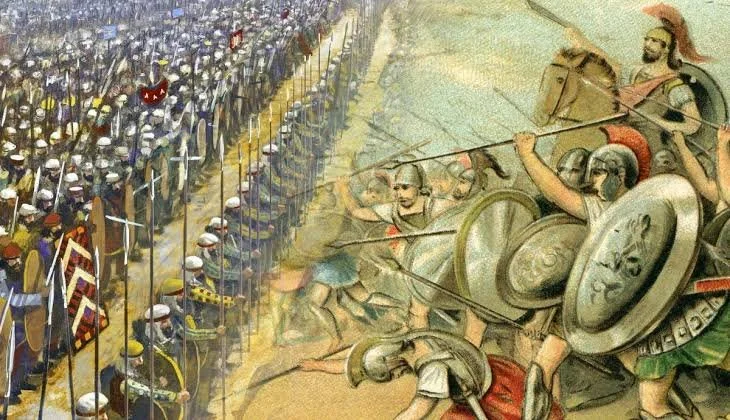
The Persian Empire became one of the most important employers of Greek mercenaries. Persian rulers recognized that Greek infantry could be highly effective, particularly in close-order combat.
Greek soldiers entered Persian service for different reasons. Some were individuals seeking employment, while others belonged to larger groups commanded by Greek officers. The political divisions of Greece made it possible for Persian rulers to recruit soldiers from communities that were otherwise enemies of Persia.
The most famous illustration is the expedition associated with Cyrus the Younger in 401 BCE. Cyrus recruited a large force of Greek mercenaries, later known as the Ten Thousand, as part of his attempt to challenge his brother Artaxerxes II for the Persian throne.
The campaign ultimately failed after Cyrus was killed at the Battle of Cunaxa. Yet the Greek mercenaries demonstrated remarkable military resilience. Their subsequent retreat through hostile territory became one of the most famous episodes in Greek military history and was later described by Xenophon in the Anabasis.
Xenophon and the Ten Thousand
The experience of the Ten Thousand is especially significant because it demonstrates how mercenary armies could function as organized military communities.
After the death of Cyrus and the betrayal and execution of several Greek commanders, the mercenaries found themselves deep inside the Persian Empire without reliable leadership. They nevertheless reorganized themselves and began the long journey toward the Black Sea.
Their survival demonstrated several characteristics of professional soldiers. They possessed military discipline, tactical knowledge, organizational structures, and an understanding of collective bargaining with commanders.
Xenophon's account also reveals the economic side of military service. These soldiers were not simply fighting for an abstract political cause. They expected payment, rewards, and safe conditions. Their continued cooperation depended upon leadership being able to maintain their confidence.
Mercenaries in the Greek City-States
Greek city-states themselves also employed mercenaries. Athens, Sparta, Corinth, Thebes, and other states could supplement citizen armies with hired troops when circumstances required.
This became especially important when prolonged wars placed pressure on citizen populations. A citizen-soldier generally had agricultural, commercial, or political responsibilities at home. Extended campaigns could therefore become economically disruptive.
Mercenaries offered a solution. Professional soldiers could remain in the field for longer periods and could be deployed to distant theaters.
Athens, for example, increasingly relied upon professional troops during the later stages of the Peloponnesian War and the fourth century BCE. As warfare became more complex and geographically extensive, the distinction between citizen armies and professional forces became less absolute.
Light Infantry and Specialized Mercenaries
Mercenary service was not restricted to heavily armed infantry.
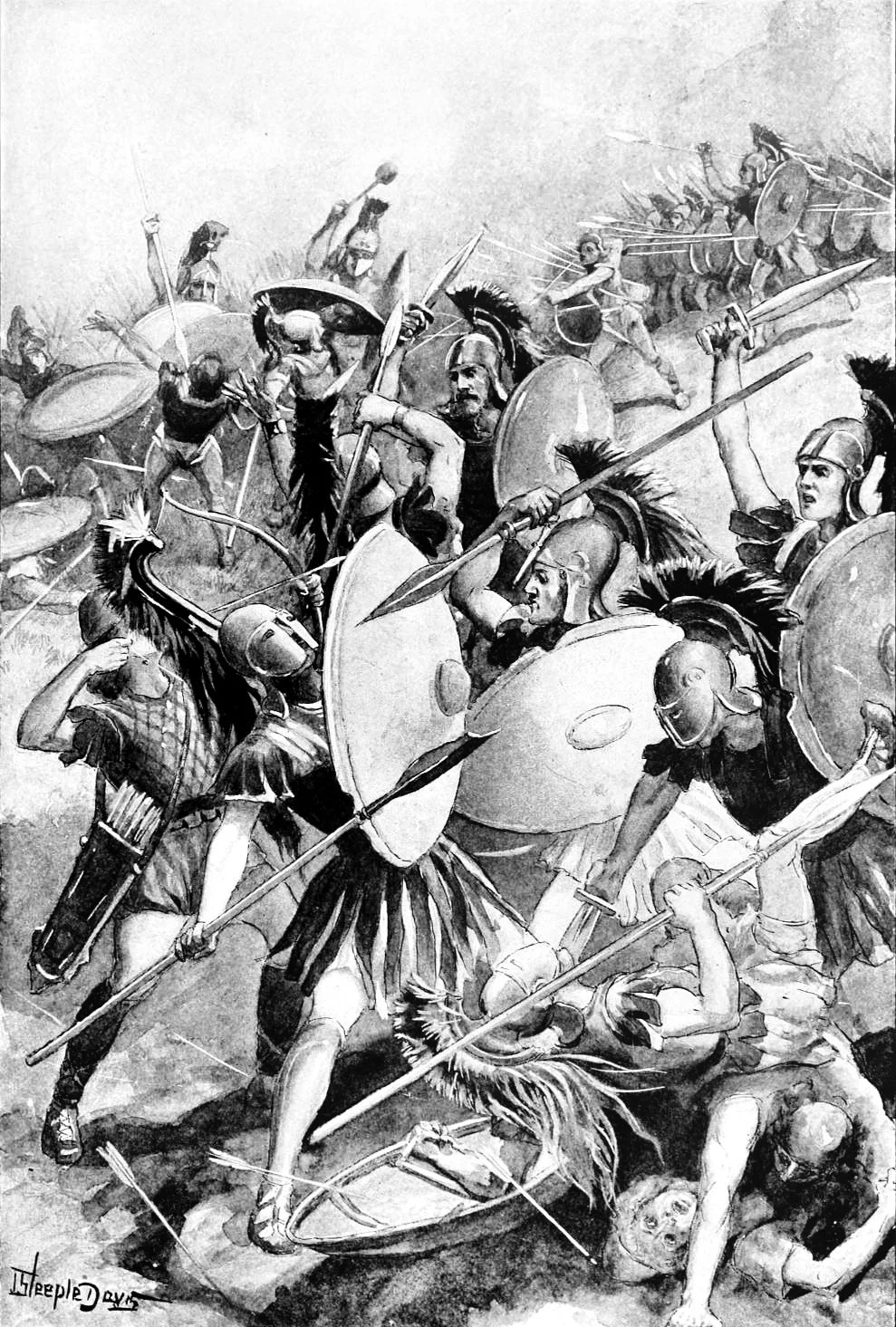
Greek armies employed specialists such as archers, slingers, cavalrymen, and peltasts. Thracian peltasts were particularly valued. Their lighter equipment allowed them to move rapidly across difficult terrain and conduct skirmishing operations against heavily armed infantry.
Cretan archers were famous for ranged combat. Thessalian cavalry had a strong reputation for mounted warfare. Rhodian slingers were also highly regarded.
These specialized troops could fundamentally alter battlefield tactics. A commander with access to a diverse mercenary force could combine heavy infantry, light troops, cavalry, and missile specialists into a more flexible army.
Mercenaries and the Peloponnesian War
The Peloponnesian War intensified the demand for professional soldiers. The conflict between Athens and Sparta lasted for decades and repeatedly required campaigns in distant regions.
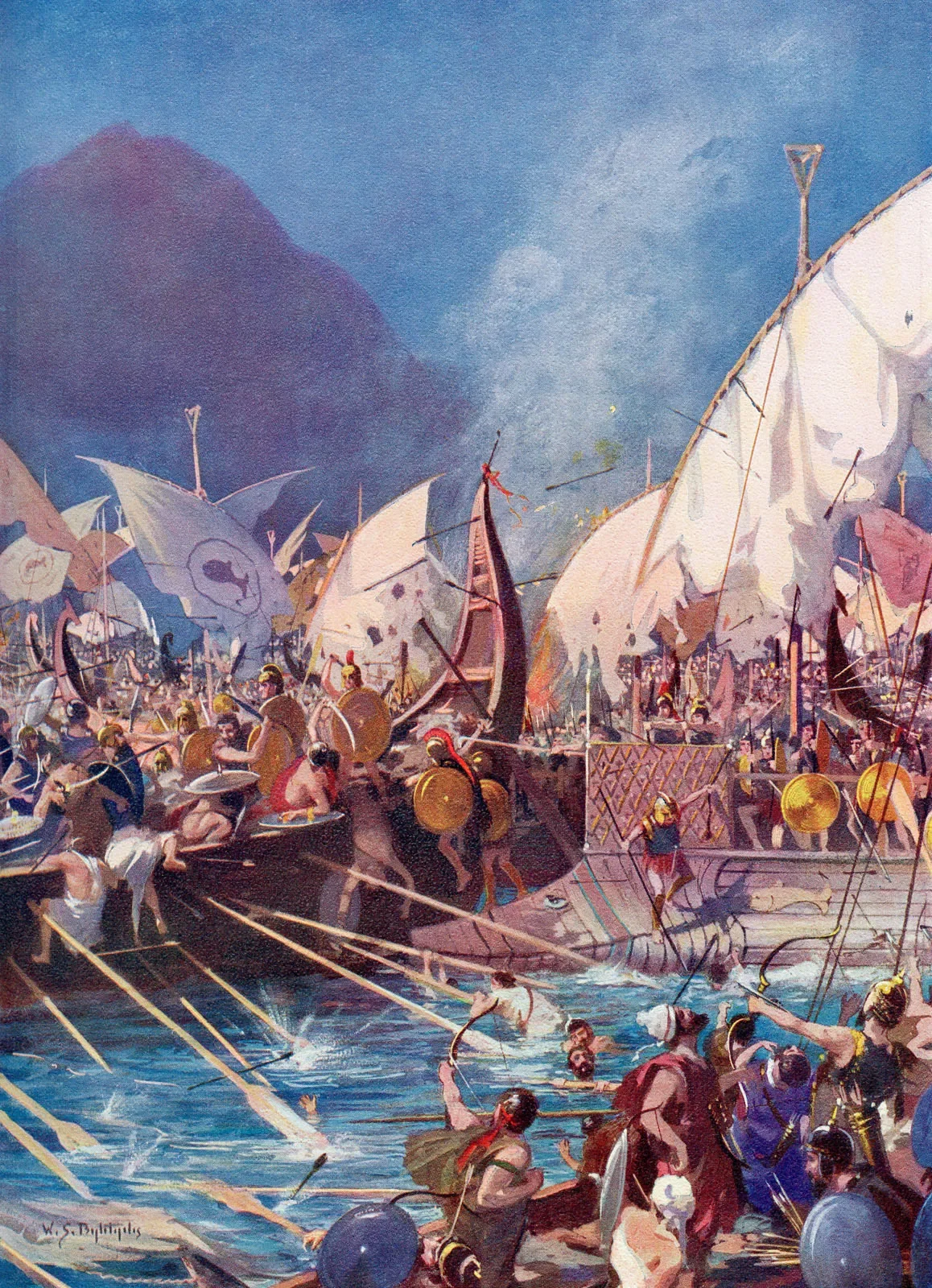
The Sicilian Expedition demonstrated the enormous logistical requirements of large-scale warfare. Athens needed soldiers, sailors, rowers, cavalry, and specialized troops far from Attica.
As the war continued, economic resources became increasingly important. Sparta eventually received substantial Persian financial assistance, allowing it to construct and maintain a naval force capable of challenging Athenian maritime supremacy.
Mercenary troops became part of this broader transformation in warfare, in which money, naval resources, supply systems, and professional military expertise were increasingly decisive.
The Fourth Century BCE
The fourth century BCE witnessed a significant expansion of professional warfare.
The decline of traditional assumptions about citizen military service was connected to prolonged conflict. States needed soldiers who could campaign repeatedly, sometimes far from their homes.
Commanders such as Iphicrates demonstrated how lighter infantry could challenge traditional hoplite methods. His reforms involving peltasts emphasized mobility, reach, and tactical flexibility.
At the same time, military entrepreneurs became increasingly prominent. Successful commanders could recruit soldiers independently and offer their services to different political powers.
This created a military marketplace in which skilled soldiers became valuable commodities.
Mercenaries and Alexander the Great
The Macedonian conquest of the Persian Empire transformed the scale of Greek military employment.
Alexander the Great commanded Macedonian and Greek troops, but his armies also incorporated soldiers from many different regions. After the conquest of Persia, large numbers of Greek mercenaries continued to serve under Hellenistic rulers.
The successor kingdoms created enormous demand for professional armies. The Seleucid, Ptolemaic, Antigonid, and other states needed soldiers to control territories, fight rivals, suppress revolts, and defend borders.
The Hellenistic world therefore produced perhaps the most extensive mercenary system in ancient Greek history.
The Advantages of Mercenary Soldiers
Mercenaries provided several military advantages.
First, they were experienced. A professional soldier who had fought in multiple campaigns could possess practical battlefield knowledge that a newly mobilized citizen might lack.
Second, they were available for prolonged campaigns. Because warfare was their occupation, they could remain away from home for extended periods.
Third, mercenaries could provide specialized capabilities.
Fourth, their employment could reduce the political cost of mobilizing citizens. A government could hire professional soldiers rather than continuously disrupting its civilian population.
The Risks of Mercenary Warfare
Mercenaries also presented serious dangers.
Their primary motivation was generally contractual compensation rather than civic loyalty. If payment stopped, their commitment could weaken.
A commander who lacked sufficient funds might therefore lose his army at a critical moment.
Mercenary commanders could also acquire substantial political influence. Armed forces loyal primarily to their leaders could become independent political actors.
There was also the danger of switching employers. A soldier who was willing to fight for one ruler could potentially fight against that ruler's former allies later.
This made mercenary warfare both useful and unpredictable.
The Economics of War
Mercenary warfare demonstrates how closely ancient military history was connected to economics.
Soldiers required wages, food, equipment, clothing, transportation, and sometimes bonuses. Armies therefore depended upon taxation, tribute, loans, plunder, or subsidies.
The ability to finance an army could determine the outcome of a war as much as battlefield tactics.
Persian funding of Greek and Spartan forces during the Peloponnesian War is an important example. Financial resources allowed states to maintain military operations that would otherwise have been difficult to sustain.
The Social Impact of Mercenary Service
Mercenary warfare also affected Greek communities socially.
A man who spent years campaigning abroad might return with wealth and military experience. Others might never return, settling in foreign territories or dying during campaigns.
Military service therefore contributed to the movement of people throughout the Mediterranean and Near East.
Greek mercenaries became part of a wider interconnected world in which soldiers, merchants, settlers, and political refugees crossed regional boundaries.
Conclusion
The history of Greek warfare cannot be understood solely through the image of the citizen hoplite defending his city. Alongside the citizen soldier existed a growing population of professional fighters whose skills could be purchased by states, kings, generals, and political factions.
Mercenaries became particularly important as warfare expanded in duration, distance, complexity, and cost. They served Persian princes, Greek city-states, Macedonian kings, and Hellenistic monarchs. They fought as hoplites, peltasts, archers, cavalrymen, and other specialists.
Their importance ultimately reflects a broader transformation in ancient warfare. Military power increasingly depended not only on courage and civic obligation but also on professional expertise, financial resources, logistics, and the ability to maintain armies over long periods.
The Greek mercenary was therefore more than a hired sword. He was part of a developing military economy that connected the Greek world with Persia, Egypt, Thrace, Asia Minor, and the wider Mediterranean. His career illustrates how warfare became increasingly professional and international long before the emergence of the great professional armies of later empires.