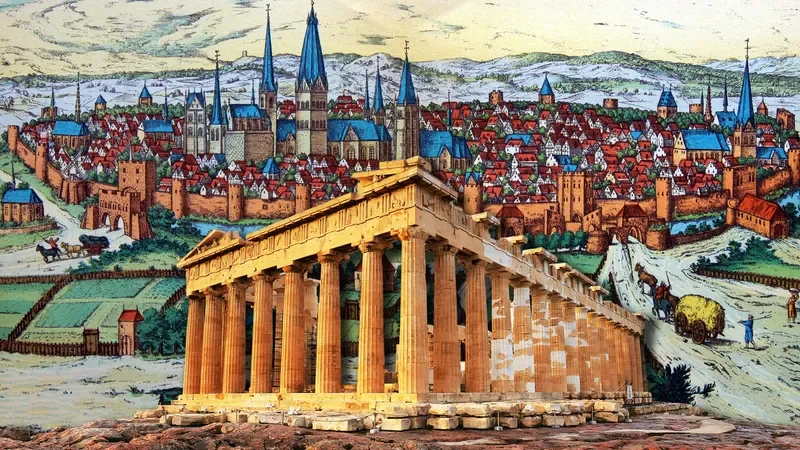
The ancient Greek city-state, or polis, was one of the most influential political institutions of the ancient Mediterranean.
A polis was more than a city.
It was a political community consisting of an urban center, surrounding territory, citizens, institutions, religious traditions, and a collective identity.
Examples included Athens, Sparta, Corinth, Thebes, Argos, and many smaller communities.
Unlike modern nation-states, Greek poleis were generally independent political units.
There was no single Greek government controlling all Greek communities.
Instead, each polis developed its own laws and institutions.
Athens developed democracy.
Sparta developed a distinctive mixed political system.
Corinth became a major commercial power.
Thebes emerged as an important military state.
The diversity of these systems makes the Greek world particularly important for political history.
Citizenship was central.
A citizen was not simply a resident.
Citizens possessed political rights and responsibilities.
In Athens, citizens could participate in assemblies, juries, and certain public offices.
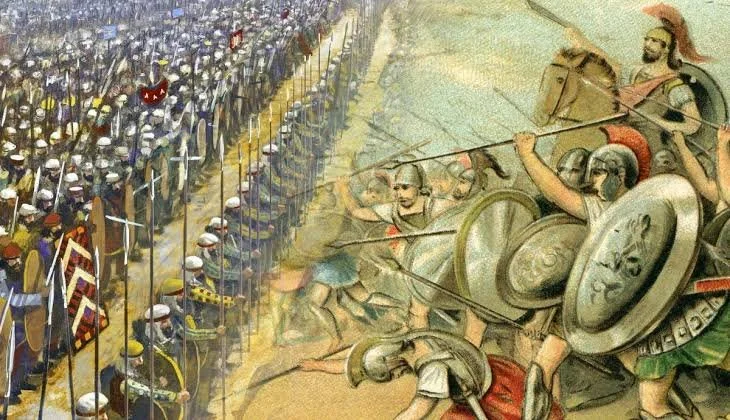
Military service was another major component of citizenship.
The relationship between citizenship and military responsibility reinforced the idea that members of the political community were responsible for its defense.
The polis also created a powerful sense of identity.
Athenians described themselves as Athenians.
Spartans identified themselves with Sparta.
Religious festivals, athletic competitions, military service, and public rituals strengthened civic identity.
The polis also provided economic organization.
Markets, agricultural land, workshops, harbors, and trade networks supported the community.
Some poleis became major commercial centers.
Corinth's location allowed it to benefit from trade between different parts of Greece.
Athens developed a powerful maritime economy connected to Piraeus.
Greek colonization expanded the polis model.
New communities were founded around the Mediterranean and Black Sea.
Although colonies could maintain relationships with their founding cities, many eventually developed independent political identities.
The polis also became a setting for philosophical debate.
Greek thinkers asked fundamental questions about justice, citizenship, law, and government.
Plato's Republic examined the nature of justice and political organization.
Aristotle's Politics analyzed different constitutional systems and argued that political communities should be studied systematically.
The Greek polis therefore became both a practical political institution and an object of intellectual investigation.
However, comparing poleis directly to modern nations has limitations.
Modern nation-states generally have centralized governments, permanent bureaucracies, defined national citizenship, and territorial sovereignty on a much larger scale.
Greek poleis were smaller and often lacked centralized institutions comparable to modern states.
They also frequently depended on personal relationships, local traditions, and face-to-face political participation.
Nevertheless, the polis influenced later political thought.
Modern concepts of civic participation, citizenship, public debate, constitutional government, and political accountability have intellectual connections to ancient Greek political experiments.
The polis also demonstrated that political communities can organize themselves in dramatically different ways.
There was no single Greek model.
The contrast between Athens and Sparta alone shows how diverse political systems could emerge within the same broader cultural world.
The city-state ultimately became one of the great political experiments of antiquity.
Its legacy survives not because modern nations are direct copies of Greek poleis, but because the Greeks developed enduring questions about political membership and civic responsibility.
Who belongs to a political community?
Who should have the right to govern?
What obligations does a citizen owe to the state?
How should political power be distributed?
What makes a government legitimate?
These questions remain central to modern political life.
The ancient Greek polis did not provide modern answers to all of them.
But it helped create the political vocabulary through which later generations continued to ask them.