The Battle of Marathon, fought in 490 BCE, became one of the most famous military encounters of the ancient world.
It was part of the first major Persian invasion of mainland Greece and demonstrated that the Persian Empire, despite its enormous resources, could be defeated by a determined Greek army.
The conflict emerged from the wider confrontation between Persia and the Greek world.
The Ionian Revolt had challenged Persian authority in Asia Minor. Athens supported the rebels, angering the Persian king Darius I.
Darius eventually sent an expedition across the Aegean.
The Persian force captured Eretria and then moved toward Attica.
The Persian army landed near Marathon, a coastal plain northeast of Athens.
The Athenians mobilized their citizen army.
They were supported by Plataea.
Ancient sources provide different numbers for the Persian army, and modern historians remain cautious about estimating its exact size.
The Greek force was probably several thousand hoplites rather than the enormous numbers sometimes suggested by popular retellings.
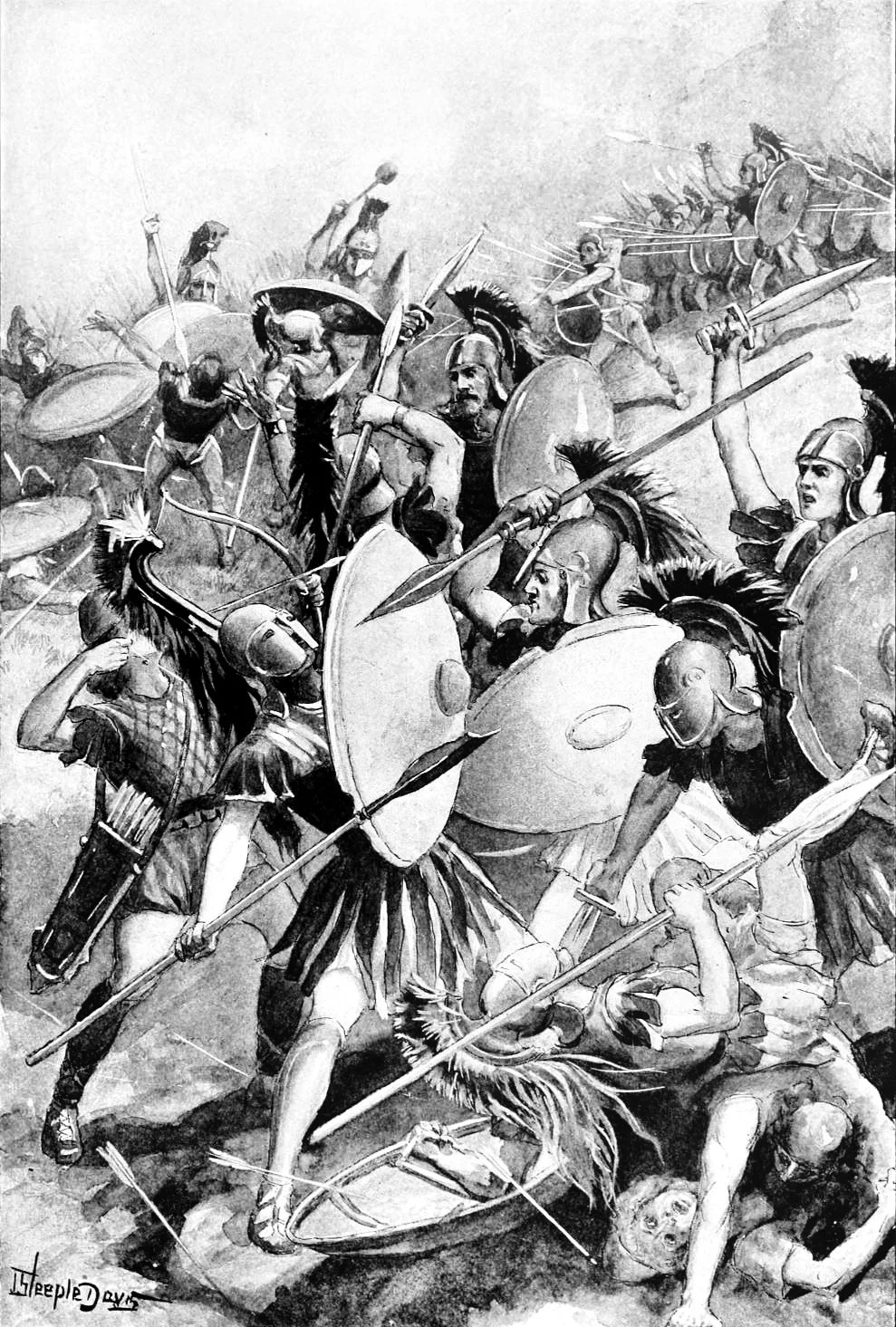
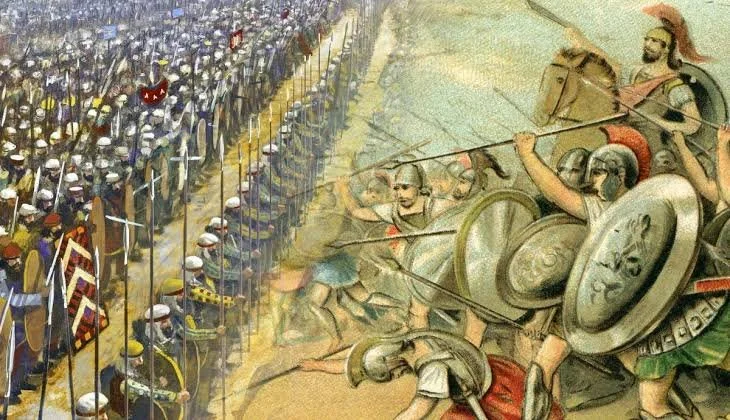
The Greek strategy relied on the strengths of hoplite warfare.
Heavy infantry operating in close formation could be extremely dangerous against opponents lacking comparable armor and formation discipline.
The Athenians eventually advanced against the Persians.
Herodotus reports that the Greeks ran toward the Persian position, a detail that has become legendary.
The battle was hard fought.
The Greek center reportedly weakened under Persian pressure, while the Greek wings achieved greater success. The Athenian formation then enveloped portions of the Persian force.
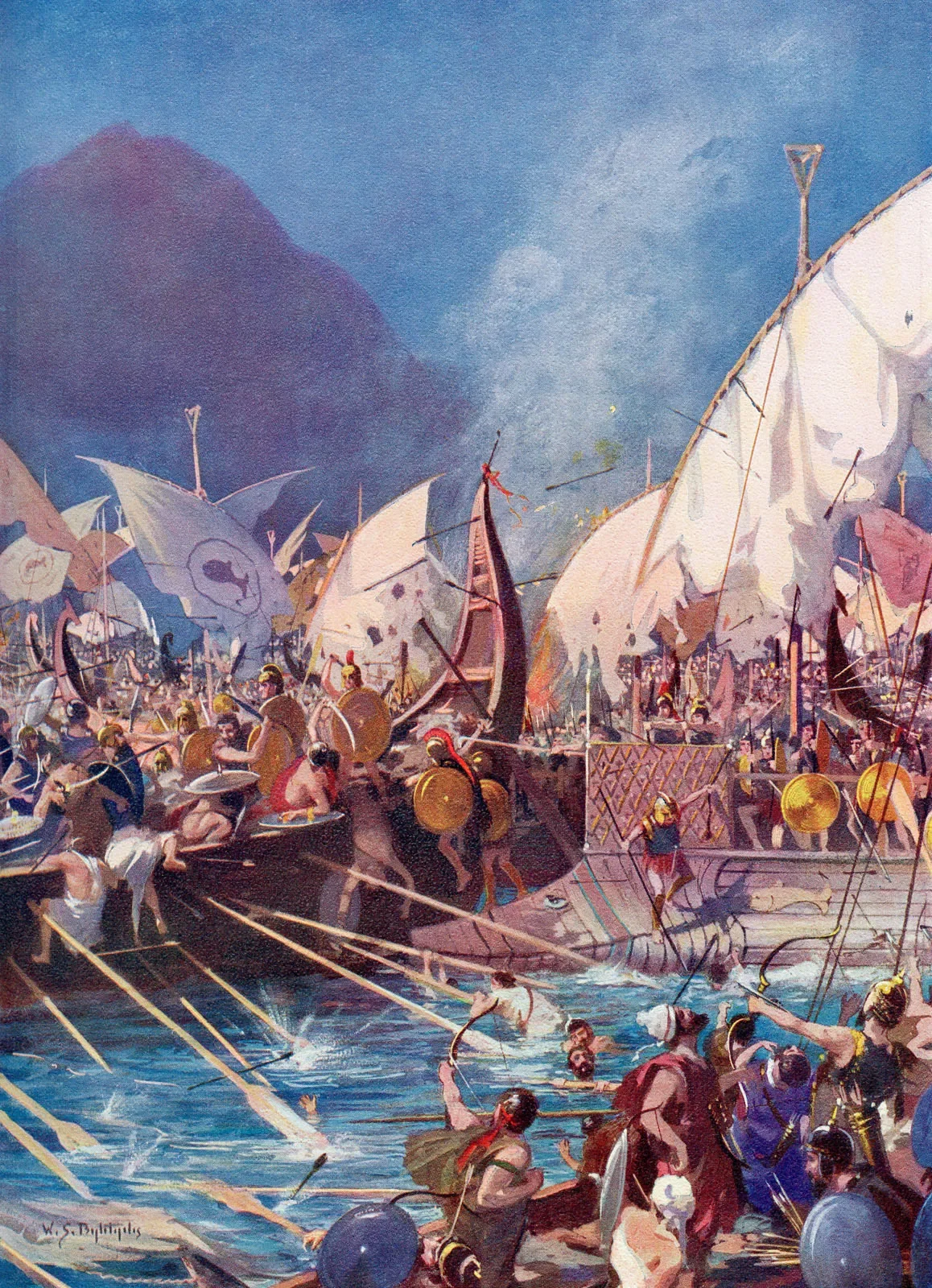
The Persians retreated toward their ships.
The Greek victory was decisive.
The Persians lost substantial numbers of troops, while Greek losses were considerably lower according to Herodotus.
Marathon had enormous psychological importance.
The Persian Empire had appeared nearly unstoppable.
Yet a relatively small Greek army had defeated a major expeditionary force.
The battle also demonstrated the effectiveness of heavily armed citizen infantry under favorable circumstances.
Marathon did not end the Persian-Greek conflict.
Darius planned another invasion but died before completing it.
His successor, Xerxes I, launched the much larger invasion of 480 BCE.
The later battles of Thermopylae, Salamis, and Plataea became part of the continuing Persian Wars.
Marathon consequently became the opening chapter in a larger story.
Its importance was amplified by later Athenian memory.
The battle became part of Athens' civic identity. The Marathon warriors were celebrated as defenders of freedom and the city.
The modern marathon race takes its name indirectly from the ancient battle through later traditions surrounding a messenger traveling from Marathon to Athens.
However, the modern athletic event does not reproduce a historically certain single ancient run.
Marathon's real historical significance lies elsewhere.
It demonstrated that Persian power could be resisted.
It strengthened Athenian confidence.
It became part of the ideological foundation of later Greek narratives about resistance to Persia.
Most importantly, Marathon shows that military power cannot be measured solely by the size of an empire.
Terrain, equipment, cohesion, leadership, motivation, and tactical circumstances can radically change the outcome of battle.