The Persian Wars were a series of conflicts between the Persian Empire and various Greek communities during the early fifth century BCE.
The wars became foundational to Greek historical memory because they were later interpreted as a struggle between political independence and imperial domination.
The origins of the conflict can be traced partly to the Ionian Revolt.
Greek cities in western Anatolia rebelled against Persian rule around the beginning of the fifth century BCE. Athens and Eretria provided assistance.
The revolt was eventually suppressed.
Persian king Darius I then sought to punish Athens and expand Persian influence in the Aegean.
The first Persian invasion culminated in the Battle of Marathon in 490 BCE.
The Athenians and Plataeans defeated the Persian army that landed at Marathon.
A decade later, Xerxes launched a much larger invasion.
This time the Persian army advanced overland through northern Greece while a major fleet supported the campaign.
Greek states faced an enormous strategic problem.
They could not simply defeat Persia through a single land battle.
Greek resistance therefore depended on coordination.
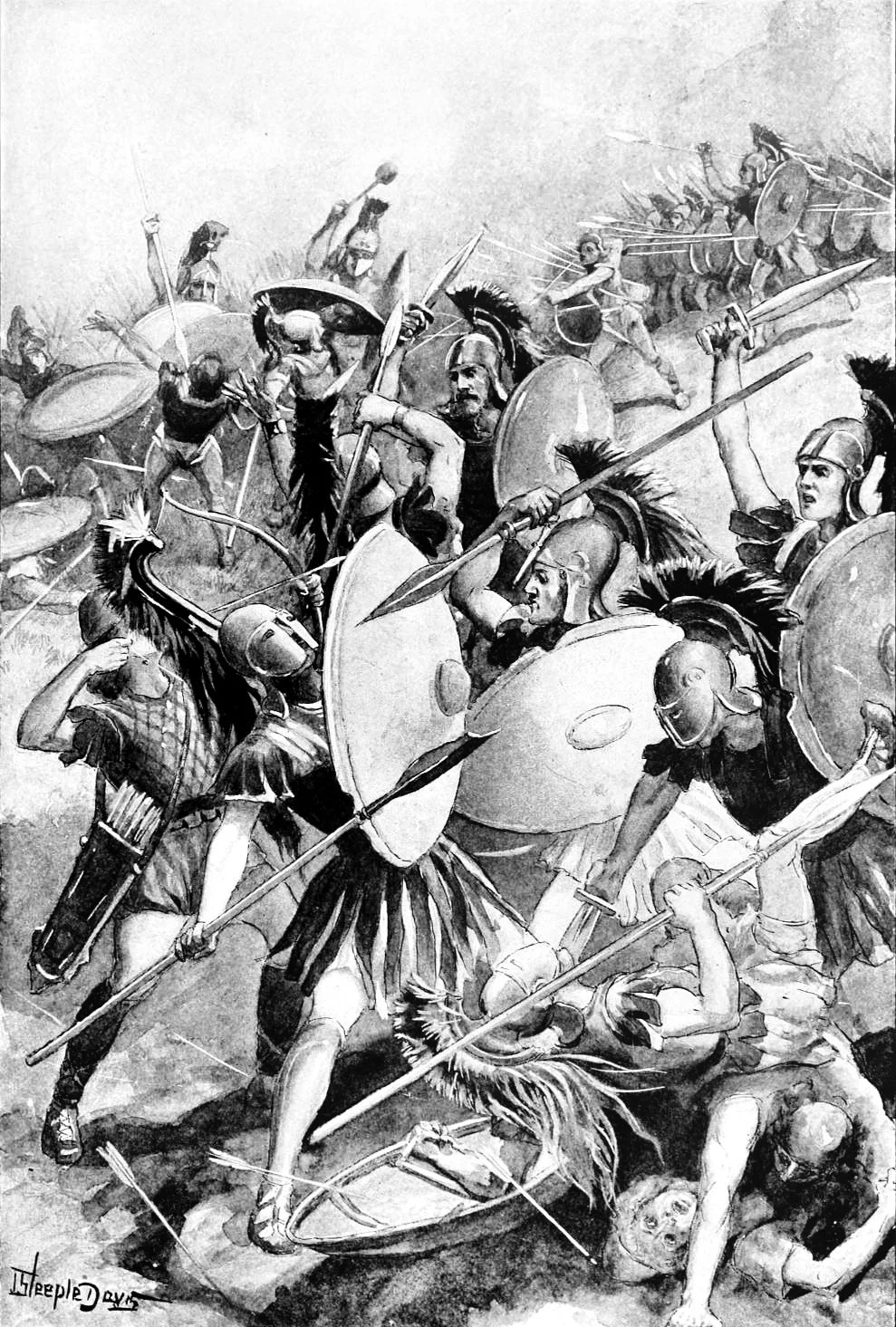
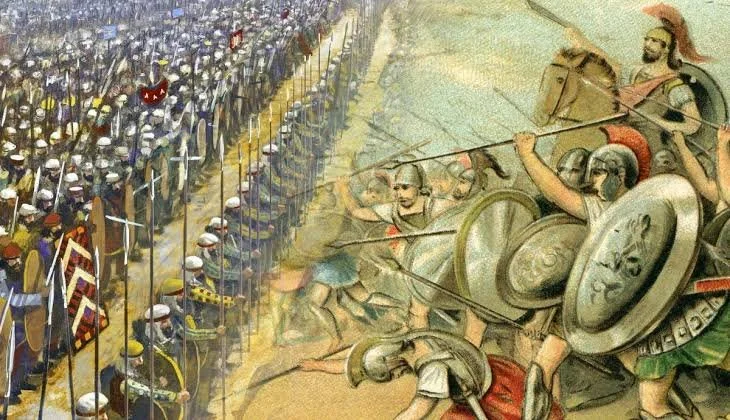
At Thermopylae, a coalition force attempted to block the Persian advance through a narrow pass.
The famous Spartan king Leonidas commanded the core of the defense.
The Greeks were eventually outflanked and defeated.
Thermopylae became legendary because of the determination of the defenders, but its military significance should not be separated from the broader campaign.
The Persian army then advanced into central Greece and Athens was evacuated.
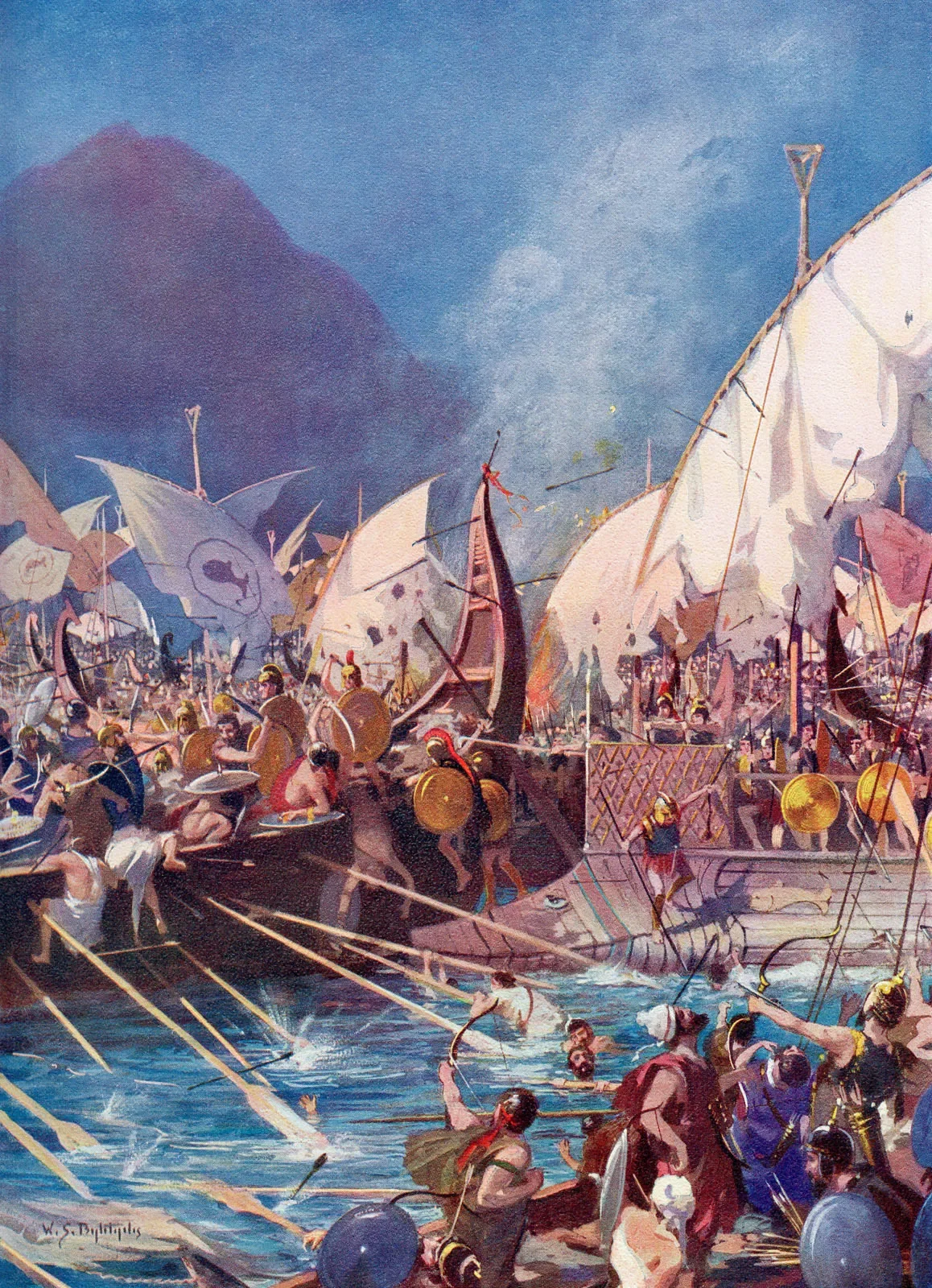
The decisive naval confrontation occurred at Salamis.
Greek ships fought in confined waters where Persian numerical superiority became less useful.
The Greek fleet achieved a major victory.
Xerxes eventually withdrew with much of his army.
The following year, Greek forces defeated the remaining Persian land army at Plataea.
The Persian invasion failed.
Greek communities retained their political independence, although the conflict did not create a permanently united Greece.
Athens subsequently became the leader of a maritime alliance, the Delian League.
The Persian Wars therefore had consequences far beyond the battlefield.
They transformed Athenian power.
The victory contributed to the development of Athenian naval supremacy and imperial expansion.
Greek writers also used the wars to explore themes of freedom, despotism, courage, and cultural identity.
Herodotus' Histories is our most famous narrative source.
Yet Herodotus must be read critically.
He wrote decades after many of the events and incorporated stories, speeches, traditions, and interpretations from different communities.
Modern historians combine literary sources with archaeology, inscriptions, and comparative evidence.
The Persian Wars should therefore not be reduced to a simple story of "Europe versus Asia."
The Persian Empire was extraordinarily diverse and included many peoples.
Greek communities themselves were divided, and some Greek states cooperated with Persia.
The conflict was therefore a complicated political struggle involving alliances, local interests, rivalries, and imperial ambitions.
Nevertheless, the Greek victories had extraordinary historical consequences.
They allowed Athens and other Greek states to continue developing independently.
The resulting fifth-century cultural achievements became enormously influential.
The Persian Wars were thus not merely military confrontations.
They became foundational events through which later generations constructed ideas about Greek identity, political freedom, military courage, and resistance to imperial power.