The Sicilian Expedition of 415–413 BCE was one of the most disastrous military ventures in ancient Greek history. Athens attempted to intervene in Sicily with an enormous expeditionary force, hoping to defeat Syracuse, expand its influence in the western Mediterranean, and potentially transform the balance of power in the Peloponnesian War.
Instead, the campaign ended with the destruction of the Athenian army and fleet.
Thousands of soldiers died or were captured. Athenian naval power was severely weakened. The defeat encouraged Athens' enemies and contributed significantly to the eventual collapse of Athenian imperial power.
The disaster was not caused by one mistake.
It resulted from a combination of political ambition, inadequate intelligence, divided leadership, strategic overreach, logistical problems, delayed decision-making, and failure to adapt to changing circumstances.
The Sicilian Opportunity
Athens became involved in Sicilian affairs because several Greek communities on the island were engaged in rivalries and conflicts.
Syracuse was the dominant power in Sicily.
Athenians increasingly viewed the island as both a strategic opportunity and a potential source of resources.
The immediate justification for intervention involved the city of Segesta, which appealed to Athens for assistance against its enemies.
Segestan representatives reportedly presented Athens with an attractive picture of their wealth.
Athens saw an opportunity.
The Grand Strategy
Some Athenians imagined that conquering or neutralizing Syracuse could have enormous consequences.
Sicily could provide:
Grain
Wealth
Naval bases
Strategic access to the western Mediterranean
Potential allies
Additional military resources
The expedition therefore evolved from a limited intervention into an extraordinarily ambitious project.
Alcibiades
Alcibiades was one of the strongest advocates of the expedition.
He argued that Athens should act aggressively.
He possessed extraordinary political confidence and believed that military expansion could strengthen Athens.
His vision was ambitious.
The problem was that Athens had insufficient information about the true difficulties of conquering Syracuse.
Nicias' Warning
Nicias opposed the expedition.
He believed the operation was dangerous and expensive.
Ironically, when the Assembly decided to proceed, Nicias attempted to discourage the Athenians by exaggerating the size of the forces he believed necessary.
The Athenians interpreted his remarks differently.
Instead of abandoning the expedition, they approved an even larger force.
The Leadership Crisis
Three commanders were appointed:
Alcibiades
Nicias
Lamachus
Their strategic personalities were very different.
Alcibiades favored aggressive action.
Nicias was cautious.
Lamachus was experienced and practical.
This created problems for unified command.
The Mutilation of the Herms
Before the expedition sailed, religious statues known as herms were mutilated throughout Athens.
The incident caused enormous political anxiety.
Alcibiades was implicated.
He requested an immediate investigation.
Instead, his political enemies delayed proceedings.
Eventually, he was recalled.
Alcibiades Defects
Rather than returning to Athens, Alcibiades fled.
He eventually provided information to Sparta.
This was devastating.
He advised the Spartans to strengthen their position in Greece and support Syracuse.
The Missed Opportunity
One of the most important strategic failures occurred early in the campaign.
Athens had an opportunity to attack Syracuse before the city was fully prepared.
Instead, indecision delayed decisive action.
By the time the Athenians committed to a major siege, Syracuse had organized its defenses.
Syracuse Responds
Syracuse demonstrated considerable resilience.
Its citizens constructed defensive works and mobilized forces.
Spartan assistance also arrived.
The Athenians found themselves fighting a determined enemy far from home.
The Walls
Athens attempted to surround Syracuse with siege walls.
The strategy was designed to isolate the city.
However, Syracuse constructed counter-walls.
This transformed the campaign into a complex engineering contest.
The Arrival of Spartan Leadership
The Spartan commander Gylippus arrived in Sicily.
He helped reorganize the Syracusan forces.
His presence significantly improved Syracusan military coordination.
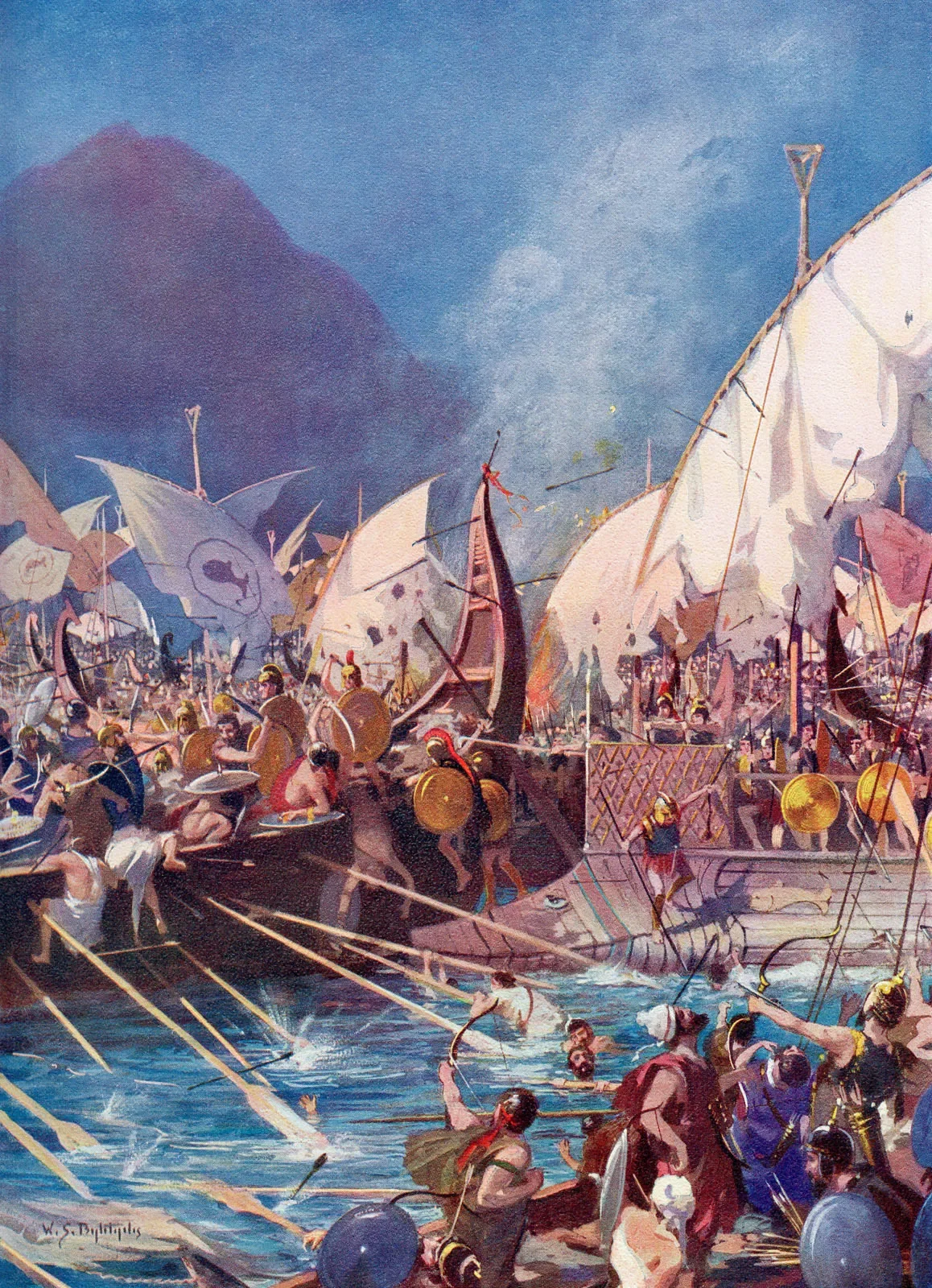
The Naval War
The Athenian fleet had originally been one of its greatest advantages.
But fighting inside the harbor of Syracuse reduced the effectiveness of Athenian naval tactics.
The confined waters limited maneuvering.
Syracuse increasingly adapted its ships and tactics to the environment.
Nicias Becomes Trapped
Nicias had wanted to withdraw after the situation deteriorated.
However, political pressure and fear of appearing weak delayed withdrawal.
Athens also sent reinforcements under Demosthenes.
Instead of abandoning the expedition, Athens invested even more resources.
The Eclipse
In 413 BCE, a lunar eclipse occurred.
Nicias and others regarded the event as significant.
Ancient sources describe how religious concerns contributed to delaying the withdrawal.
Modern readers should avoid assuming that one superstition alone caused the disaster, but the episode demonstrates how religious interpretation could influence military decisions.
The Final Naval Battle
The Syracusans eventually defeated the Athenian fleet inside the harbor.
The Athenians could no longer escape by sea.
Their strategic position collapsed.
The Retreat
The surviving Athenian soldiers attempted to retreat overland.
They were exhausted, thirsty, and pursued by enemy forces.
The retreat became catastrophic.
The Quarries
Large numbers of Athenians were captured and confined in the stone quarries near Syracuse.
Conditions were horrific.
Many prisoners died from starvation, disease, exposure, and overcrowding.
Why the Expedition Failed
Several major errors contributed to the catastrophe.
Strategic Overreach
Athens attempted to achieve too much too far from home.
Poor Intelligence
Athens underestimated Syracuse's military and political strength.
Divided Command
The commanders possessed incompatible approaches.
Political Interference
Domestic Athenian politics repeatedly influenced military decisions.
Delayed Action
Opportunities to attack or withdraw were missed.
Logistical Problems
Supplying an enormous force in Sicily was difficult.
Naval Confinement
The Syracusan harbor reduced Athenian naval advantages.
Failure to Withdraw
Athens continued the campaign after the original strategic conditions had deteriorated.
Consequences
The defeat was catastrophic.
Athens lost:
Ships
Soldiers
Experienced commanders
Money
Political prestige
The disaster also encouraged Athens' enemies.
Sparta established a fortified position at Decelea in Attica.
Persia increased its support for Sparta.
Historical Importance
The Sicilian Expedition demonstrates one of the central principles of military history:
A powerful state can destroy itself by pursuing an objective that exceeds its logistical and strategic capacity.
Athens remained capable of resistance after Sicily.
The city did not immediately surrender.
Nevertheless, the expedition permanently weakened the Athenian war effort.
Its failure became one of the decisive turning points of the Peloponnesian War.