Athenian imperial power rested fundamentally upon the sea.
Although Athens is often remembered for its philosophers, temples, democracy, and hoplite soldiers, the city became a major Mediterranean power largely because it developed one of the strongest navies in the ancient world.
The Athenian fleet protected trade routes, transported armies, collected tribute, suppressed rebellions, and projected power across the Aegean.
Without naval superiority, the Athenian Empire could not have existed in the form it did.
The Persian Wars
The foundations of Athenian naval power were established during the Persian Wars.
Themistocles recognized that Athens needed a powerful fleet.
The discovery of silver at Laurion provided an opportunity.
Instead of distributing the revenue among citizens, Athens invested heavily in warships.
The Trireme
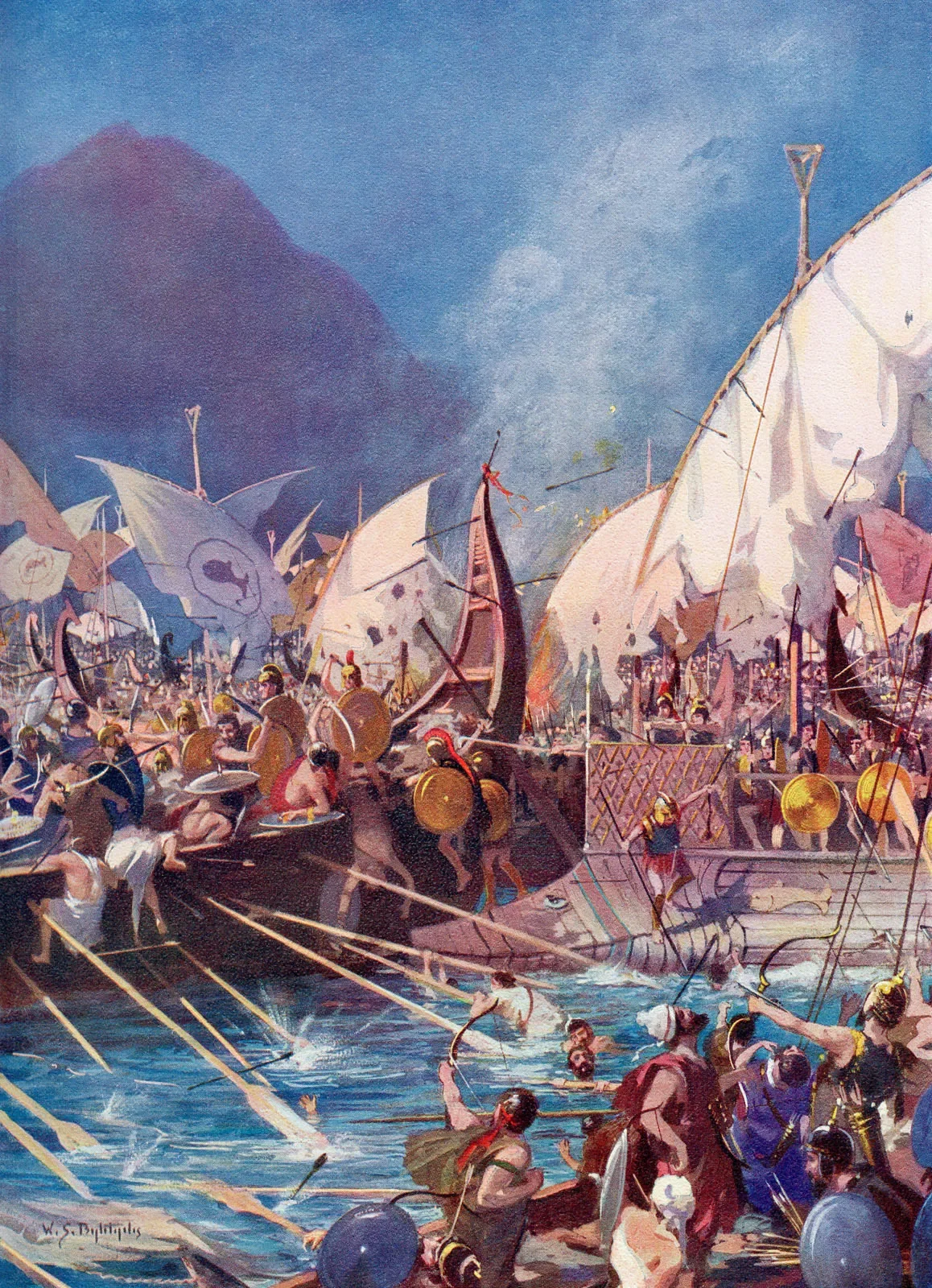
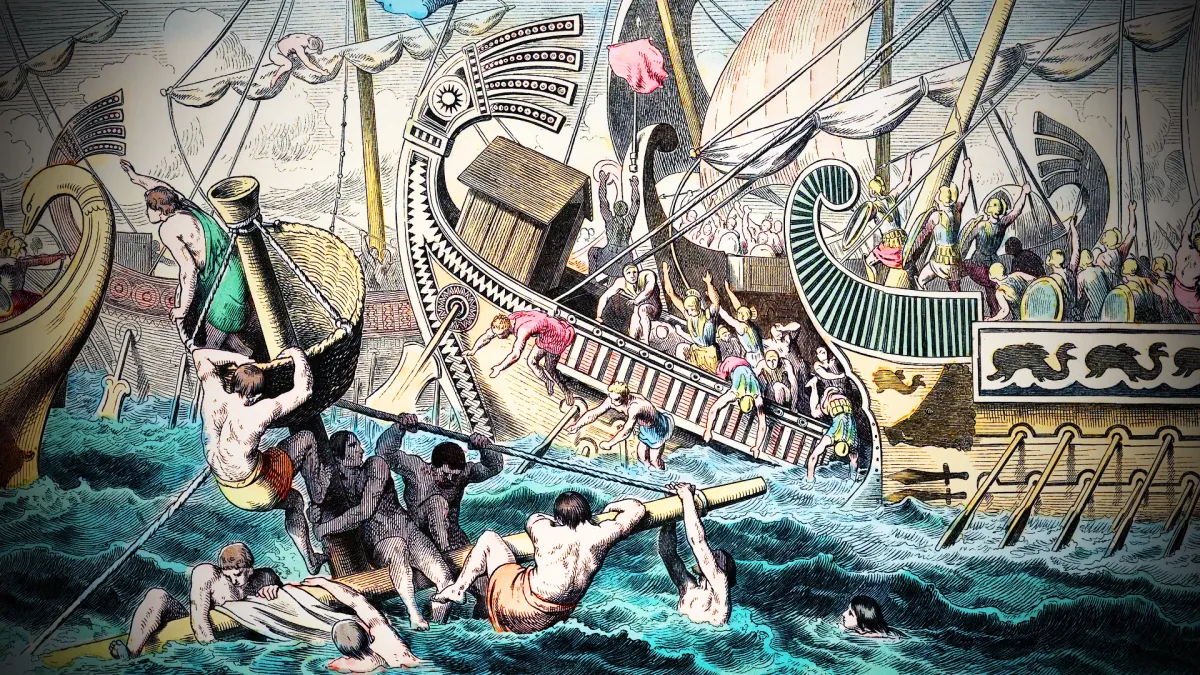
The principal warship was the trireme.
It was a long, relatively narrow vessel designed for speed and maneuverability.
Three levels of oarsmen powered the ship.
The vessel also carried a bronze-covered ram at the bow.
The Battle of Salamis
Athenian naval power was demonstrated dramatically at Salamis in 480 BCE.
The Greek fleet confronted the Persian navy in confined waters.
The geography reduced the numerical advantage of the Persian fleet.
Greek ships were able to maneuver effectively.
The Persian defeat became one of the most important victories of the Persian Wars.
From Defense to Empire
After the Persian Wars, Athens became the leading naval power in the Aegean.
The Delian League was formed as an alliance against Persia.
Athens eventually transformed the alliance into an empire.
Member states could contribute ships or money.
Increasingly, many paid tribute instead of supplying ships.
Tribute
Tribute provided Athens with enormous financial resources.
This money supported:
Ships
Crews
Fortifications
Government
Religious festivals
Monumental construction
The famous buildings of Classical Athens were therefore indirectly connected to imperial wealth.
Controlling the Aegean
A strong fleet allowed Athens to maintain influence over island communities and coastal cities.
Ships could rapidly transport soldiers.
They could blockade rebellious cities.
They could escort merchant vessels.
Naval power gave Athens strategic flexibility that land-based states lacked.
The Long Walls
The Long Walls connected Athens with Piraeus.
This infrastructure created a strategic system linking the city to its naval base.
Even when Spartan armies invaded Attica, Athens could continue receiving supplies by sea.
The Naval Citizen
The navy also changed Athenian society.
Many rowers came from poorer citizen classes.
Their military importance increased their political significance.
Democracy and naval power therefore reinforced each other.
Economic Power
Athens depended heavily on maritime trade.
Grain imports were especially important.
Attica could not always produce enough grain to support its large population.
The Aegean and Black Sea trade networks therefore became strategically essential.
The Peloponnesian War
Sparta recognized the importance of Athenian naval power.
Initially, Sparta possessed a superior land army but a weaker navy.
Persian funding eventually helped Sparta develop naval capabilities.
The war increasingly became a struggle for maritime control.
The Sicilian Disaster
The Sicilian Expedition demonstrated the dangers of using naval power beyond sustainable limits.
Athens sent enormous forces to Sicily.
The defeat destroyed a significant portion of the fleet.
The Final Defeat
Athenian naval power recovered partially after Sicily.
However, Persian financial support helped Sparta build a competitive navy.
At the Battle of Aegospotami in 405 BCE, the Athenian fleet was effectively destroyed.
Athens soon surrendered.
Legacy
The Athenian Empire demonstrates that naval power can transform a relatively small territory into a major international power.
The fleet gave Athens:
Mobility
Economic access
Military reach
Political leverage
Imperial enforcement
The Athenian example became one of the earliest historical demonstrations of the strategic importance of maritime power.