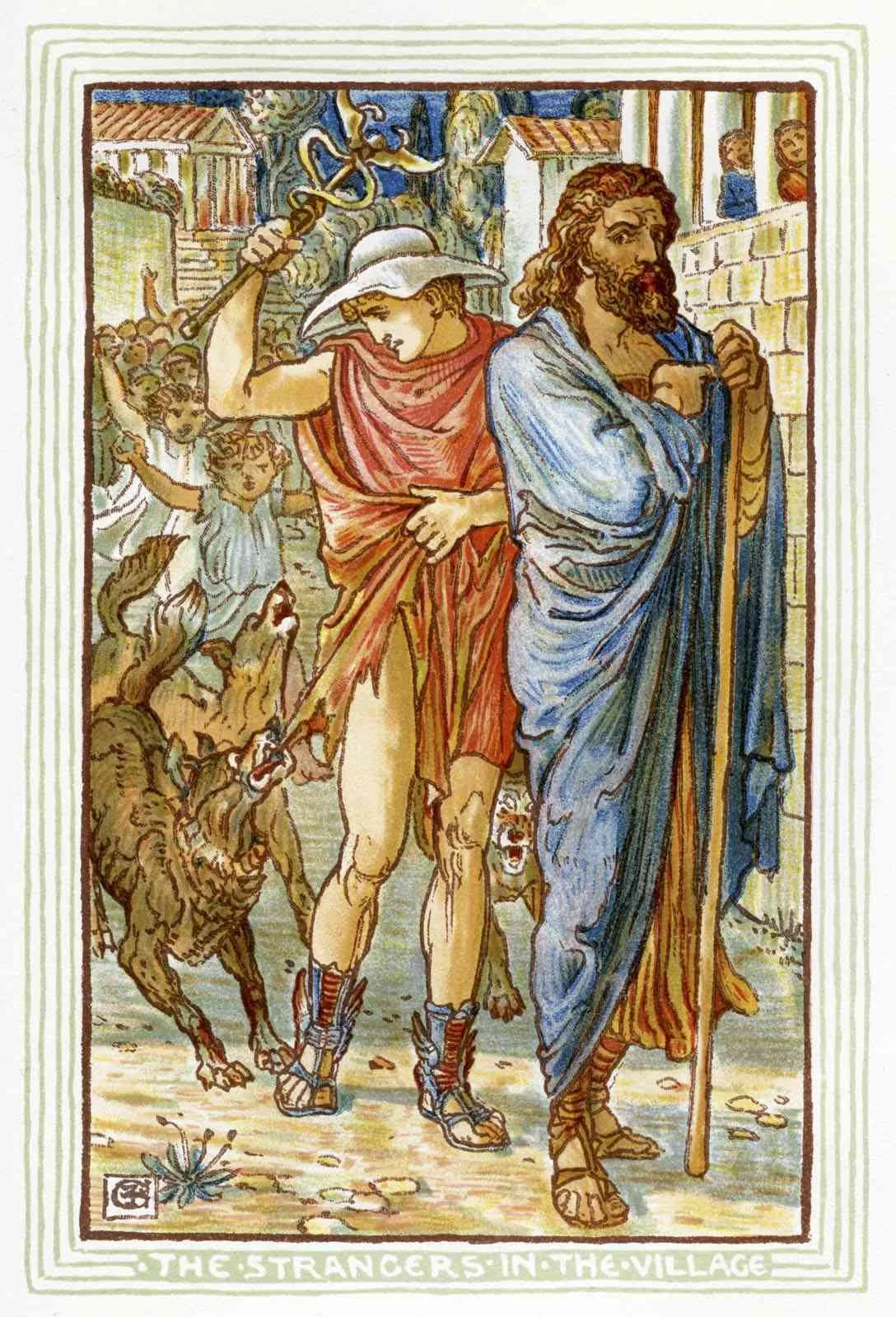
The tale of Baucis and Philemon is one of the most touching stories of hospitality in Greek mythology. Preserved most famously by the Roman poet Ovid, the story describes an elderly couple whose kindness toward disguised gods earns them divine protection while their inhospitable neighbors face destruction.
Although the surviving literary version comes from Roman literature, the story draws upon themes deeply rooted in the ancient Greek tradition, especially xenia, the sacred obligation of hospitality toward strangers.
The narrative emphasizes that wealth and social status are not reliable measures of moral worth. A poor household can be more honorable than a wealthy community if its inhabitants demonstrate generosity, humility, and respect toward guests.
The Meaning of Hospitality
Hospitality was extremely important in ancient Mediterranean societies.
Travel was difficult and dangerous.
There were no modern hotels, transportation networks, or communication systems.
A traveler might therefore depend upon strangers for food, water, shelter, and protection.
Greek culture developed the concept of xenia, a relationship between host and guest governed by social and religious expectations.
Zeus himself was associated with the protection of strangers and guests.
The Disguised Gods
In the story, Zeus and Hermes travel through the countryside disguised as ordinary human travelers.
They approach numerous households seeking hospitality.
The gods are not immediately recognized.
This is crucial to the story.
The residents must choose how to treat them without knowing their true identities.
Rejection by the Neighbors
The gods are repeatedly refused.
Households close their doors.
People do not offer food or shelter.
Their behavior reveals a lack of hospitality.
The community values its own comfort more than the needs of vulnerable strangers.
The gods eventually reach the modest home of Baucis and Philemon.
The Poor Cottage
Baucis and Philemon are elderly and poor.
Their home is small and simple.
They possess little wealth.
Yet they welcome the travelers immediately.
They offer whatever food they have available.
Their poverty does not prevent generosity.
Instead, their limited resources make their hospitality more meaningful.
Preparing the Meal
The couple prepares a humble meal.
They provide vegetables, bread, olives, and wine.
The food is simple compared with the feasts of wealthy households.
But the guests are treated with respect.
The couple repeatedly apologizes that their meal is not better.
Their behavior demonstrates an important moral principle: hospitality is measured by generosity of spirit rather than extravagance.
The Miraculous Wine
As the meal continues, the wine jug mysteriously refills itself.
Baucis and Philemon realize that their guests must be divine.
They become frightened.
The miraculous sign reveals that the strangers are not ordinary travelers.
Yet the gods do not punish the couple.
Their hospitality has already demonstrated their virtue.
Divine Judgment
Zeus and Hermes reveal their identities.
They tell the couple that the surrounding community will be punished for its refusal to offer hospitality.
The gods then lead Baucis and Philemon to safety.
From their elevated position, the couple witnesses destruction overtaking the region.
The Transformation of the Landscape
The gods destroy the inhospitable community.
In many versions, the flood covers the area.
The humble home of Baucis and Philemon is spared.
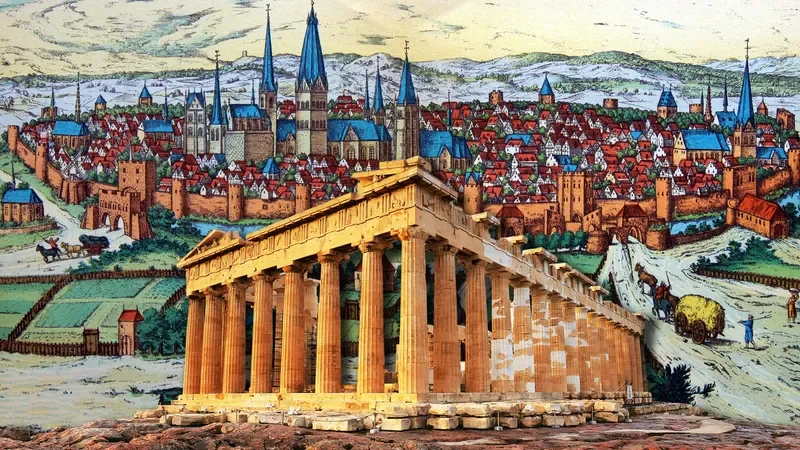
Their cottage is transformed into a magnificent temple.
The transformation creates a dramatic contrast between the couple's original poverty and their new sacred environment.
The Couple's Reward
The gods offer Baucis and Philemon a reward.
The couple does not request wealth, youth, or power.
Instead, they ask to serve the gods as caretakers of the temple.
Their modest request reflects their character.
They are satisfied with a life devoted to one another and to the divine.
Their Final Wish
Baucis and Philemon also make one additional request.
They do not want either spouse to experience the death of the other.
They ask that they die at the same time.
The gods grant their wish.
When the couple eventually reaches the end of their lives, they are transformed into intertwined trees.
Baucis becomes a linden tree and Philemon becomes an oak.
Their branches remain connected.
The Symbolism of the Trees
Their transformation provides the final expression of their marriage.
They began the story as an elderly couple living in poverty.
They end it permanently united.
The trees represent continuity, endurance, and mutual dependence.
Even death cannot separate them.
Wealth Versus Virtue
One of the story's central themes is the contrast between material wealth and moral wealth.
Baucis and Philemon possess very little.
Their neighbors apparently possess greater resources.
Yet the wealthy community is condemned while the poor couple is rewarded.
The story therefore rejects the assumption that prosperity automatically indicates virtue.
Hospitality as a Religious Duty
The tale reinforces the idea that strangers should be treated respectfully.
A traveler might be a god in disguise.
The uncertainty creates a powerful incentive for kindness.
But the moral lesson extends beyond fear of divine punishment.
Hospitality is presented as inherently virtuous.
The Elderly Couple
Baucis and Philemon are also significant because they are elderly.
Greek and Roman literature frequently celebrates youthful heroes, warriors, and lovers.
This story instead places an old married couple at the center.
Their virtues are patience, generosity, loyalty, and humility.
Their age becomes a source of wisdom rather than weakness.
Marriage and Mutual Loyalty
Their relationship is another major theme.
They share responsibilities.
They eat together.
They welcome strangers together.
They face divine judgment together.
And they die together.
The story therefore presents marriage as a partnership rather than merely a social arrangement.
The Moral Structure
The story follows a clear moral pattern:
The gods test humanity.
Most people fail.
A poor couple succeeds.
The wicked community is punished.
The virtuous couple is rewarded.
Their devotion is immortalized through transformation.
This structure gives the story its enduring simplicity.
Greek Cultural Background
Although Ovid's version is Roman, the underlying themes have strong parallels in Greek mythology.
Stories of gods appearing in disguise are common.
The principle that divine beings may test human hospitality is especially compatible with the Greek conception of Zeus as protector of guests and strangers.
The story therefore belongs to a broader Mediterranean tradition concerning the sacred nature of hospitality.
The Legacy of Baucis and Philemon
The tale influenced European literature, painting, opera, and moral storytelling.
Its themes remain understandable across cultures.
A person does not need wealth to demonstrate generosity.
A stranger deserves humane treatment.
Marriage can be defined by loyalty rather than material success.
And moral worth cannot always be judged by outward appearance.
Conclusion
The Tale of Baucis and Philemon is ultimately a story about the extraordinary value of ordinary kindness.
The couple possesses no great army, political authority, or treasure.
They simply open their door.
That simple decision saves them.
Their neighbors, who refuse to help strangers, lose everything.
The story's final image of Baucis and Philemon transformed into two trees growing together provides a fitting conclusion. Their wealth was never material. Their greatest possession was their devotion to one another and their willingness to treat strangers with dignity.
Their story remains a timeless reminder that hospitality can reveal character more clearly than wealth, status, or power ever could.